
Causes
Storm Damage and Ceiling Leaks
Short answer
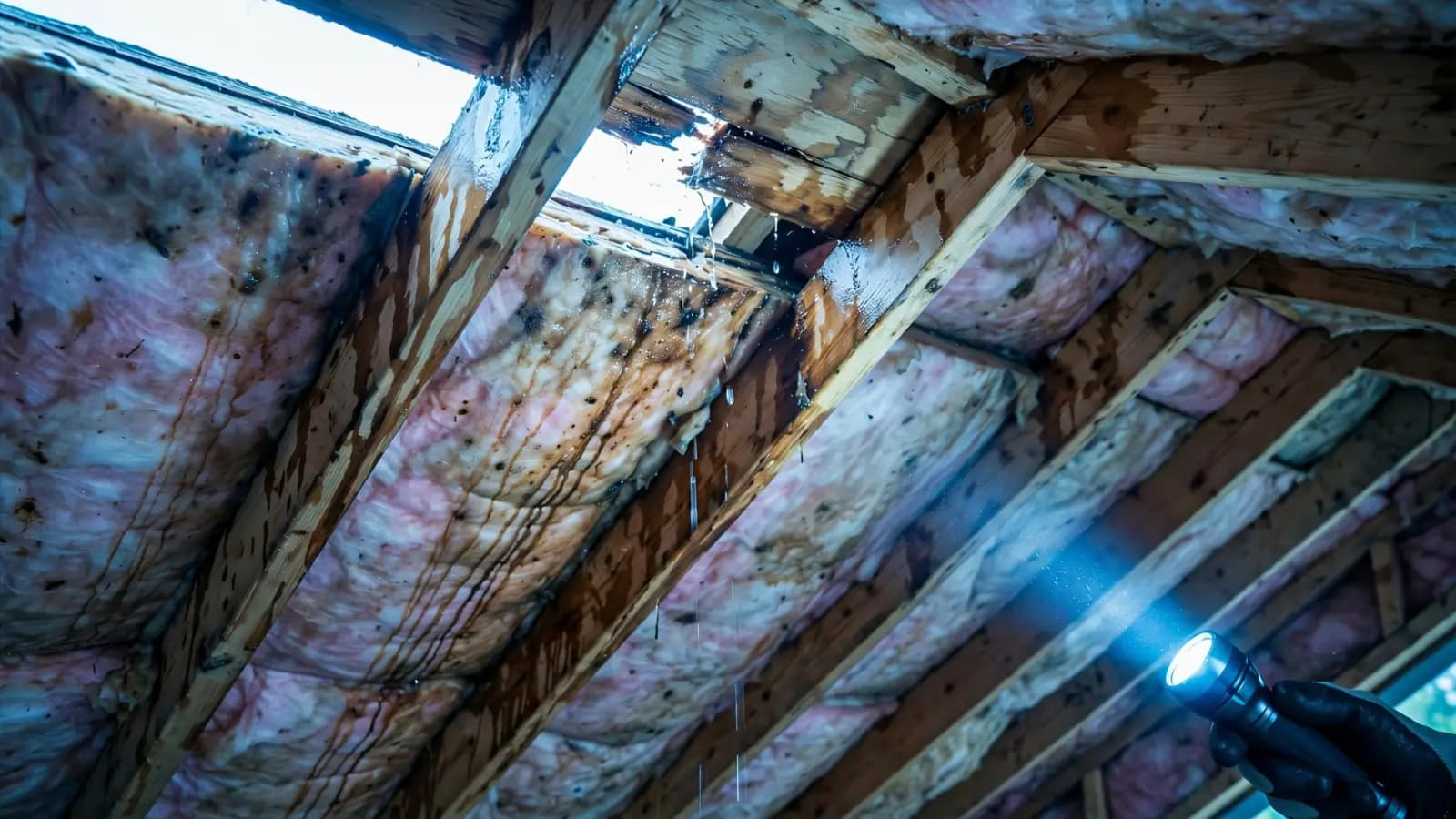
Storms damage ceilings when wind, hail or falling trees open the roof or walls, or when wind-driven rain is forced past flashing, vents and windows that normally keep water out. During the storm, focus on safety and containing water inside. Afterward, document everything, arrange an emergency tarp through a professional, and get wet ceilings and insulation dried quickly.
At a glance
- Condition
- Rain entering the home through storm-damaged or overwhelmed roof and wall openings.
- Common causes
- Wind-lifted or missing shingles, fallen trees and limbs, hail impacts, wind-driven rain through vents and flashing, clogged gutters overflowing.
- Evidence
- New stains or drips during or right after a storm, visible roof or siding damage, debris on the roof.
- Risk if ignored
- Large volumes of water, structural damage from trees, electrical hazards, and widespread mold after regional events when contractors are scarce.
- What to do now
- Stay safe, contain water, document damage, and contact your insurer and a roofer.
- Solution
- Emergency tarping, roof repair, professional drying, and ceiling repair.
During the storm
- Stay out of rooms with tree damage or sagging ceilings.
- Contain drips with buckets and move belongings.
- Do not go into the attic during lightning or high winds, or onto the roof at all.
- Switch off circuits feeding wet ceiling fixtures at the panel only if you can reach it from a dry location.
Wind-driven rain without visible damage
A roof can leak in a severe storm without any missing shingles. High winds push water sideways and upward into ridge vents, gable vents, soffits, around chimney flashing and under shingle edges. If stains appear only during storms from one direction and the roof looks intact, have a roofer check vents and flashing on the windward side. These leaks often behave like a roof leak but only under specific conditions.
After the storm: documentation
In federally declared disasters, FEMA's website and DisasterAssistance.gov list assistance programs; local emergency management agencies post area-specific information.
- Photograph and video every affected ceiling and room, the exterior, and any debris, before cleanup where safe.
- Note the date and time of the storm and when leaks began.
- Keep damaged materials or photos of them until your insurer says otherwise.
- Keep receipts for tarps, fans, dehumidifiers and emergency services.
- Contact your insurance company promptly; policies generally require reasonable steps to prevent further damage.
Why fast drying matters more after regional storms
After widespread storms, roofers and restoration companies are in high demand and wait times grow. Meanwhile, wet insulation and drywall can develop mold within days. Even before permanent repairs, pulling back soaked insulation, running fans and dehumidifiers, and removing clearly ruined materials limits the damage. See drying a water-damaged ceiling and the ceiling water damage checklist.
Frequently asked questions
Why is my ceiling leaking after heavy rain when the roof looks fine?
Wind-driven or very heavy rain can enter through vents, flashing, gutters that overflow behind fascia, and windows or siding above the ceiling, even when shingles look intact.
Who installs an emergency roof tarp?
Roofers and many restoration companies provide emergency tarping. Avoid climbing onto a wet or damaged roof yourself.
Should I wait for the insurance adjuster before drying the ceiling?
Most policies expect you to take reasonable steps to prevent further damage. Document thoroughly with photos first, then start drying, and keep records. Check with your insurer about their specific requirements.
Is ceiling damage from a fallen tree an emergency?
Yes. Treat it as a structural and electrical hazard: leave the affected area, stay clear of downed lines, and contact emergency services if anyone is hurt or lines are down.
Related guides
- CausesRoof leakStains that appear after rain: flashing, vents, shingles, ice dams and how water travels to the ceiling.
- EmergencyEmergencyActive leaks, bulging ceilings and water near lights: the safe sequence of steps.
- Guides & ToolsDamage checklistPrintable checklist from the first hour through the first week after a ceiling leak.
- LocationCharlotteCharlotte-specific causes, housing context, permits and utilities.
Also referenced in
This guide is general educational information, not a site-specific inspection. Read our editorial policy for how content is researched and reviewed.