
Repair & Drying
How Long Does a Wet Ceiling Take to Dry?
Short answer
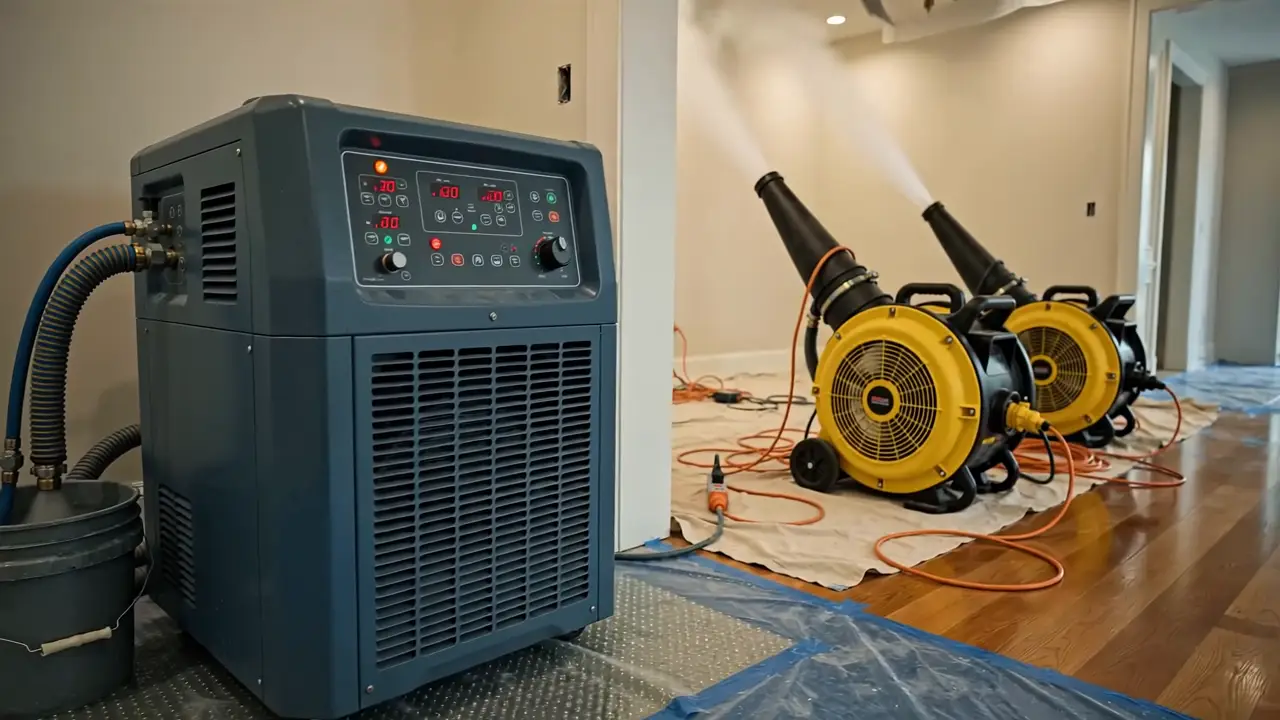
A lightly wetted drywall ceiling with good airflow often dries in 2 to 5 days. A soaked ceiling with wet insulation above, or one enclosed between floors, can take one to several weeks and may not dry fully without opening the cavity. The ceiling is dry when moisture readings match an unaffected area of the same material, not when it looks or feels dry.
At a glance
- Condition
- Ceiling materials holding water after the source is stopped.
- Common causes
- Any leak; enclosed cavities and wet insulation slow drying.
- Evidence
- Elevated moisture readings, cool surface, odor, staining that darkens.
- Risk if ignored
- Mold growth if materials stay wet beyond roughly 24–48 hours; lasting damage to drywall.
- What to do now
- Stop the source, remove wet insulation, run dehumidification and airflow, measure daily.
- Solution
- Controlled drying to match dry reference readings, opening the ceiling when the cavity cannot dry.
What controls drying time
| Factor | Speeds drying | Slows drying |
|---|---|---|
| Amount of water | Brief drip | Overflow or long-running leak |
| Access to the top | Open attic, insulation pulled back | Floor above, sealed cavity |
| Insulation | None or removed | Soaked batts or cellulose on the board |
| Air | Moving air across the surface | Still air |
| Humidity | Dehumidifier running in a closed room | Humid weather, open windows in summer |
| Temperature | Warm room (with dehumidification) | Cold basement |
| Finish | Flat paint, bare drywall | Glossy or vinyl paint, wallpaper |
The drying sequence
- STEP 1Stop the source
- STEP 2Remove soaked insulation
- STEP 3Dehumidify + move air
- STEP 4Measure vs. dry reference
- STEP 5Repair only when dry
Homeowner drying plan
- Confirm the source is stopped.
- Remove soaked insulation from above if the attic is accessible and safe; bag it.
- Close the room and run a dehumidifier sized for the space, emptying it or connecting it to a drain.
- Point fans across the ceiling surface, not directly at mold, and not into a sagging area.
- Keep the room moderately warm.
- Take moisture readings at the same marked points every day, plus a reference reading on dry ceiling.
- If readings stop dropping after a few days, or odor develops, bring in professional drying.
How professionals measure dry
Restoration technicians compare moisture readings in affected materials with readings in unaffected materials of the same type in the same building, often called a dry standard or dry reference. They also track temperature and relative humidity to calculate whether the air can absorb more moisture. Drying is complete when affected materials reach the reference readings, not after a fixed number of days. Thermal imaging cameras help map wet areas, but they show temperature differences, so readings are confirmed with a meter.
When the ceiling has to be opened
Restoration companies sometimes drill small holes or remove small sections to inject air into a cavity, which can avoid larger removal when the drywall is still sound.
- Water is trapped between floors with no access from above.
- Insulation is soaked and the ceiling is the only access.
- Readings are not dropping after several days of drying.
- Contaminated water was involved.
- The drywall is soft or sagging and will be replaced anyway.
Frequently asked questions
Will ceiling water damage dry by itself?
Small, exposed areas often will, given airflow and time. Water trapped under insulation or between floors frequently does not dry fast enough to prevent mold without fans, dehumidifiers or opening the ceiling.
How long does it take drywall to dry after a leak?
Two to five days is common for a lightly wetted, exposed drywall ceiling with good conditions. Soaked or enclosed drywall can take one to several weeks.
Do I need a dehumidifier to dry a wet ceiling?
A dehumidifier speeds drying considerably, especially in humid climates or basements, because it removes the moisture that evaporates instead of leaving it in the room.
Can I paint a ceiling that is still damp?
No. Paint and primer over damp drywall can trap moisture, fail to adhere, and let stains bleed through. Wait until readings match a dry area.
Should I open windows to dry a wet ceiling?
In dry, cool weather, outside air can help. In humid weather, open windows add moisture; keep the room closed and run a dehumidifier instead.
Related guides
- Ceiling ProblemsWet ceilingDamp or dark patches without dripping: where the moisture comes from and whether it will dry on its own.
- ServicesWater damage dryingDehumidifiers, air movers, cavity drying and documented moisture readings.
- Repair & DryingRepair or replaceDecision rules for keeping or replacing wet drywall, plus an interactive checker.
- Ceiling ProblemsCeiling moldSpots, fuzz or discoloration after a leak: how mold develops, what is safe to clean, and what needs a pro.
Also referenced in
This guide is general educational information, not a site-specific inspection. Read our editorial policy for how content is researched and reviewed.