
Water Damage by Ceiling Type
The same leak behaves differently on different ceilings. Drywall softens and sags, plaster loses its grip on the lath and can drop in heavy pieces, drop ceiling tiles stain quickly but are easy to replace, and older textured ceilings raise asbestos questions before any repair.
Rooms matter too: basements, bathrooms and kitchens each have their own typical leak sources.
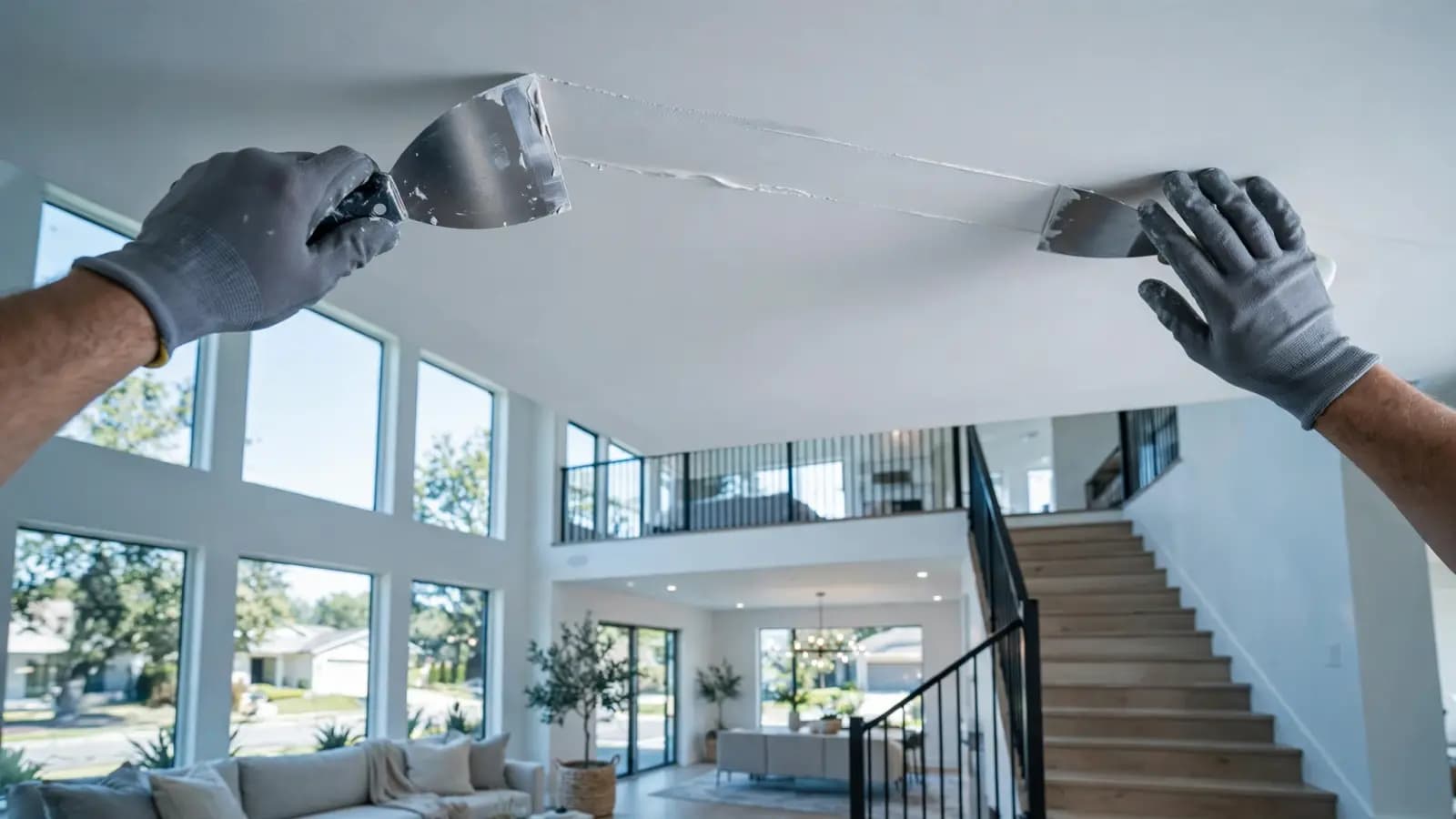 Drywall ceilingsHow gypsum board takes on water, damp vs saturated board, and moisture-resistant options.
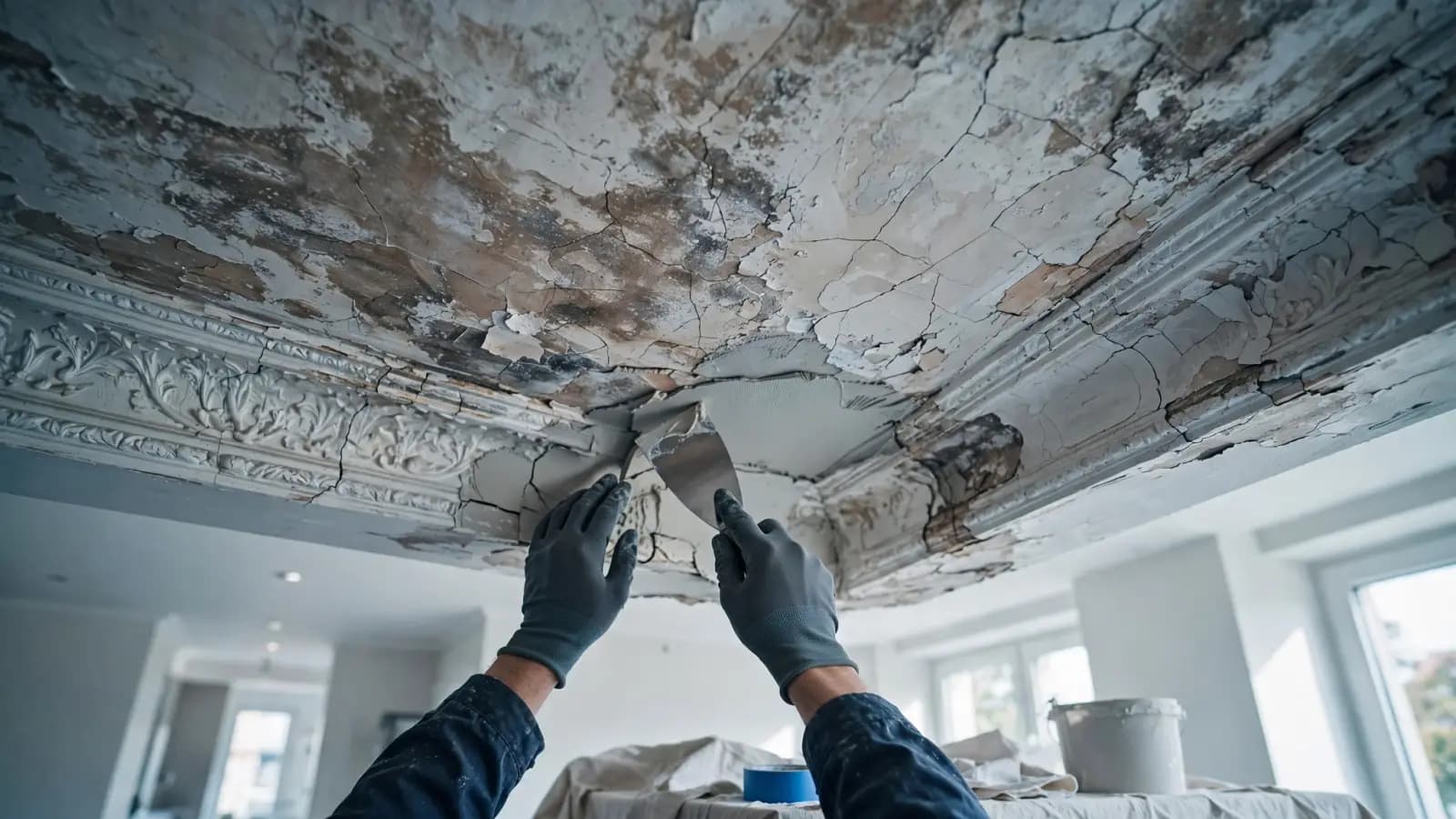 Plaster ceilingsLath and plaster in older homes: key failure, delamination, and how plaster is repaired.Severity 3/5 · Elevated
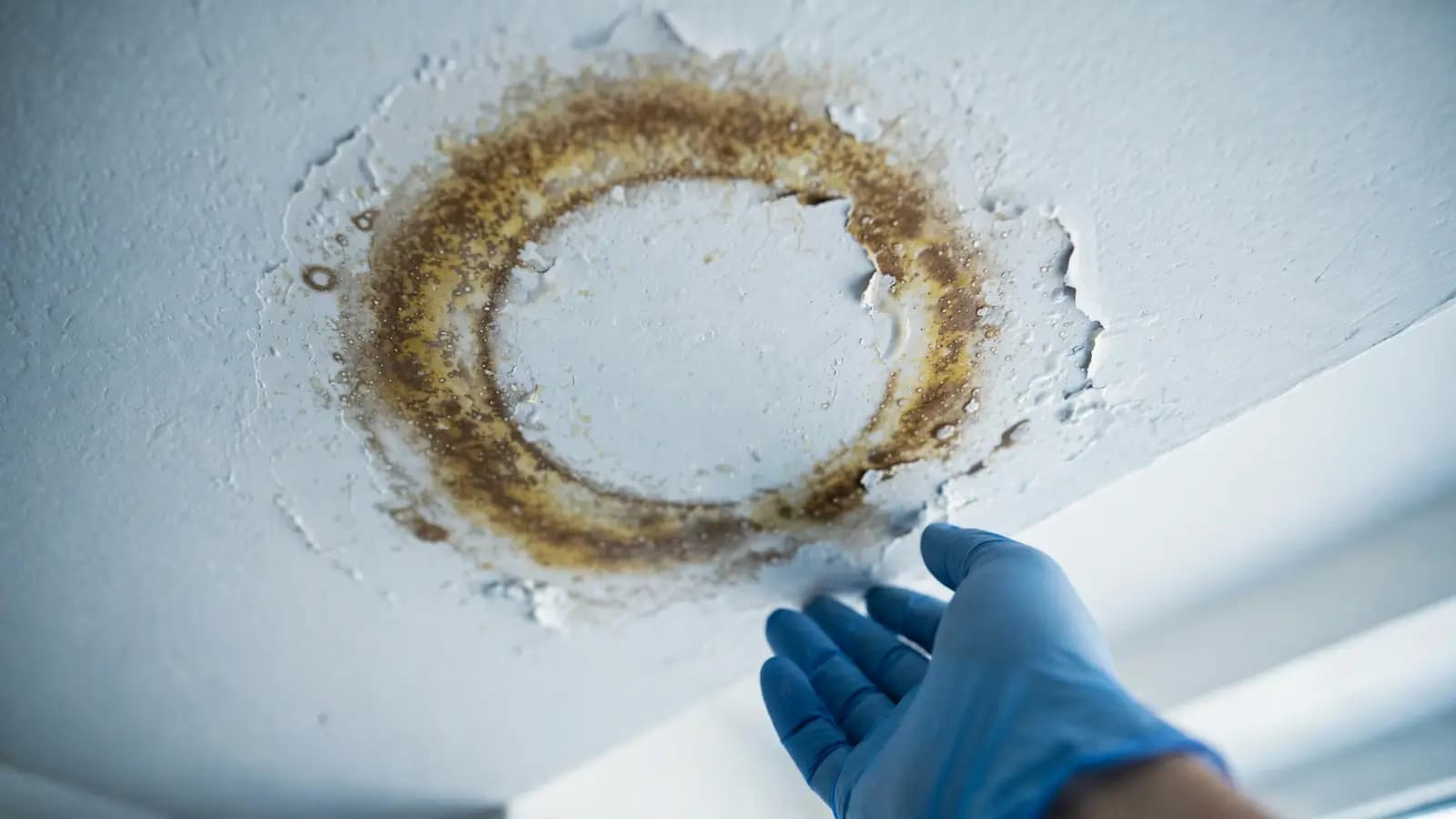 Drop ceilingsSuspended tiles: why they stain quickly, how to look above them, and replacing tiles.
- Textured & popcornPopcorn, knockdown and orange-peel ceilings after a leak, including the asbestos question.
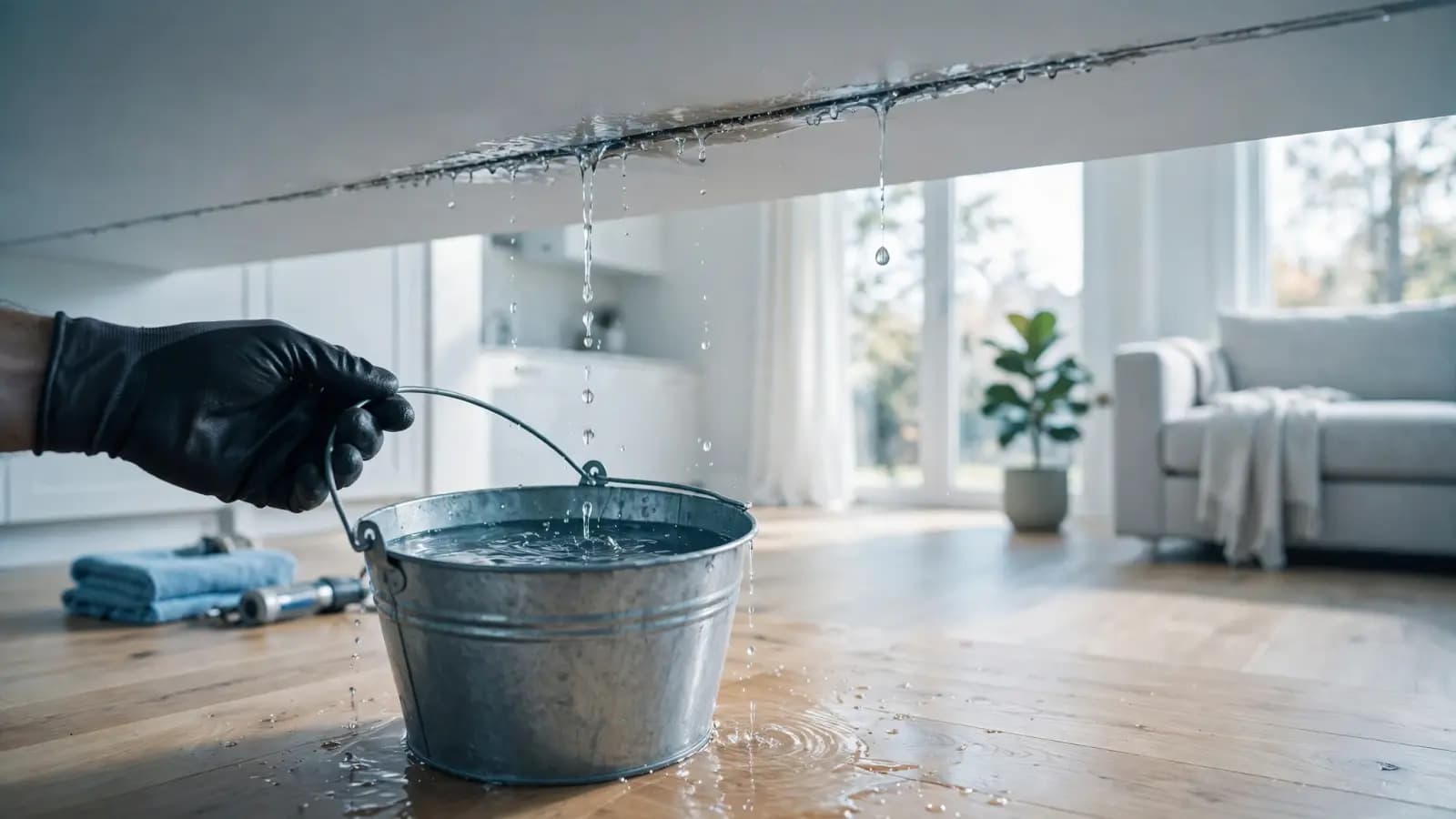 Basement ceilingsLeaks from the floor above, sweating pipes and ducts, and finish choices for easier access.
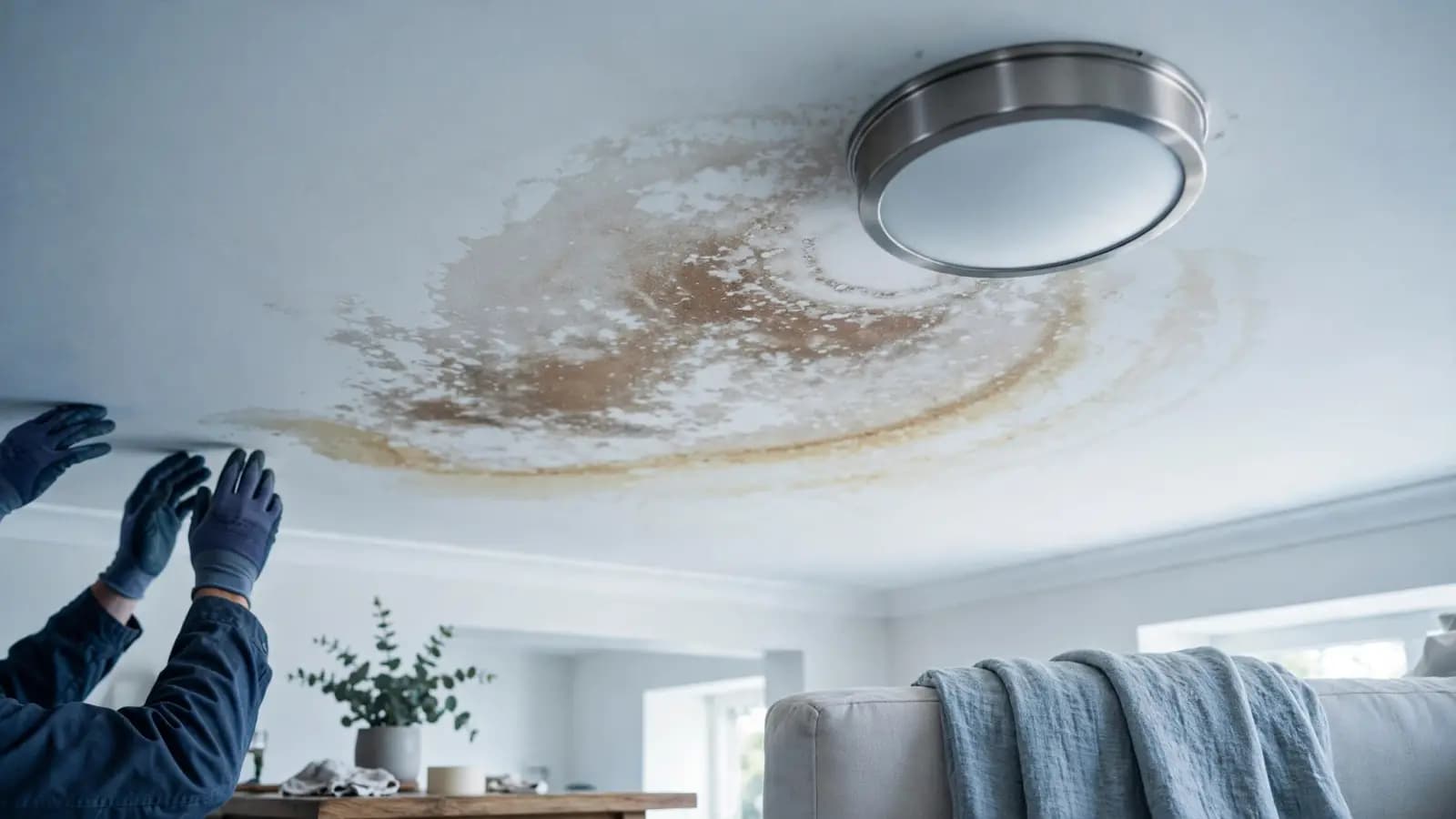 Bathroom ceilingsWater from above and steam from below: ventilation, mold and repair materials.
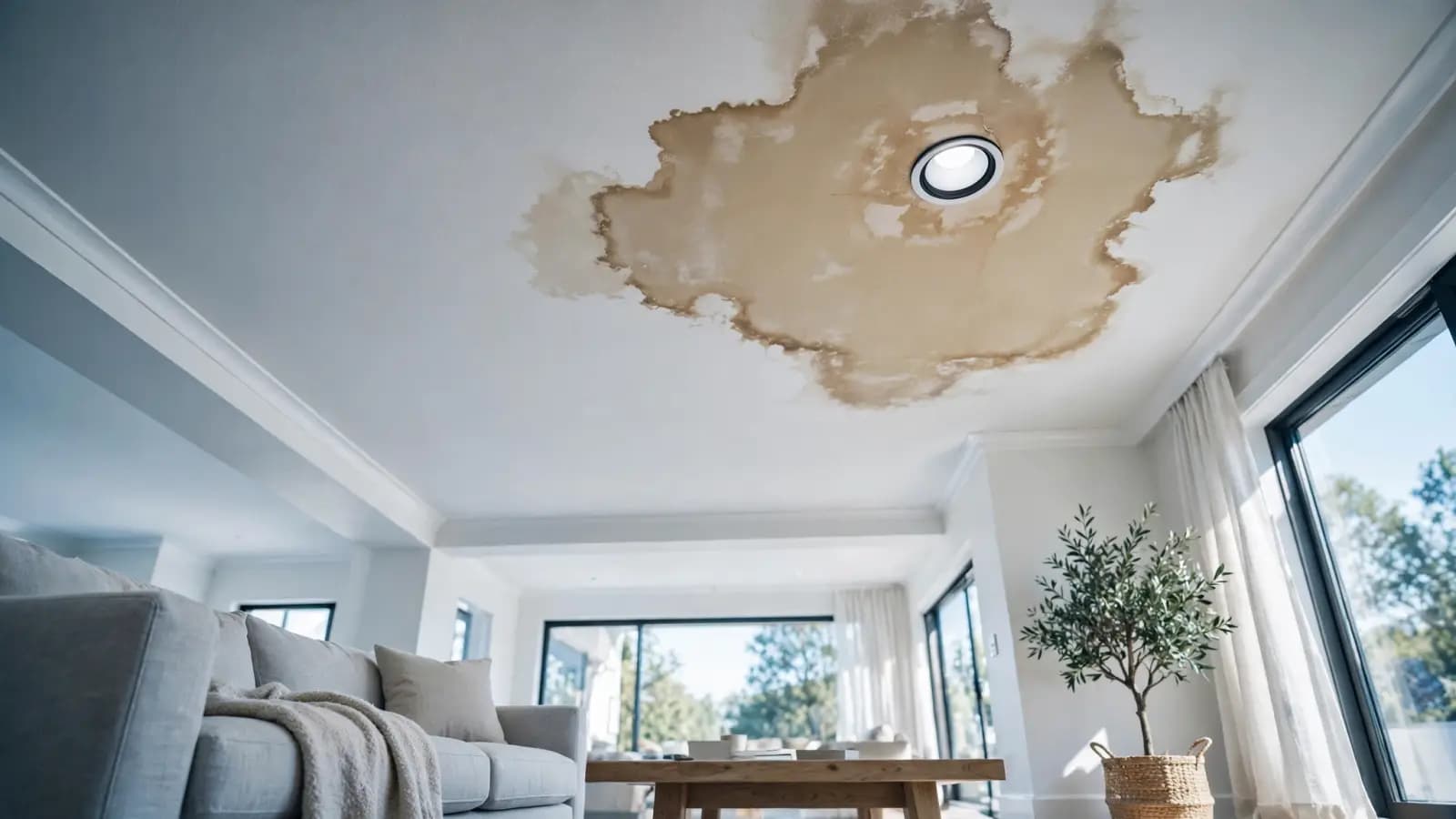 Kitchen ceilingsStains above kitchens: bathrooms and laundry overhead, recessed lights, and cooking moisture.
How each ceiling material responds to a leak
Start with the material: drywall, plaster, drop ceilings or textured ceilings. Then check the room guide, because the room usually points to the source: bathroom ceilings tend to suffer from shower and toilet leaks above, kitchen ceilings from appliance lines and dishwashers, and basement ceilings from supply pipes, drains and condensation.
| Ceiling | First sign of water | Main risk | Usual outcome |
|---|---|---|---|
| Drywall | Stain, then soft or bulging board | Sagging and collapse of saturated panels | Dry and patch if firm; replace if soft or sagging |
| Plaster and lath | Cracks, bubbling, loose keys | Heavy pieces detaching without warning | Re-secure and patch, or overlay; needs plaster experience |
| Drop ceiling tiles | Stained or warped tiles | Hidden wet insulation and framing above | Replace tiles after drying the cavity |
| Textured or popcorn | Brown spots, texture loosening | Possible asbestos in pre-1980s texture | Test before scraping or sanding |
Free referral call · All 50 states
Not sure what you are looking at?
Describe the damage and we will point you to the right next step.
By calling, you agree to be connected with an independent local contractor and that your call may be recorded for quality. Calling is free and there is no obligation to hire anyone.