
Ceiling Problems
Water Dripping From the Ceiling
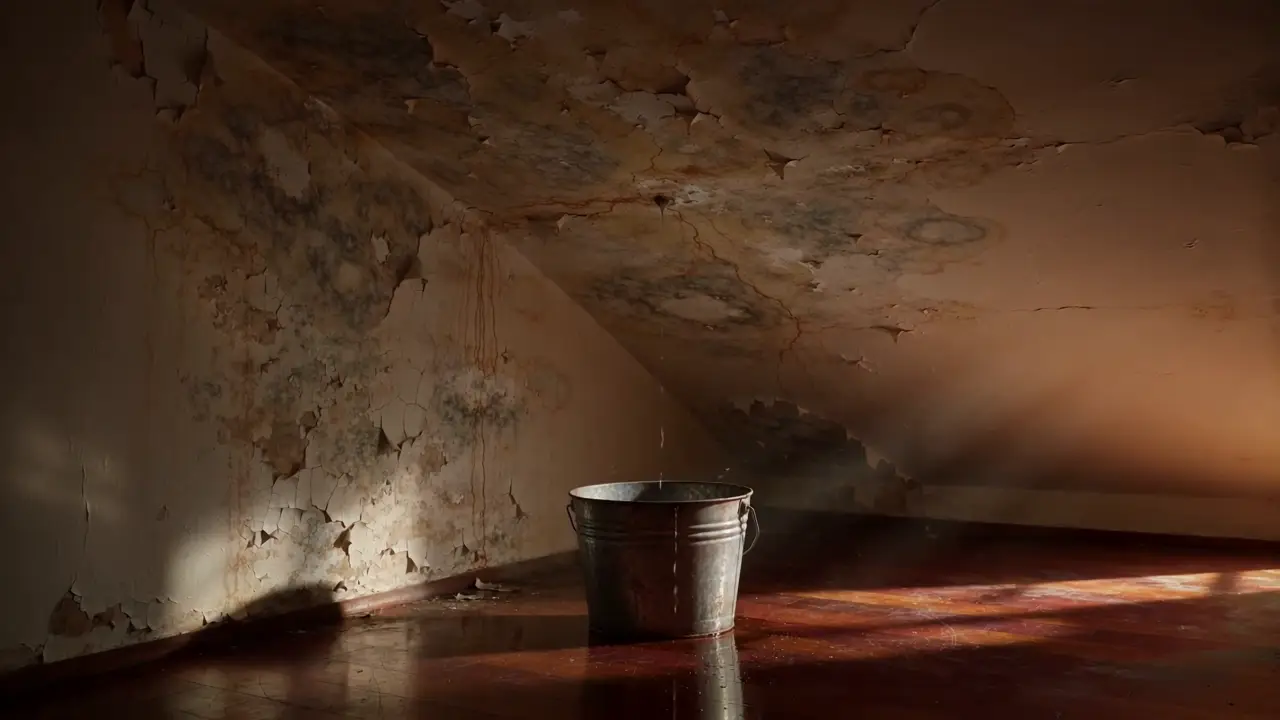
Short answer
Water dripping from a ceiling means a leak is active and water has already passed through the ceiling material. Put a container under the drip, stop the source if you can, and stay away from any light fixture or outlet the water is near. If it is dripping from a light fixture, switch that circuit off at the breaker only if you can reach the panel from a dry spot.
At a glance
- Condition
- Water passing through ceiling seams, fasteners, fixtures or the drywall itself.
- Common causes
- Supply or drain leaks above, overflowing fixtures, roof leaks during rain, and condensate overflow.
- Evidence
- Drips, wet spots on the floor, a growing stain or bubble overhead.
- Risk if ignored
- Electrical shock near fixtures, ceiling saturation and collapse, and spreading damage to floors and walls.
- What to do now
- Contain the water, stop the source, avoid fixtures, and check for sagging.
- Solution
- Repair the source, dry the ceiling cavity, and repair or replace damaged drywall.
First steps, in order
- Keep people away from the drip if it is near a light, fan or smoke detector, or if the ceiling is sagging.
- Turn off the source: the fixture above, the toilet's supply valve, or the main water shutoff if you cannot tell which line is leaking.
- Put a bucket under the drip with a towel inside to stop splashing. Lay plastic down.
- If the water is near an electrical fixture, switch that circuit off at the breaker panel, but only if the panel area is dry and you are not standing in water.
- Move furniture, rugs and electronics out of the way.
- Take photos and video of the drip, the ceiling and the source.
Where is the water coming from?
If shutting off the main water valve stops the drip within minutes, the source is pressurized plumbing. If it continues after the main is off, think drain lines (water you already used), the roof, condensate, or water that has pooled above the ceiling and is still draining out.
| Drip behavior | Likely source |
|---|---|
| Stops when the main water is shut off | Supply line: plumbing leak |
| Only after a shower, bath or flush | Drain, seal or pan: upstairs bathroom leak |
| Only during or after rain | Roof leak or storm damage |
| When the AC has been running | HVAC condensation |
| Constant, slowing over hours | Water pooled above the ceiling still draining |
Water dripping from a ceiling light
Light fixtures are a low point and an opening in the drywall, so water often finds its way out there. It also means water is in contact with wiring and the electrical box. Cut power to that circuit at the panel, leave the fixture alone, and have an electrician inspect the fixture and box before the circuit is turned back on.
After the dripping stops
A ceiling that dripped is saturated at the drip point, and the water usually spread across the top of the drywall and into the insulation before it came through. Plan for drying the cavity, not just the visible spot. See drying a water-damaged ceiling, or bring in professional drying if the area is large.
Frequently asked questions
Who fixes the ceiling after the dripping stops?
Once the source is repaired, a water damage restoration company dries the cavity and removes damaged material, and a drywall contractor or the restoration company rebuilds the ceiling. See the who-to-call guide for the full order.
Should I poke a hole in my ceiling to let the water out?
Only if the drywall is not sagging, no wiring or fixtures are nearby, and the water is collecting in one contained spot. Otherwise keep clear and let a professional decide. A hole in sagging drywall can release a lot of water and debris at once.
Why is water dripping from my ceiling when no one is using water upstairs?
A pressurized supply line can leak at any time, a roof can leak during or after rain, AC condensate can overflow while the system runs, and water pooled above the ceiling can keep dripping for hours after the original leak stopped.
Is water dripping from a ceiling light dangerous?
Yes. Water and energized wiring is a shock and fire hazard. Switch off that circuit at the breaker from a dry location, do not touch the fixture, and have an electrician inspect it before restoring power.
How do I shut off the water to my house?
The main shutoff is usually where the water line enters the house, often in a basement, crawl space, utility room or garage, or near the water heater. Homes with a water meter in the yard can also be shut off at the meter, which may need a meter key.
Related guides
- EmergencyEmergencyActive leaks, bulging ceilings and water near lights: the safe sequence of steps.
- Ceiling ProblemsWet ceilingDamp or dark patches without dripping: where the moisture comes from and whether it will dry on its own.
- Guides & ToolsLeak source finderA step-by-step decision tree for narrowing down where the water comes from.
- Guides & ToolsWho to callWhich professional handles each part of the problem, and the order to call them in.
Also referenced in
This guide is general educational information, not a site-specific inspection. Read our editorial policy for how content is researched and reviewed.
Water still coming through the ceiling?
Stop the source, then get the ceiling dried before mold and saturation set in.