
Causes
Toilet Overflow Leaking Through the Ceiling
Short answer
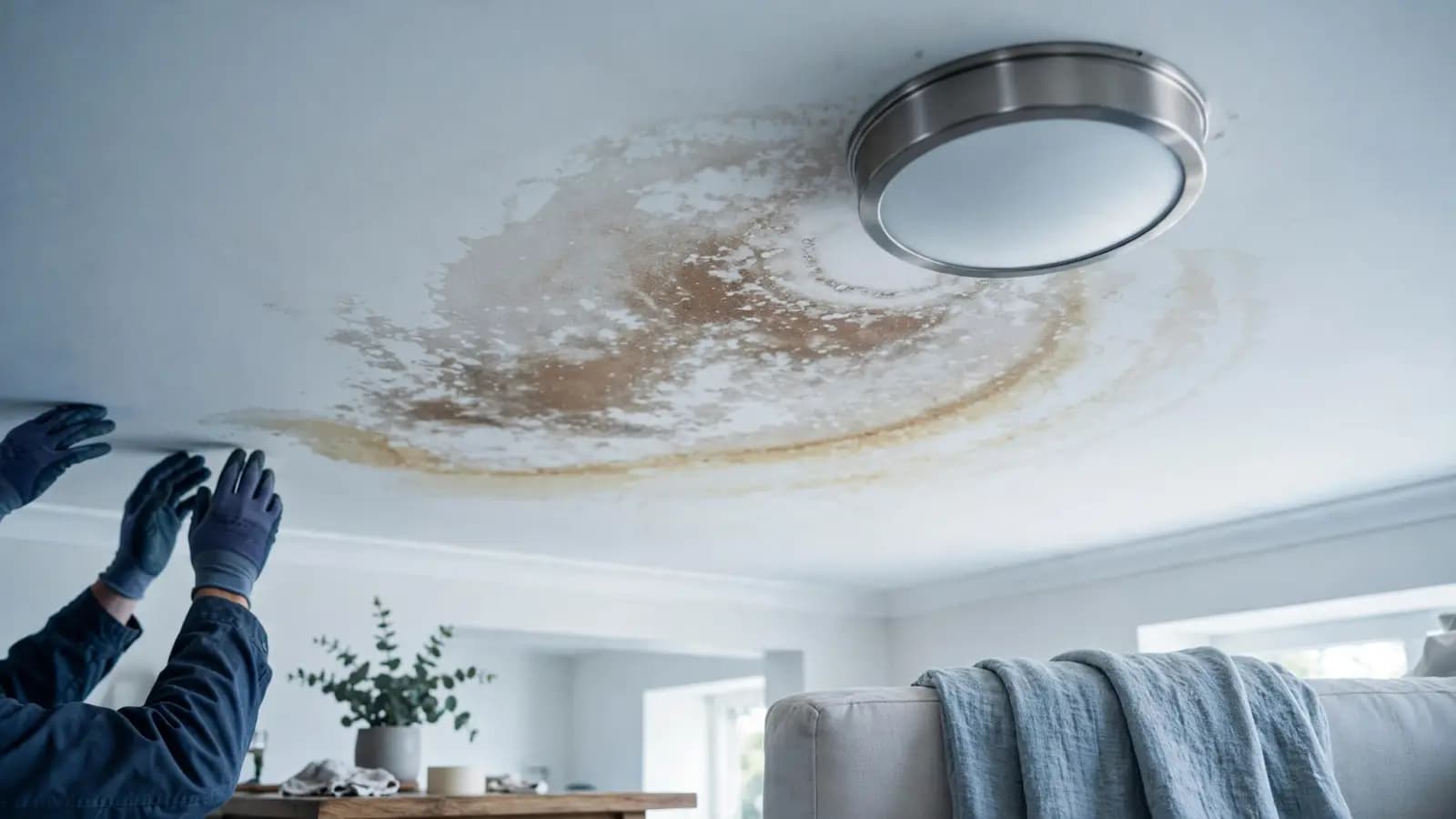
When toilet water reaches the ceiling below, the ceiling is contaminated, not just wet. Water that has been in a toilet bowl, especially with waste, carries bacteria, so porous materials it soaks, such as drywall and insulation, are normally removed rather than dried. Stop the overflow at the toilet's supply valve, keep people away from the dripping water, and use a professional for cleanup.
At a glance
- Condition
- Toilet water entering the floor and ceiling below through overflow or a failed seal.
- Common causes
- Clogged toilets that overflow, failed wax rings or flanges, cracked tanks or bowls, failed supply lines and fill valves.
- Evidence
- Stain below the toilet location, water around the toilet base, odor, a toilet that rocks.
- Risk if ignored
- Bacterial contamination of drywall, insulation and subfloor; health risk from contact.
- What to do now
- Close the supply valve behind the toilet, avoid contact with the water, ventilate.
- Solution
- Removal of contaminated porous materials, cleaning and disinfection of framing, drying, rebuild.
Why toilet water changes everything
Restoration work commonly uses the IICRC S500 categories of water. Category 1 is clean water from a source such as a supply line. Category 2 is gray water with significant contamination, such as overflow from a toilet bowl containing urine but no feces, or washing machine discharge. Category 3 is grossly contaminated water, including sewage and toilet overflow containing feces. Clean water also degrades over time: water from a clean source that sits in a cavity for days is treated as more contaminated.
The practical consequence: clean-water damage can often be dried in place, while contaminated porous materials are removed.
Stopping a toilet overflow
- Close the supply valve on the wall or floor behind the toilet (turn clockwise).
- If it will not close, lift the tank lid and raise the float to stop the fill, then shut off the main water.
- Do not flush again until the clog is cleared.
- Keep people and pets away from water dripping below, and avoid touching it without gloves.
Slow wax-ring leaks
Not every toilet leak is a dramatic overflow. A failed wax ring or a cracked flange can leak a small amount at every flush for months. Signs include a toilet that rocks, a stain or soft floor at the base, a sewer smell, and a ceiling stain directly below the toilet. These leaks involve waste water and often rot the subfloor around the flange. The toilet is pulled, the flange and subfloor repaired, and the ceiling below opened.
What cleanup involves
See water damage cleanup for what to expect from a professional.
- Contaminated drywall and insulation in the affected ceiling area are removed and bagged.
- Framing and subfloor are cleaned, treated and dried; badly soaked or rotted subfloor is replaced.
- The room is protected so debris is not tracked through the house.
- Workers use gloves, eye protection and respiratory protection appropriate to the contamination.
Frequently asked questions
Is a toilet overflow through the ceiling dangerous?
It is a contamination hazard. Toilet water can carry bacteria and other pathogens, so avoid contact, keep people away, and have contaminated porous materials removed rather than dried.
Can drywall be saved after a toilet overflow?
Drywall soaked by toilet water containing waste is generally removed. Drywall that was only briefly splashed by clean tank water may be assessed differently, but contaminated porous materials are not normally kept.
How do I know if my toilet wax ring is leaking?
Signs include a toilet that rocks, water or staining at the base, a sewer odor, a soft floor around the toilet, and a stain directly below on the ceiling.
Who cleans up after a toilet overflow into the ceiling?
A water damage restoration company that handles contaminated water. A plumber fixes the toilet or drain first.
Related guides
- CausesUpstairs bathroom leakStains under a bathroom: testing each fixture to find which one is leaking.
- ServicesWater damage cleanupExtraction, debris removal and contaminated-water cleanup after a ceiling leak.
- EmergencyEmergencyActive leaks, bulging ceilings and water near lights: the safe sequence of steps.
- Ceiling ProblemsSoft drywallDrywall that gives or crumbles when pressed: what has failed inside the board and the repair path.
This guide is general educational information, not a site-specific inspection. Read our editorial policy for how content is researched and reviewed.