
Ceiling Problems
Bubbling Ceiling Paint From Water
Short answer
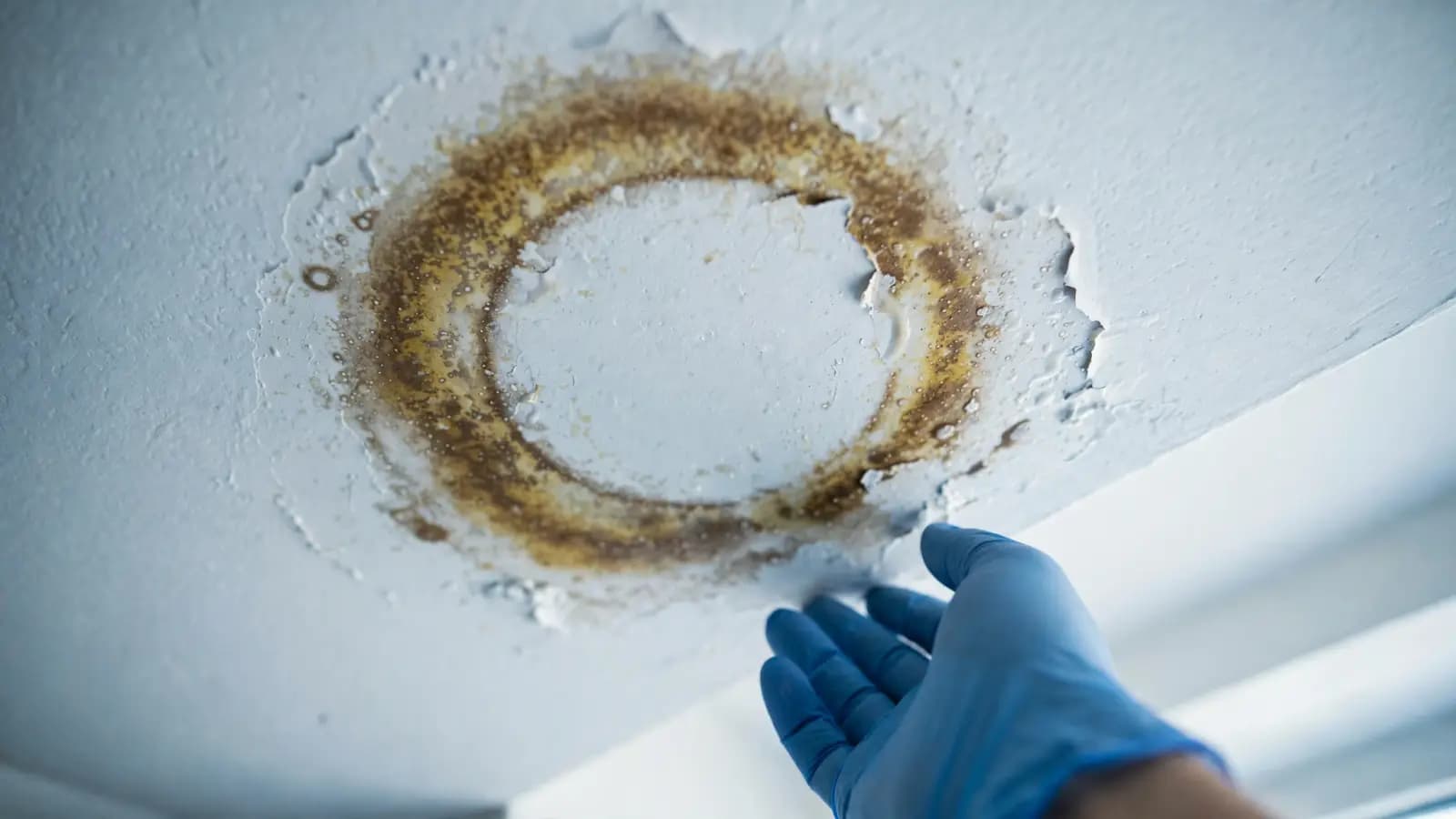
Ceiling paint bubbles when water gets behind the paint film and breaks its bond with the drywall. Small dry blisters can come from humidity or poor surface preparation, but a soft, swollen or water-filled bubble means a leak above is active now. Stop the source first; the bubble is a symptom, not the problem.
At a glance
- Condition
- Paint film lifting away from the ceiling surface in blisters or a single larger pocket.
- Common causes
- Leaks from above, overflows, roof leaks, condensation in bathrooms, and painting over a damp or dirty surface.
- Evidence
- Raised blisters, a soft dome that may hold water, cracking paint at the bubble edge, staining around it.
- Risk if ignored
- A water-filled bubble can burst; the drywall behind it may be soft. Large bubbles near fixtures are an electrical concern.
- What to do now
- Stop the water, protect the floor, keep away from fixtures, and assess whether the drywall behind is sagging.
- Solution
- Fix the source, dry, scrape loose paint, repair the drywall surface, prime and repaint.
What a bubble tells you
| What you see | What it usually means |
|---|---|
| Many small, dry, hard blisters | Moisture or heat during painting, or paint applied over a dusty or glossy surface |
| Blisters only in a bathroom, worse in winter | Condensation from showers and poor exhaust |
| One soft bubble with a stain around it | Leak from above; water is between paint and drywall |
| A dome that sways or sloshes | A water pocket holding significant weight |
| Bubble plus a droop in the surrounding ceiling | Saturated drywall: treat as a sagging ceiling |
Why water makes paint bubble
Latex ceiling paint forms a flexible film that is relatively water-resistant on its face. When water arrives from above and soaks through the drywall, it reaches the back of that film and cannot escape quickly. Pressure builds, the bond to the drywall paper fails, and the film stretches into a bubble. Because the film holds water in, the drywall behind it stays wet longer than the surrounding ceiling.
What to do now
- Find and stop the source above, whether a fixture, a pipe or the roof.
- Put a bucket and plastic under the bubble.
- Check the area around the bubble for sag. If the surrounding drywall is bending, follow the emergency steps.
- Keep away from light fixtures and switch that circuit off at the panel if water is near one and you can do so safely.
- Leave a small water bubble in place unless a professional advises draining it.
How the repair works
Once the source is fixed, the area has to dry completely, which often means removing the loose paint so the drywall can breathe. After drying, loose paint is scraped back to a firm edge, any torn paper is sealed with a primer made for damaged drywall paper, the area is skim-coated smooth, and the ceiling is primed with a stain blocker and repainted. If the board is soft, it is replaced. See how to repair a water-damaged ceiling.
Bubbles in bathrooms
Bathroom ceilings bubble from two directions: leaks from the bathroom above and condensation from showers below. If the bubbling covers a wide area and returns after repainting, ventilation is the likely issue. An exhaust fan that vents to the outside (not into the attic) and runs during and after showers usually solves it. More in bathroom ceilings.
Frequently asked questions
Why is my ceiling bubbling?
Most ceiling bubbles form because water has reached the back of the paint film and broken its bond with the drywall. The water usually comes from a leak above. In bathrooms, repeated condensation can do the same thing without a leak.
Should I pop a water bubble in my ceiling?
Not as a first step. Stop the source, protect the area and check for sagging. A professional may drain a contained bubble through a small hole, but if the drywall is sagging or wiring is nearby, draining it can release water suddenly. Keep people clear and let a professional decide.
Can I just paint over a ceiling bubble?
No. New paint over a bubble will fail the same way. The loose paint has to be removed, the drywall dried and repaired, and the surface primed with a stain-blocking primer before repainting.
Is a ceiling bubble a sign of mold?
Not directly, but the water trapped behind the bubble keeps the drywall wet, which creates conditions for mold if it lasts more than a day or two. Look for spotting or a musty smell.
Why did my ceiling paint bubble with no leak?
Dry blisters without staining usually come from painting in humid conditions, painting over a dirty or glossy surface, or condensation in bathrooms. They are a painting or ventilation problem rather than water damage.
Related guides
- Ceiling ProblemsPeeling paintFlaking and peeling paint after a leak or from humidity: diagnosis and a repair that holds.
- Ceiling ProblemsSagging ceilingDrooping or bulging drywall after a leak: why it happens, collapse risk, and safe next steps.
- Ceiling TypesBathroom ceilingsWater from above and steam from below: ventilation, mold and repair materials.
- CausesUpstairs bathroom leakStains under a bathroom: testing each fixture to find which one is leaking.
This guide is general educational information, not a site-specific inspection. Read our editorial policy for how content is researched and reviewed.