
Ceiling Problems
Peeling Ceiling Paint After Water Damage
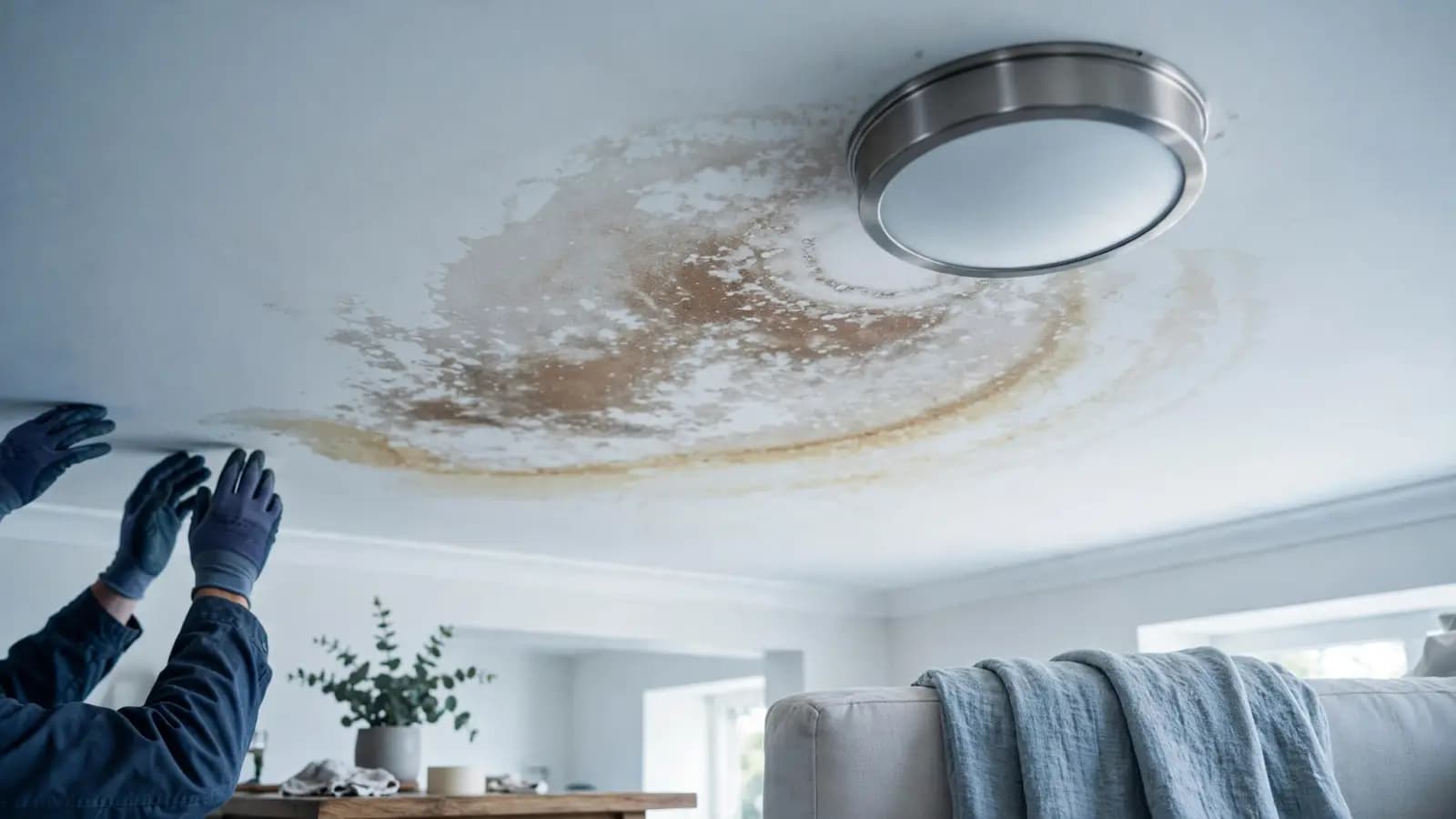
Short answer
Ceiling paint peels after water damage because moisture breaks the bond between the paint and the surface beneath it. Peeling in one patch with staining points to a leak above; peeling spread across a bathroom ceiling usually points to condensation. Repainting will fail again unless the moisture source is fixed and the surface is properly prepared and primed.
At a glance
- Condition
- Paint losing adhesion and lifting or flaking from drywall or plaster.
- Common causes
- Past or active leaks, chronic bathroom humidity, painting over dampness, and older layers of incompatible paint.
- Evidence
- Curling flakes, exposed primer or paper, staining nearby, and peeling that returns after repainting.
- Risk if ignored
- Mostly cosmetic once dry; in homes built before 1978 the old paint layers may contain lead.
- What to do now
- Confirm the area is dry and the source is fixed; test older paint for lead before scraping.
- Solution
- Scrape to a firm edge, seal exposed paper, skim, prime with a bonding or stain-blocking primer and repaint.
Leak or humidity?
| Clue | Leak above | Humidity / condensation |
|---|---|---|
| Location | One patch, often with a stain | Spread across the ceiling, often worst over the shower |
| Timing | After rain or use of a fixture above | Gradual, worse in cold months |
| Surface feel | May be soft or damp | Firm board, damp only after showers |
| Other signs | Rings, bubbling, drip marks | Mildew spots, fogged mirrors that stay fogged |
Why repainting alone fails
New paint can only stick as well as the layer underneath it. If the old paint is loose, the new coat adds weight and tension and pulls it off further. If the drywall paper was wetted and its surface fibers are loose, paint peels with a skin of paper attached. And if moisture is still arriving, any new film will lift again.
Repair sequence
- Fix the moisture source, whether a leak repair or a bathroom exhaust fan vented outdoors.
- Confirm the area is dry with a moisture meter compared against a dry area.
- If the home was built before 1978, test the paint for lead before scraping or sanding.
- Scrape loose paint back to a firmly bonded edge.
- Seal any exposed or fuzzy drywall paper with a primer designed for damaged paper; otherwise joint compound will bubble.
- Skim-coat and sand to blend the edge, then prime with a stain-blocking primer and paint with a ceiling paint suited to the room.
When peeling is part of something bigger
Peeling with soft drywall, sagging or mold means the board needs more than paint. See soft drywall ceiling and mold on a water-damaged ceiling. For plaster ceilings, peeling can accompany plaster losing its grip on the lath, which is covered under plaster ceilings.
Frequently asked questions
Why is my ceiling paint peeling after a leak?
Water soaked through to the back of the paint and broke its bond with the drywall or plaster. When it dried, the paint stayed detached and began to lift and flake.
Why does my bathroom ceiling paint keep peeling?
Repeated condensation from showers is the usual cause, especially without an exhaust fan that vents outside or when the fan is not run long enough. Fix ventilation first, then repair with a primer and a paint rated for bathrooms.
Is peeling ceiling paint dangerous?
Usually not, apart from the leak that caused it. In homes built before 1978, flaking paint may contain lead and should not be dry-scraped or sanded without lead-safe precautions.
What primer should I use after water damage?
Use a stain-blocking primer over water stains, typically shellac- or oil-based for the best blocking, and a primer designed to seal damaged drywall paper where the paper face is exposed.
Related guides
- Ceiling ProblemsBubbling paintBlisters and water-filled bubbles in ceiling paint: causes, what is safe, and how the repair works.
- Repair & DryingFixing water stainsStain-blocking primers, painting technique, and covering stains on textured ceilings.
- Ceiling TypesBathroom ceilingsWater from above and steam from below: ventilation, mold and repair materials.
- Ceiling TypesPlaster ceilingsLath and plaster in older homes: key failure, delamination, and how plaster is repaired.
This guide is general educational information, not a site-specific inspection. Read our editorial policy for how content is researched and reviewed.