
Ceiling Problems
Cracked Ceiling After Water Damage
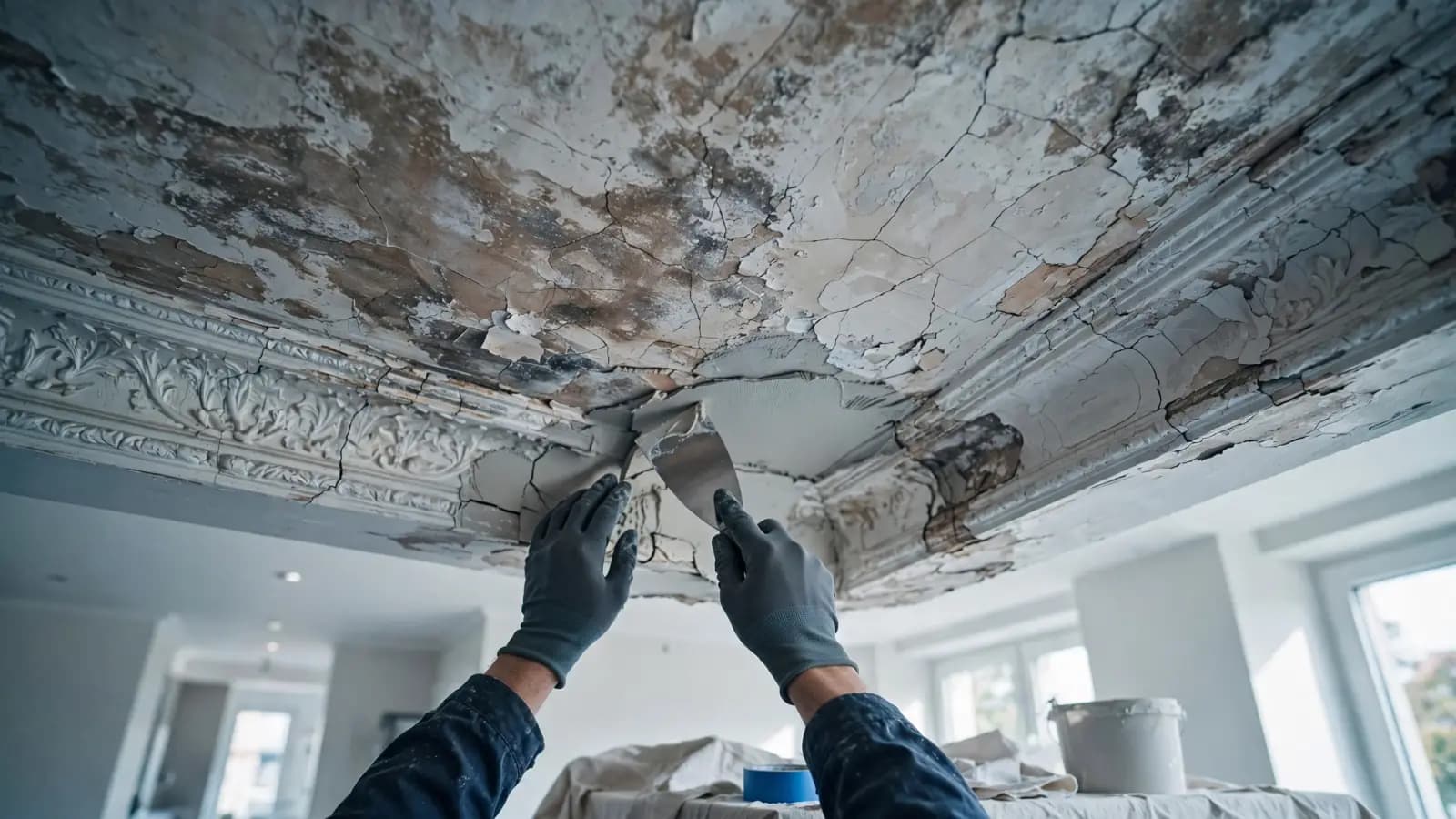
Short answer
Ceiling cracks after water damage usually follow drywall tape seams or the edge of a stained area, because water softens joint compound and makes the board swell and then shrink as it dries. A crack combined with sagging, or one that keeps lengthening, is a sign the ceiling is losing support and needs attention quickly.
At a glance
- Condition
- Cracks in tape joints, finishes or plaster after the ceiling was wetted.
- Common causes
- Swelling and shrinkage of wet drywall and compound, tape losing adhesion, plaster detaching from lath.
- Evidence
- Straight cracks along seams, cracks at the edge of stains, lifted tape, crumbling compound.
- Risk if ignored
- Usually cosmetic once dry, but cracking plus sagging, or widening cracks, can precede failure.
- What to do now
- Confirm dryness, check for sag and fastener pops, monitor crack length.
- Solution
- Fix the source, dry, then re-tape or replace damaged sections; investigate any structural cracks.
Water cracks versus other cracks
| Crack type | Typical look | Usual cause |
|---|---|---|
| Along a tape seam near a stain | Straight, follows a joint | Wet joint compound and tape losing bond |
| Around the edge of a stain | Irregular, matches the stain outline | Swelling and shrinkage of wetted drywall |
| Short cracks or bumps in a line | Dimples over fastener positions | Fasteners popping as wet board pulls away |
| Long cracks with sagging or level change | Widening, uneven surface | Loss of support: urgent |
| Hairline cracks across the room, no stain | Fine, often at corners | Normal settling, seasonal movement |
Plaster ceilings crack differently
Older homes with plaster over wood lath can crack in a web pattern when water weakens the plaster and the keys that lock it onto the lath. Plaster is heavy, and when the keys break, sections can sag or detach. Cracking with a hollow sound when tapped lightly is a warning sign. See plaster ceilings.
When a crack is urgent
- The crack is getting longer or wider over hours or days.
- The ceiling on either side of the crack is at a different height.
- The crack accompanies sagging or bulging: see sagging ceiling.
- Water is coming through the crack.
Repair
Once dry, a crack in a seam is repaired by removing loose tape and compound, re-taping, and finishing. Cracks around stained areas usually come with damaged paper, so the area is sealed with primer before finishing. If the board is soft or fasteners have pulled through, the section is refastened or replaced. The full sequence is in how to repair a water-damaged ceiling, and textured ceilings need texture matching.
Frequently asked questions
Can a water leak cause ceiling cracks?
Yes. Water softens joint compound, weakens tape adhesion, and makes drywall swell and shrink, which opens cracks along seams and stain edges.
Is a cracked ceiling after a leak a structural problem?
Usually not. Most cracks after a leak are in the drywall finish. Cracks with sagging, level changes or cracks that keep growing may indicate loss of support and should be checked promptly.
Should I fix the crack right away?
Wait until the source is repaired and the ceiling is confirmed dry. Repairs made over damp drywall crack again.
Why did screws pop out of my ceiling after a leak?
Wet drywall swells and softens around the screws, and the board's weight pulls it away from the framing, pushing the screw heads into view or tearing the paper. Popped fasteners in a wet area are a sign the board is losing its hold.
Related guides
- Ceiling TypesPlaster ceilingsLath and plaster in older homes: key failure, delamination, and how plaster is repaired.
- Ceiling ProblemsSagging ceilingDrooping or bulging drywall after a leak: why it happens, collapse risk, and safe next steps.
- Repair & DryingHow to repairThe full sequence from stopping the leak to the final coat of paint, with DIY limits marked.
- Repair & DryingTexture repairMatching knockdown, orange peel and popcorn textures over a patch.
This guide is general educational information, not a site-specific inspection. Read our editorial policy for how content is researched and reviewed.