
Service guide
Ceiling Water Damage Repair & Restoration
Short answer
Professional ceiling water damage repair covers the full job: finding and documenting the wet area, drying the ceiling cavity, removing drywall and insulation that cannot be saved, then installing, finishing and painting new drywall to match. Restoration contractors handle the drying and removal; the leak itself is fixed by the matching trade, such as a plumber or roofer.
At a glance
- Condition
- Ceiling damaged by water beyond a simple stain.
- Common causes
- Roof leaks, plumbing and fixture leaks, overflows, HVAC condensate, storms.
- Evidence
- Staining over a large area, wet insulation, soft or sagging drywall, mold, contaminated water.
- Risk if ignored
- Mold, collapse of saturated sections, and repeat damage if drying is incomplete.
- What to do now
- Stop the source, document the damage, and call for an assessment.
- Solution
- Inspection, moisture mapping, drying, controlled removal, rebuild and finish.
What the service includes
Some companies do all of these; others do mitigation (drying and removal) and refer rebuild to a drywall contractor. Ask which steps a quote covers. The homeowner version of this sequence is how to repair a water-damaged ceiling.
- Inspection: identifying the affected area with moisture meters and often thermal imaging, and checking for safety issues such as sagging and wet fixtures.
- Documentation: photos, moisture readings and a scope of work, which are useful for insurance claims.
- Water removal and protection: extracting standing water and protecting floors and contents.
- Controlled demolition: removing saturated, sagging, moldy or contaminated drywall and insulation.
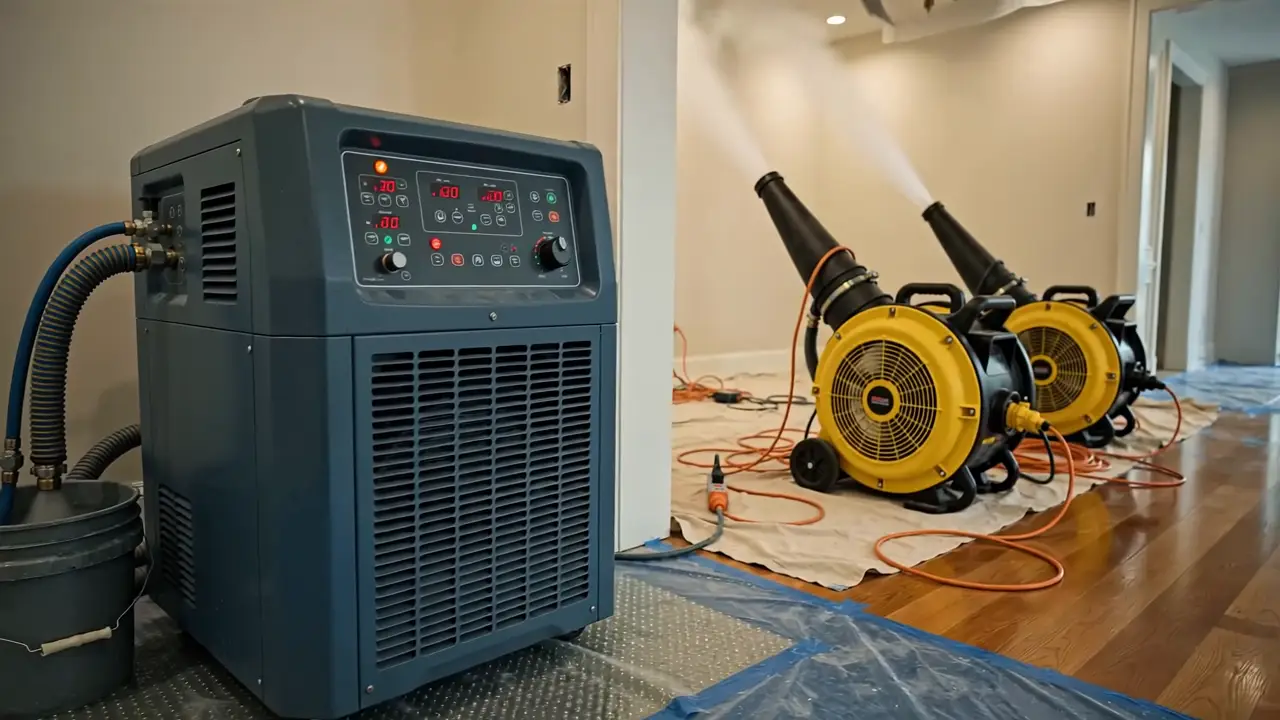
- Drying: dehumidifiers and air movers, with daily readings until materials reach dry reference levels.
- Rebuild: new insulation, drywall, tape and finish, texture matching, primer and paint.
When to call for professional repair
If water is still coming through, start with the emergency steps.
- The ceiling is sagging, bulging or soft.
- Water spread across a large area or more than one room.
- Insulation above is soaked.
- Contaminated water was involved.
- There is mold, or a musty smell with no visible source.
- You need documentation for an insurance claim.
What affects the cost
Ceiling repair costs vary widely by region and situation, so this page does not list prices. These factors drive the quote:
- Size of the affected area and number of rooms.
- Whether the ceiling can be dried in place or must be removed.
- Water category: contaminated water requires more removal and protective work.
- Insulation type and amount to replace.
- Ceiling height, access, and whether there is a finished floor above.
- Texture matching or whole-ceiling refinishing.
- Testing for asbestos or lead in older homes.
- Days of drying equipment on site.
How to choose a contractor
- Ask whether technicians are trained in water damage restoration, for example through IICRC certification, and verify any license your state requires.
- Ask how they will measure dryness and whether they will share daily moisture readings.
- Get the scope in writing, including what will be removed and what will be rebuilt.
- Ask whether they work directly with insurance companies, and keep your own copies of all documentation.
- Be cautious of anyone who wants to close the ceiling before moisture readings confirm it is dry.
Frequently asked questions
Who repairs water-damaged ceilings?
Water damage restoration companies handle drying and removal; drywall contractors and painters handle the rebuild and finish. Some restoration companies do both. The leak itself is repaired by a plumber, roofer or HVAC technician.
Should I hire a restoration company or a general contractor?
For wet materials, a restoration company: they measure moisture and dry the structure before anything is closed up. A general contractor or drywall contractor is a good fit for the rebuild once drying is documented.
Does homeowners insurance cover ceiling water damage repair?
It depends on the policy and the cause. Sudden and accidental leaks are often treated differently from long-term leaks, wear and tear, or flooding. Document everything and ask your insurer.
How long does ceiling water damage repair take?
Drying often takes several days. Rebuild and finishing, including drying time for joint compound and texture, commonly adds several more days. Larger or contaminated jobs take longer.
Can the ceiling be repaired without replacing it?
Yes, when the drywall stayed firm and the water was clean. Drying in place followed by stain-blocking primer and paint is a common outcome for smaller leaks.
Is ceiling restoration different from ceiling repair?
In practice the terms overlap. Restoration usually describes the full process including drying and removal; repair often refers to the rebuild. This page covers both.
Related guides
- ServicesWater damage dryingDehumidifiers, air movers, cavity drying and documented moisture readings.
- ServicesDrywall ceiling repairPatching or replacing ceiling drywall after drying, and matching finish and texture.
- EmergencyEmergencyActive leaks, bulging ceilings and water near lights: the safe sequence of steps.
- LocationCharlotte repairHiring for ceiling repair in Charlotte: timing, drying, permits and vetting.
Also referenced in
This guide is general educational information, not a site-specific inspection. Read our editorial policy for how content is researched and reviewed.
Need ceiling damage assessed?
Call and describe what you see. You will get plain answers and help from a ceiling water damage specialist.