
Emergency guide
Emergency Ceiling Water Damage: What to Do Now
Short answer
If water is coming through your ceiling right now: move people away from the area, avoid anything electrical that is wet, stop the water source if you can do it safely, contain the water, and then call the right professional. Never stand under a bulging or sagging ceiling, and never touch a wet light fixture or switch.
The five steps, in order
- Move people and pets away from the affected area. Close the door to the room if the ceiling is sagging or bulging.
- Avoid electrical hazards. Do not touch wet fixtures, switches or outlets. If you can reach the breaker panel from a dry spot without standing in water, switch off circuits for that room. If the panel is wet or you smell burning, leave and call the electric utility or 911.
- Stop the source if it can be done safely: the fixture's shutoff valve, the toilet supply valve, the main water shutoff, or turning off the air conditioner. Do not go on the roof.
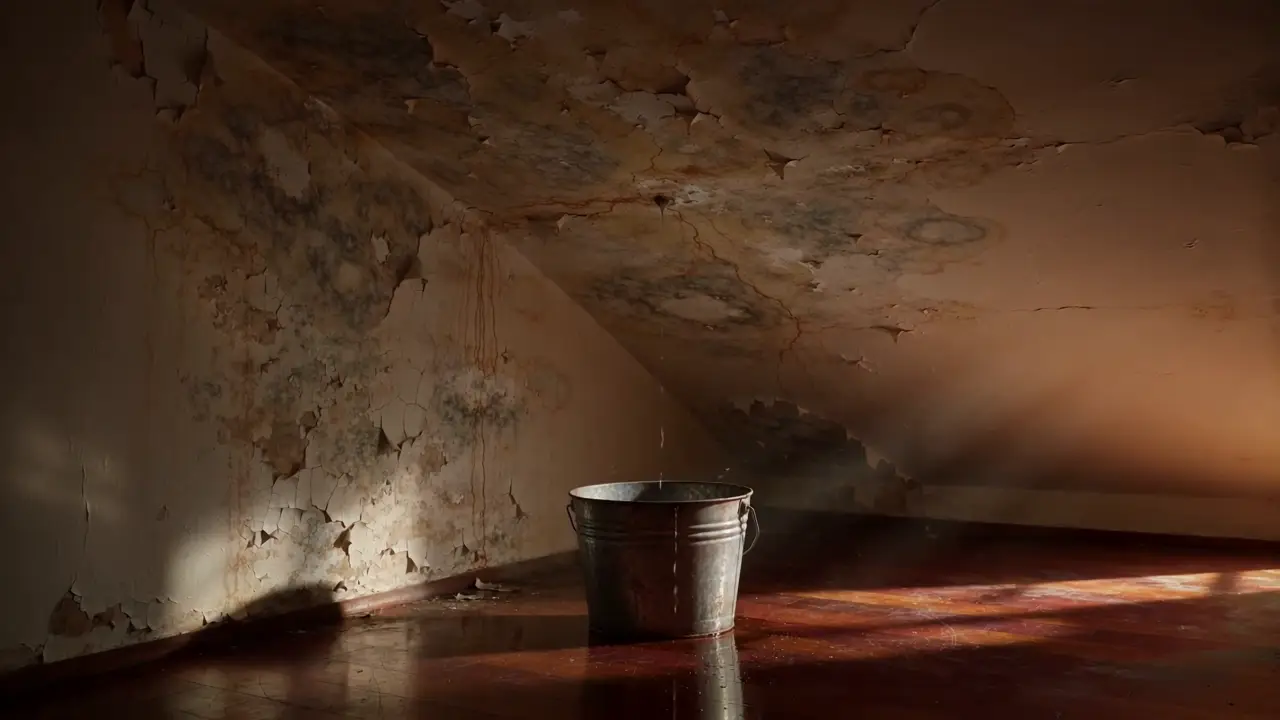
- Contain water where safe: buckets under drips, towels and plastic, furniture and electronics moved out, but only in areas that are not under a sagging ceiling.
- Contact appropriate professional help: the trade that stops the water (plumber, roofer, HVAC), a water damage restoration company, and an electrician if water reached wiring.
Emergency situations and what each needs
| Situation | Immediate priority | Read next |
|---|---|---|
| Water actively dripping or pouring | Stop the source; contain the water | Dripping ceiling |
| Ceiling bulging with water | Clear the room; do not puncture from below | Sagging ceiling |
| Ceiling sagging or cracking | Clear the room; stop the source | Can it collapse? |
| Water near or in a light fixture | Cut power at the panel from a dry location | Dripping ceiling |
| Ceiling has partly collapsed | Keep out; check remaining ceiling; cut power | Water damage cleanup |
| Toilet or sewage water coming through | Avoid contact; stop the toilet supply | Toilet overflow |
| Storm or fallen tree | Leave the damaged area; avoid downed lines | Storm damage |
What not to do
- Do not stand under, push up, or prop a sagging ceiling.
- Do not poke holes in a sagging or bulging ceiling from directly below.
- Do not touch wet electrical fixtures or use a ladder near them.
- Do not walk on attic drywall between joists.
- Do not climb onto a wet or storm-damaged roof.
- Do not use a household vacuum on water or wet debris.
- Do not handle toilet or sewage water without protection.
Finding your main water shutoff
The main shutoff is usually where the water line enters the home: in a basement, crawl space, utility room or garage, or near the water heater. Many homes also have a shutoff at the meter, often in a box near the street, which may need a meter key. Turning a gate valve clockwise or a lever-handle ball valve a quarter turn closes it. Find it before you need it.
After the emergency is under control
Once the water has stopped and the area is safe, the priority is drying within 24–48 hours to limit mold. Use the ceiling water damage checklist for the first week and who to call to line up the right professionals. For the full repair, see ceiling water damage repair.
Frequently asked questions
What should I do if water is pouring through my ceiling?
Get people away from the area, avoid wet electrical fixtures, shut off the water source or the main valve, contain what you can safely, and call a plumber or roofer plus a water damage restoration company.
Is a bulging ceiling an emergency?
Yes. A bulge means water is pooling on or in the ceiling. Keep everyone out from under it, stop the source, and call for professional help.
Should I turn off the electricity if water is coming through the ceiling?
Turn off the circuits for the affected area at the breaker panel if you can reach it from a dry location without standing in water. If the panel is wet, or you smell burning, leave and call the electric utility or 911.
Can I stay in my house with water coming through the ceiling?
Usually, if the problem is limited to one area, the water is stopped and the electrical risk is controlled. Leave if there is structural damage, a gas smell, an electrical hazard you cannot control, or sewage in living areas.
Who handles emergency ceiling water damage?
Water damage restoration companies handle emergency extraction, drying and controlled removal. The leak itself needs a plumber, roofer or HVAC technician, and wet wiring needs an electrician.
Related guides
- Ceiling ProblemsDripping ceilingActive drips through the ceiling or a light fixture: safe first steps and how to trace the source.
- Ceiling ProblemsSagging ceilingDrooping or bulging drywall after a leak: why it happens, collapse risk, and safe next steps.
- Guides & ToolsDamage checklistPrintable checklist from the first hour through the first week after a ceiling leak.
- Guides & ToolsWho to callWhich professional handles each part of the problem, and the order to call them in.
Also referenced in
This guide is general educational information, not a site-specific inspection. Read our editorial policy for how content is researched and reviewed.
Water still coming through the ceiling?
Once the source is stopped and the area is safe, call for help with drying and assessment.