
Ceiling Problems
Brown Water Stain on Ceiling
Short answer
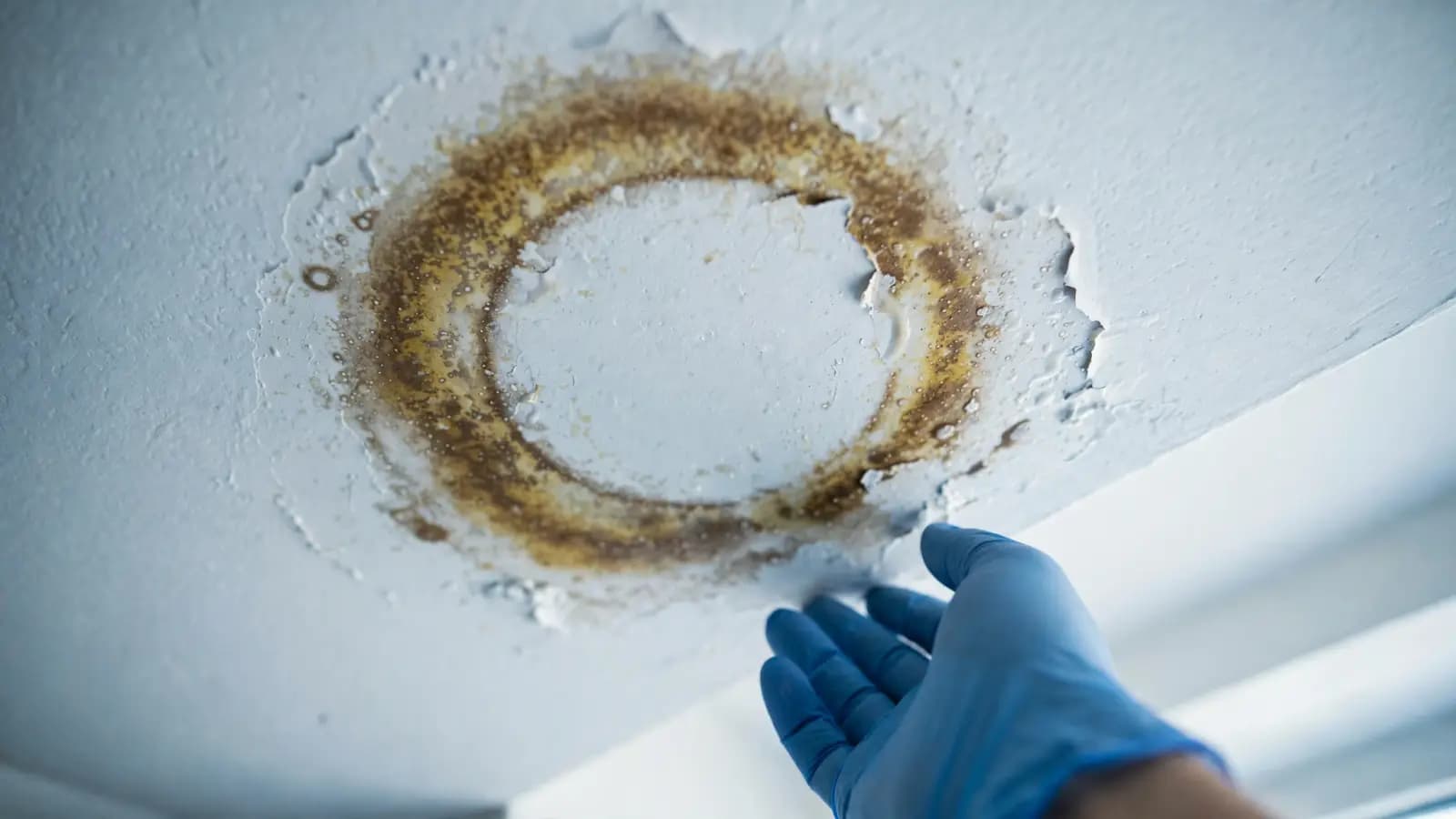
A brown stain on a ceiling is the mark water leaves after it soaks into drywall or plaster and then evaporates. As the water moves, it carries tannins from wood framing, dust and minerals to the edge of the wet area, which is why the stain usually has a darker ring. The stain itself is not dangerous, but it proves water reached the ceiling and the source may still be active.
At a glance
- Condition
- Discoloration of ceiling paint and drywall paper left by water that soaked in and dried.
- Common causes
- Roof leaks, plumbing leaks from the floor above, HVAC condensate overflow, attic condensation, and past leaks that were repaired.
- Evidence
- Brown or yellow blotch with a darker outer ring; sometimes several concentric rings from repeated wetting.
- Risk if ignored
- Low if the area is dry and firm. Higher if the stain grows, feels damp or soft, or appears after every rain or shower.
- What to do now
- Check whether it is wet, mark the edge with pencil, and watch whether it grows after rain or plumbing use.
- Solution
- Fix the source, confirm the drywall is dry, seal the stain with a stain-blocking primer and repaint.
What does a brown ceiling stain mean?
Ceiling drywall is a gypsum core covered in paper. When water reaches it from above, the paper and gypsum absorb it and the water spreads outward. As the edge of the wet area dries, dissolved material is left behind at the drying front. Water that has passed over wood framing picks up tannins, and water that passed through insulation or roofing picks up dust and grime. That deposited material is the brown color.
Concentric rings usually mean the area has been wet more than once. A single large ring with a sharp edge often points to one event, such as an overflowing tub. A stain that is darker in the middle and fuzzy at the edge can still be wet.
Common causes of brown ceiling stains
Each source has its own guide: roof leaks, plumbing leaks, leaks under an upstairs bathroom and HVAC condensation.
| Where the stain is | Most likely sources | What to check |
|---|---|---|
| Top-floor ceiling, appears after rain | Roof leak, flashing, vent boot, ice dam | Attic above the stain during or after rain |
| Below a bathroom | Shower pan, tub drain or overflow, toilet seal, supply lines | Whether the stain grows after the fixture is used |
| Near an attic air handler or vent | HVAC condensate overflow or sweating ducts | Drain pan, condensate line, duct insulation |
| Under a kitchen or laundry room | Dishwasher, ice-maker line, washer hoses | Supply connections and drain hoses |
| Near exterior walls in winter | Attic condensation, ice dams | Frost on roof sheathing, bathroom fans venting into the attic |
How water travels through a ceiling
Is the ceiling still wet?
A dry stain and a wet stain look similar. These checks separate them without opening the ceiling:
- Press gently near the stain with a flat palm. Wet drywall feels cool, soft or spongy. Stop if it gives noticeably.
- Trace the edge with a light pencil line and recheck it in 24–48 hours and again after rain or fixture use. Growth means an active source.
- A pin or pinless moisture meter compares the stained area with a dry area of the same ceiling. A higher reading at the stain means moisture is still present.
- Look for bubbling paint, sagging, or a drip forming at the low point, which are signs of an active leak.
How to find the source
Water rarely drips straight down. It runs along rafters, joists, pipes and the back of the drywall before it shows up, so the stain can be several feet from the actual leak. Start directly above the stain and work uphill and upstream.
The ceiling leak source finder walks through the questions in order: does it change with rain, with plumbing use, with the air conditioner running, or with the season?
Can you paint over a water stain?
Only after the source is fixed and the drywall is dry. Ordinary latex ceiling paint lets the stain bleed back through within days, because the deposited tannins are water-soluble. A stain-blocking primer (shellac-based or oil-based primers are the most reliable on water stains) seals them first. The full process is in fixing water stains on a ceiling.
When the drywall needs replacement instead
A stain alone does not mean the drywall must come out. Replacement is usually needed when the board is soft, crumbling, sagging, delaminating, moldy, or was soaked by contaminated water. The decision rules are in when to replace ceiling drywall.
When to get professional help
- The stain keeps growing and you cannot find the source: a leak detection specialist or the appropriate trade.
- The stain is from a roof leak: a roofer for the roof, then repair for the ceiling.
- The ceiling is wet over a large area or the insulation above is soaked: professional drying.
- There is visible mold or a musty smell: see mold on a water-damaged ceiling.
Frequently asked questions
Why is there a brown spot on my ceiling?
A brown spot is almost always the residue of water that soaked into the ceiling and dried. The color comes from tannins in wood framing and from dust or minerals the water carried. Roof leaks, plumbing leaks from above and HVAC condensate are the most common sources.
Is a brown water stain on the ceiling dangerous?
The stain itself is not dangerous. The risk depends on whether the area is still wet: an active leak can lead to soft drywall, sagging, mold growth and, in severe cases, collapse. A dry, firm stain from a fixed leak is a cosmetic problem.
Can an old water stain be from a leak that was already fixed?
Yes. Stains do not fade on their own, so many homes have stains from leaks repaired years ago. Mark the edge and watch it through a few rain events and normal plumbing use. If it never grows and moisture readings match the rest of the ceiling, it is likely historical.
Why does the water stain have a darker ring around the edge?
As a wet area dries from the outside in, water carries dissolved tannins and dirt to the drying edge and leaves them there. The outer ring therefore holds the most residue. Multiple rings mean the area was wet and dried several times.
Will bleach remove a water stain from a ceiling?
Diluted bleach can lighten some stains, but it adds moisture to drywall, can damage the paper face and does not stop the stain from bleeding back. Sealing with a stain-blocking primer and repainting is the reliable fix once the area is dry.
Why is the stain not directly under the leak?
Water travels along framing, pipes, wiring and the top of the drywall until it finds a low point or seam to soak through. A roof leak can show up several feet downhill from the actual hole.
Related guides
- Ceiling ProblemsWet ceilingDamp or dark patches without dripping: where the moisture comes from and whether it will dry on its own.
- CausesRoof leakStains that appear after rain: flashing, vents, shingles, ice dams and how water travels to the ceiling.
- Guides & ToolsLeak source finderA step-by-step decision tree for narrowing down where the water comes from.
- Repair & DryingFixing water stainsStain-blocking primers, painting technique, and covering stains on textured ceilings.
Also referenced in
This guide is general educational information, not a site-specific inspection. Read our editorial policy for how content is researched and reviewed.
Stain still spreading?
A spreading stain means water is still arriving. Finding the source is the first job.