
Ceiling Problems
Wet Ceiling: Causes and First Steps
Short answer
A wet ceiling means water is in or above the ceiling material now, from a leak, an overflow or condensation. A small area that dampened once may dry on its own within a few days if the source is stopped and air can move, but water trapped under insulation or between floors often stays wet for weeks. Stop the source, then confirm drying with moisture readings rather than touch.
At a glance
- Condition
- Ceiling drywall or plaster holding moisture, visible as a dark, cool or damp area.
- Common causes
- Active roof or plumbing leaks, overflowing fixtures above, HVAC condensate, and attic or bathroom condensation.
- Evidence
- Darker paint, cool or damp feel, fresh stain, bubbling, odor, or water on the floor below.
- Risk if ignored
- Mold can begin to grow on wet building materials within 24–48 hours; prolonged wetting weakens drywall.
- What to do now
- Stop the water source, keep people clear if the ceiling sags, and start airflow and dehumidification.
- Solution
- Controlled drying of the ceiling cavity, removal of soaked insulation or drywall where needed, then repair.
Why is my ceiling wet?
There are only three ways water reaches a ceiling: it leaks in from outside (roof, flashing, windows above), it escapes from a pipe, fixture or appliance above, or it condenses out of humid air onto a cold surface. Leaks usually create a defined spot. Condensation tends to create widespread dampness, often along exterior walls, in bathrooms without working exhaust fans, or near uninsulated ducts.
| Pattern | Points toward |
|---|---|
| Wet after rain, dry in dry weather | Roof leak or storm damage |
| Wet after a shower, bath or flush | Upstairs bathroom leak |
| Wet all the time, getting worse | Pressurized plumbing leak |
| Wet in summer near ducts or the air handler | HVAC condensation |
| Damp patches in a cold-weather bathroom | Condensation from poor ventilation |
From damp to deformed
- DampFirm; slightly elevated reading
- WetCool, bubbling paint, still firm
- SaturatedSoft, seams cracking
- DeformedSagging, fasteners pulling
Will a wet ceiling dry on its own?
Sometimes. Drywall dries from its exposed face, so the painted room side releases moisture slowly and the top side is usually covered by insulation or subfloor. A small spot from a brief overflow, under an open attic, can dry in a few days. A ceiling under a bathroom floor or under several inches of wet insulation can stay damp much longer because there is nowhere for the water to go.
The concern is not only the drywall. Wet insulation, joists and subfloor hold water and keep feeding moisture back into the ceiling. The EPA advises drying water-damaged materials within 24–48 hours to prevent mold growth, which is shorter than natural drying takes in an enclosed cavity.
What to do in the first 48 hours
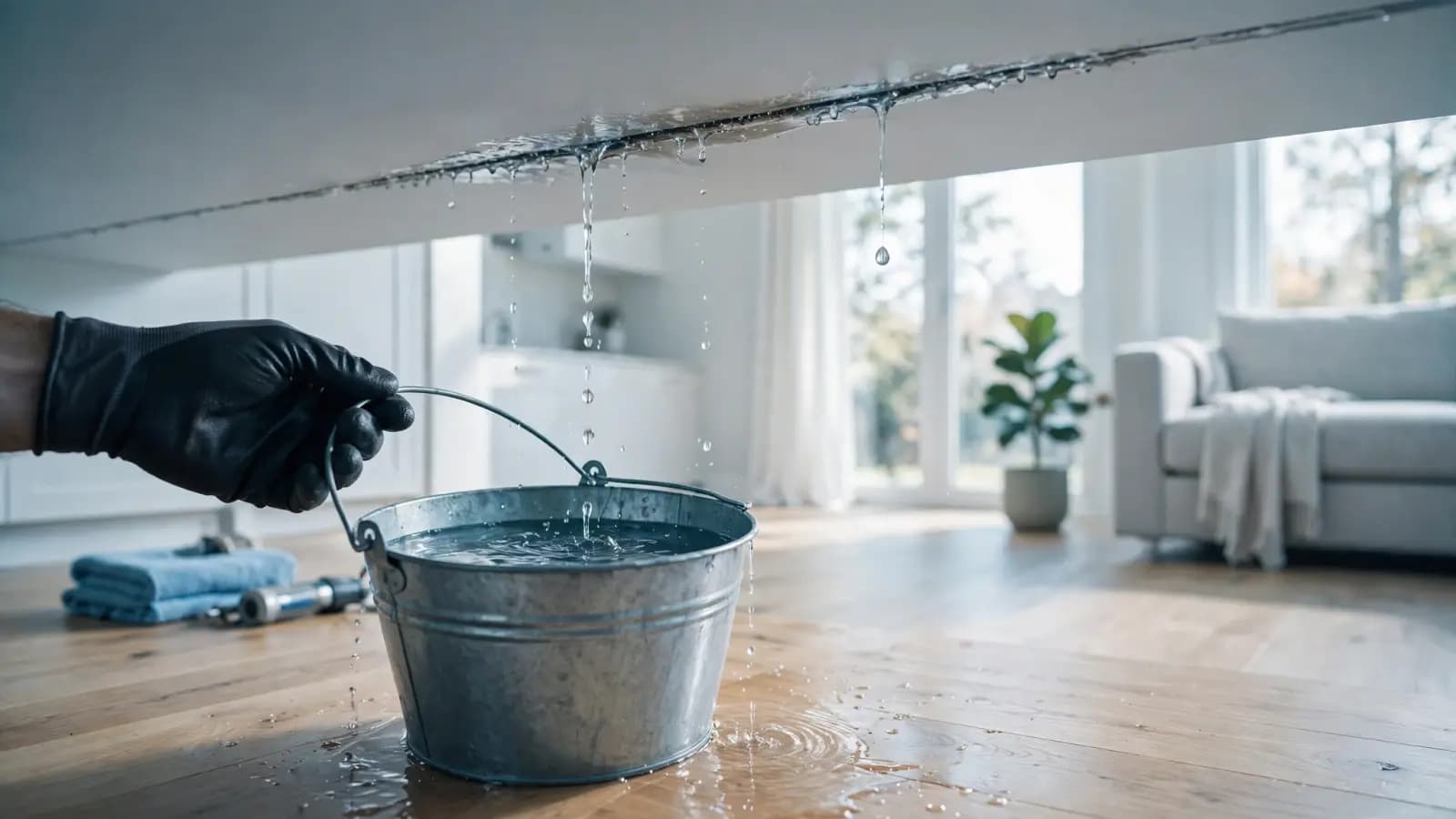
- Stop the source. Turn off the fixture or water supply, or place a container under a roof drip.
- Check for sagging and electrical exposure. If either is present, follow the emergency steps.
- Move furniture and electronics out from under the wet area.
- Increase airflow: open the room, run fans across (not into) the ceiling, and run a dehumidifier with the doors closed.
- From the attic, if it is safe to access, pull back soaked insulation so the top of the drywall can dry. Do not walk between joists.
- Photograph the area and take moisture readings each day so you can show whether it is drying.
How to tell when it is actually dry
Touch and appearance are unreliable; drywall can feel dry on the surface while the core is still wet. Restoration technicians compare readings from the affected area with an unaffected area of the same material in the same building, and call the area dry when the readings match. The method is explained in drying a water-damaged ceiling.
When a wet ceiling needs a professional
- Water spread across more than one room or soaked the insulation above.
- The water came from a toilet, sewer line or flood water, which is contaminated: see water damage cleanup.
- The ceiling has not dried after several days of fans and dehumidification.
- There is any sag, bulge or soft spot: see sagging ceiling.
Frequently asked questions
How long does it take for a wet ceiling to dry?
A lightly dampened drywall ceiling with good airflow often dries in 2–5 days. A soaked ceiling with wet insulation above, or one trapped under a floor, can take one to several weeks without professional drying equipment, and some will not dry fully without opening the cavity.
Can I sleep in a room with a wet ceiling?
If the ceiling is only stained or slightly damp, firm and away from light fixtures, the immediate risk is low. Do not sleep under a ceiling that is sagging, bulging, dripping, or near a wet light fixture, because saturated drywall can come down without warning.
Should I turn up the heat to dry a wet ceiling?
Moderate warmth helps evaporation, but heat without moisture removal just moves water into the air and onto other cold surfaces. Pair warmth with a dehumidifier and airflow, and keep the room closed so the dehumidifier is working on that space.
Does a wet ceiling always mean a leak?
No. Condensation can wet a ceiling with no leak at all, especially in bathrooms with poor exhaust, under cold attic spaces in winter, and near uninsulated air-conditioning ducts in summer.
Is a wet ceiling covered by homeowners insurance?
Coverage depends on the policy and the cause. Many policies distinguish between sudden and accidental water damage and damage from long-term leaks or lack of maintenance. Document the damage with photos before cleanup and check your policy or ask your agent.
Related guides
- Repair & DryingDrying a ceilingDrying timelines, what speeds them up, and how to confirm a ceiling is actually dry.
- Ceiling ProblemsDripping ceilingActive drips through the ceiling or a light fixture: safe first steps and how to trace the source.
- Ceiling ProblemsSoft drywallDrywall that gives or crumbles when pressed: what has failed inside the board and the repair path.
- ServicesWater damage dryingDehumidifiers, air movers, cavity drying and documented moisture readings.
Also referenced in
This guide is general educational information, not a site-specific inspection. Read our editorial policy for how content is researched and reviewed.