
Local guide
Ceiling Water Damage in Florida
Short answer
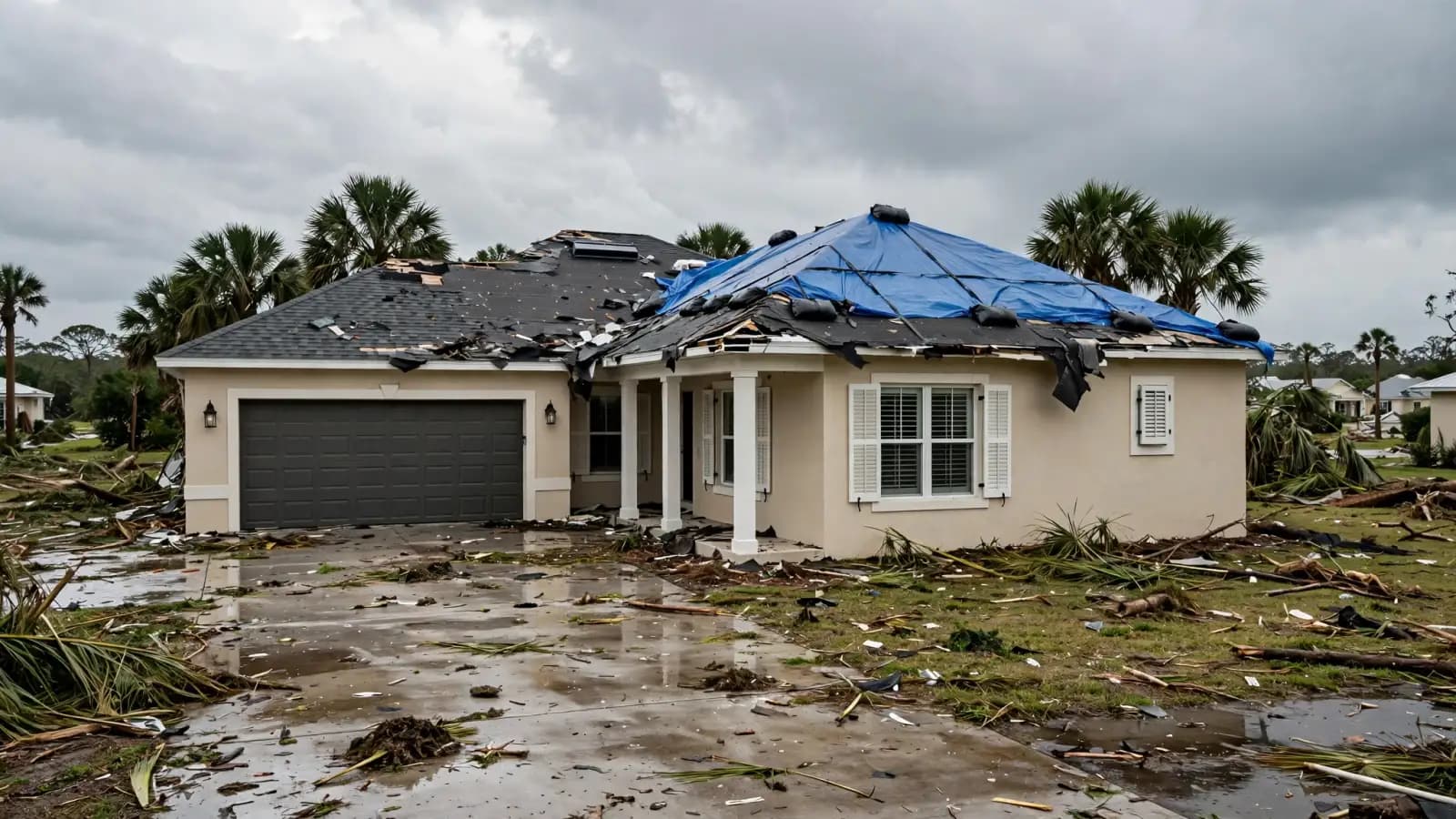
Florida ceiling water damage is dominated by hurricanes and tropical storms, daily summer thunderstorms on aging roofs, and constant air conditioning that overflows condensate lines. Flat roofs on many homes and condos add ponding-water leaks.
How ceilings get water damaged in Florida
Florida has a humid subtropical to tropical climate with a summer rainy season, frequent afternoon thunderstorms, and the highest hurricane exposure of any state.
- Hurricanes & tropical storms: Every part of Florida is exposed to hurricanes; wind-driven rain can enter through roof vents, soffits and windows even without visible roof damage. See storm damage and ceiling leaks.
- Humidity & long AC seasons: Air conditioning runs most of the year, so clogged condensate lines and sweating ducts are among the most common ceiling leaks. See ac condensation and ceiling stains.
- Flat & low-slope roofs: Many homes, condos and additions have flat or low-slope roofs that leak at seams and drains during heavy rain. See roof leaks and ceiling damage.
- Severe thunderstorms & tornadoes: Almost daily summer thunderstorms in much of the state test roofs repeatedly. See storm damage and ceiling leaks.
How conditions differ across Florida
South Florida, including Miami, has a tropical climate with year-round AC use; Central Florida sees frequent thunderstorms; and North Florida, including Jacksonville and the Panhandle, sees occasional freezes along with hurricanes.
Florida housing and what it means for ceilings
Many Florida homes are concrete block on slab, with roofs and attics as the main path for water. Florida's statewide building code was significantly strengthened after Hurricane Andrew in 1992.
When ceiling leaks peak in Florida
Florida's rainy season runs roughly from late May through October, overlapping with the June 1 to November 30 hurricane season. AC condensate leaks happen year-round but peak in the hottest, most humid months.
A practical tip for Florida homeowners
Many Florida homeowners flush the AC condensate line with a cup of white vinegar every month or two in summer to keep algae from clogging it, along with an annual professional service.
Notable water events in Florida
- 1992, Hurricane Andrew: Andrew devastated south Miami-Dade County in August 1992 and led to major building code changes.
- 2022, Hurricane Ian: Ian caused catastrophic damage in southwest Florida in September 2022.
Ceiling water damage by city in Florida
- Miami: hurricanes & tropical storms and flat & low-slope roofs.
- Tampa: severe thunderstorms & tornadoes and hurricanes & tropical storms.
- Orlando: humidity & long ac seasons and severe thunderstorms & tornadoes.
- Jacksonville: hurricanes & tropical storms and humidity & long ac seasons.
Neighboring states
Local sources
Local facts on this page were checked against these public sources. Conditions change; confirm details with the agency.
Frequently asked questions
Should I dry a Florida ceiling with open windows?
No. Florida's outdoor air is usually humid, so open windows add moisture. Keep the room closed and run the air conditioning and a dehumidifier.
Why does my Florida condo ceiling leak during storms but not normal rain?
Wind-driven rain pushes water sideways into roof vents, flashing and window frames that stay dry in normal rain. The building association usually handles roof and exterior repairs.
Can a Florida roof pass inspection and still leak in a hurricane?
Yes. Hurricane rain is driven by extreme winds into vents, soffits and window frames that normal rain never reaches. Secondary water barriers and sealed roof decks reduce the risk.
Why does my Florida ceiling get water stains around recessed lights?
Recessed lights are openings in the ceiling, so water from a roof leak or a sweating duct often appears there first. Turn off that circuit and have the source and the fixture checked.
Related guides
- CausesStorm damageWind-driven rain, fallen trees, hail and hurricanes: ceiling leaks after severe weather.
- CausesHVAC condensationAttic air handlers, clogged condensate lines, overflowing pans and sweating ducts.
- CausesRoof leakStains that appear after rain: flashing, vents, shingles, ice dams and how water travels to the ceiling.
- ServicesCeiling water damage repairEnd-to-end professional repair: inspection, drying, removal, rebuild and finishing.
Also referenced in
This guide is general educational information, not a site-specific inspection. Read our editorial policy for how content is researched and reviewed.
Free referral call · All 50 states
Need help with ceiling water damage?
Call and describe what you see. One call gets you help.
By calling, you agree to be connected with an independent local contractor and that your call may be recorded for quality. Calling is free and there is no obligation to hire anyone.