
Causes
Ceiling Water Damage From a Plumbing Leak
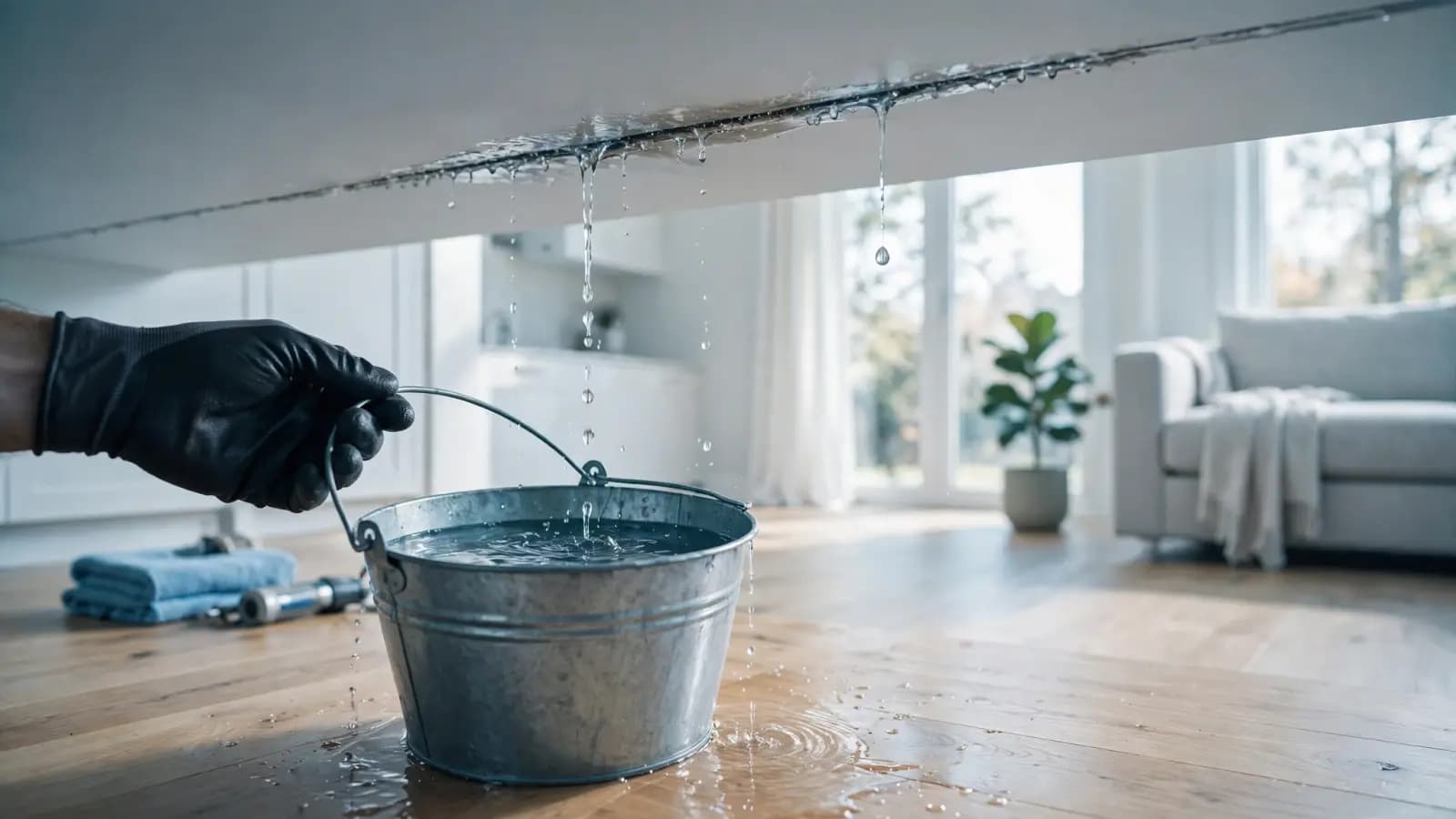
Short answer
A plumbing leak above a ceiling comes from either a pressurized supply line, which leaks constantly, or a drain line, which leaks only when water is used. Shutting off the main water valve tells you which: a supply leak stops within minutes, a drain leak does not depend on the main. A plumber repairs the pipe, which usually requires opening the ceiling; the drywall is repaired after the cavity dries.
At a glance
- Condition
- Water escaping from piping that runs through the floor or ceiling cavity above.
- Common causes
- Failed fittings, pinhole corrosion in copper, freeze damage, loose compression nuts, cracked drain fittings, nails or screws through pipe.
- Evidence
- Stains along a straight line (following a pipe), drips that continue with no fixture use, rising water bill.
- Risk if ignored
- Supply leaks release water continuously and can saturate a ceiling quickly; drain leaks may be contaminated.
- What to do now
- Shut off the main or the fixture valves, contain water, and note whether the leak stops.
- Solution
- Plumber repairs the pipe through an access opening; the cavity is dried and the ceiling patched.
Supply leak or drain leak?
The water meter test is useful for slow leaks: turn off every fixture and appliance, note the meter reading or the leak indicator dial, and check again after 30–60 minutes without using water.
| Supply line leak | Drain line leak | |
|---|---|---|
| Pressure | Always under pressure | Only flows when water is used |
| Timing | Constant, day and night | After showers, flushes, dishwasher or washer cycles |
| Main shutoff test | Stops within minutes | Not affected |
| Water quality | Clean when it leaves the pipe | Gray or contaminated |
| Water meter | Meter moves with all fixtures off | Meter does not move |
Common plumbing failures above ceilings
- Fittings and joints, including crimp, push-fit and compression connections that loosen or were poorly made.
- Pinhole leaks in older copper pipe, often in homes with aggressive water chemistry.
- Frozen pipes in exterior walls, unheated attics or above garages, which split and leak when they thaw.
- A drywall screw or nail driven into a pipe during earlier work; it may seal itself for years before corroding.
- Drain fittings and slip joints under sinks, tubs and showers, covered in upstairs bathroom leaks.
Stopping the water
- Close the fixture's own shutoff valve if you know which fixture is leaking.
- Otherwise close the main water shutoff.
- If a water heater is on the affected line, follow the manufacturer's instructions before draining or turning it off.
- Open a faucet on the lowest floor to relieve pressure and drain the lines above.
- Contain the water below and check for sagging.
Do plumbers fix the ceiling too?
Usually not. Plumbers cut the access opening they need, repair the pipe, and leave the opening for the cavity to dry. Drying and drywall repair are separate jobs, often done by a restoration contractor and a drywall finisher. Ask the plumber to cut a clean rectangular opening to the joists; it makes the patch easier. See drywall ceiling repair and leak detection if the source is hidden.
Frequently asked questions
Do plumbers fix ceiling leaks?
Plumbers fix the pipe or fixture that is leaking, which often means opening the ceiling. Most do not dry the cavity or repair the drywall; that is handled by a restoration company and a drywall contractor.
How do I know if a pipe is leaking in my ceiling?
Look for stains in a line, damp spots that stay wet even when no water is being used, and a water meter that moves with all fixtures off. A plumber or leak detection specialist can confirm with acoustic tools, moisture meters and thermal imaging.
Can a small pipe leak in the ceiling cause major damage?
Yes. A slow drip that runs for weeks can soak insulation and drywall, rot subfloor and joists, and grow mold, often causing more damage than a sudden burst that is noticed immediately.
Is water from a leaking drain pipe contaminated?
Drain water is used water and should be treated as contaminated. Toilet drain leaks are the most serious. Porous materials wetted by drain water are generally removed rather than dried.
Related guides
- CausesUpstairs bathroom leakStains under a bathroom: testing each fixture to find which one is leaking.
- Ceiling ProblemsDripping ceilingActive drips through the ceiling or a light fixture: safe first steps and how to trace the source.
- ServicesLeak detectionMoisture meters, thermal imaging, acoustic tools and water tests to find hidden sources.
- Guides & ToolsWho to callWhich professional handles each part of the problem, and the order to call them in.
Also referenced in
This guide is general educational information, not a site-specific inspection. Read our editorial policy for how content is researched and reviewed.