
Guides & Tools
Ceiling Leak Source Finder
Short answer
To find a ceiling leak's source, ask in order: is there a bathroom, kitchen, laundry or water heater directly above; does the damage change with rain; does it continue with all water turned off; and does it appear when the air conditioner runs? Each answer narrows the source to one cluster you can test. These steps are educational and do not replace an inspection.
Before you start
- Mark the stain's edge with pencil and date it, so growth is measurable.
- Note what is directly above: room, fixture, attic, equipment, roof feature.
- Remember that water travels, often uphill along framing in the direction of the source.
- If the ceiling is sagging or water is near electrical fixtures, follow the emergency guide first.
Leak source decision tree
1. Is there a bathroom directly above the ceiling?
Yes → Test each fixture separately. Bathroom leaks
No → next question
2. Is the damage worse after rain?
Yes → Investigate the roof, flashing and vents. Roof leaks
No → next question
3. Does the water meter move with every fixture off?
Yes → A pressurized supply line is leaking. Plumbing leaks
No → next question
4. Is the damage near HVAC equipment or vents, in cooling season?
Yes → Check drain pans and the condensate line. HVAC condensation
No → next question
5. Is a laundry room, kitchen or water heater above?
Yes → Check hoses, connections and pans. Appliance leaks
Test 1: the water meter test
- Turn off every faucet, fixture and water-using appliance.
- Record the meter reading or watch the leak indicator (a small triangle or dial).
- Wait 30–60 minutes without using water and check again.
- Movement means a pressurized supply leak somewhere: see plumbing leak.
Test 2: the rain correlation
Keep a simple log of rain events and stain size. If the stain grows only with rain, especially wind-driven rain from one direction, the source is the roof, flashing, a vent or a wall above. See roof leak and storm damage.
Test 3: fixtures one at a time
If a bathroom, kitchen or laundry is above, use one fixture at a time and check the ceiling after each, as described in upstairs bathroom leak. For appliances, see appliance leaks.
Test 4: AC season and equipment
If the stain appears in cooling season near an attic air handler or ceiling registers, check the drain pans and condensate line: HVAC condensation. If a water heater is above, see water heater leak.
When the tests do not agree
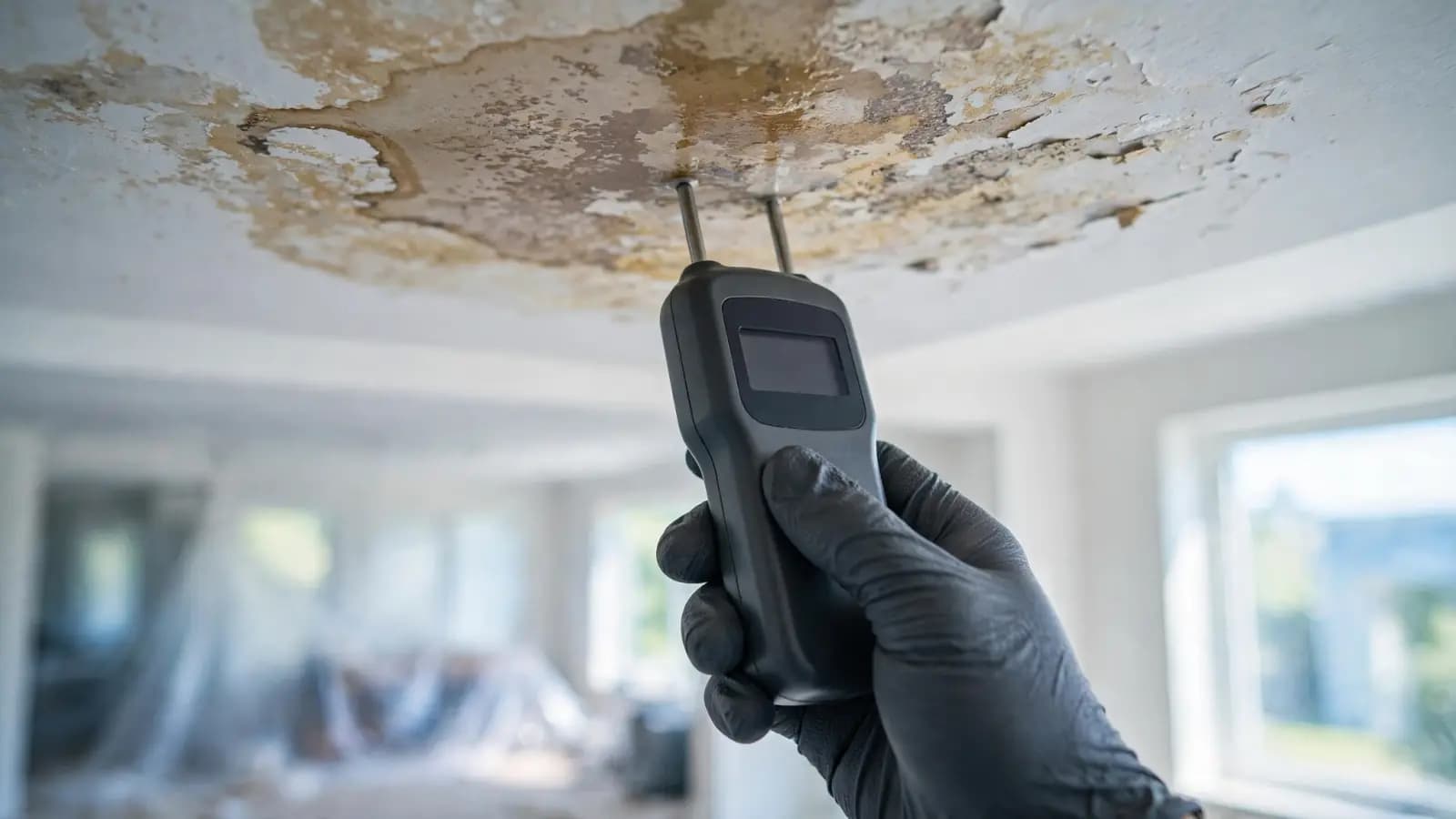
Two sources at once, slow drains that take hours to show, and water already trapped above the ceiling can confuse the results. Professional leak detection with moisture mapping, thermal imaging and acoustic tools resolves most of these cases.
Frequently asked questions
How can I tell where a ceiling leak is coming from?
Note what is above the stain, then test: does it change with rain, does the water meter move with all fixtures off, does it grow when a specific fixture is used, and does it appear when the AC runs? Each yes points to a specific source.
Why is my ceiling leaking when it is not raining?
The source is likely plumbing, a fixture, an appliance, a water heater or AC condensate rather than the roof, or water from an earlier leak is still draining out.
Can a ceiling leak come from two places?
Yes. For example, a roof leak and AC condensate can affect the same area of a top-floor ceiling. If testing gives mixed results, consider multiple sources.
Related guides
- ServicesLeak detectionMoisture meters, thermal imaging, acoustic tools and water tests to find hidden sources.
- Guides & ToolsWho to callWhich professional handles each part of the problem, and the order to call them in.
- Ceiling ProblemsBrown water stainWhat brown or yellow rings mean, how to tell if the leak is still active, and when a stain is only cosmetic.
- CausesUpstairs bathroom leakStains under a bathroom: testing each fixture to find which one is leaking.
Also referenced in
This guide is general educational information, not a site-specific inspection. Read our editorial policy for how content is researched and reviewed.