
Causes
Shower Leaking Through the Ceiling
Short answer
A shower leaks through the ceiling below from one of five parts: the wall surface (grout and caulk), the valve and trim, the door or curtain splash zone, the shower pan, or the drain. Testing the walls and floor separately, as described below, shows which. Pan and drain leaks usually require removing tile to repair properly.
At a glance
- Condition
- Water escaping the shower enclosure into the floor cavity.
- Common causes
- Cracked grout, failed caulk joints, valve or trim leaks, a failed pan or membrane, a loose drain.
- Evidence
- Stain below that grows after showers; loose tiles, soft curb, darkened grout that stays wet.
- Risk if ignored
- Chronic small leaks rot subfloor, framing and the curb, and grow hidden mold.
- What to do now
- Stop using the shower and run the wall and floor tests.
- Solution
- Regrout or recaulk for surface leaks; valve repair by a plumber; pan or drain rebuild for floor leaks.
Testing the shower
- Door or curtain: spray only the door seals and the curb edge. Leaks here are splash or seal problems.
- Walls: aim the shower head at the walls with a towel over the drain so water does not pool. Watch for 15–20 minutes over several sessions.
- Valve: remove the trim plate and look inside the wall cavity while running the shower, if it is accessible.
- Drain: pour water directly into the drain without wetting the floor.
- Pan: plug the drain and fill the floor with water above the drain level, mark the level, and wait. A dropping level or a ceiling stain means the pan is leaking.
Why caulk is not a pan repair
A tiled shower floor is not waterproof by itself; tile and grout absorb water. The waterproofing is a membrane or pan beneath the tile that directs water to the drain. When that layer fails, surface caulk or grout sealer may slow the leak but will not stop it. A proper repair usually means removing the floor tile, repairing or replacing the pan and drain, and retiling.
Ceiling repair after a shower leak
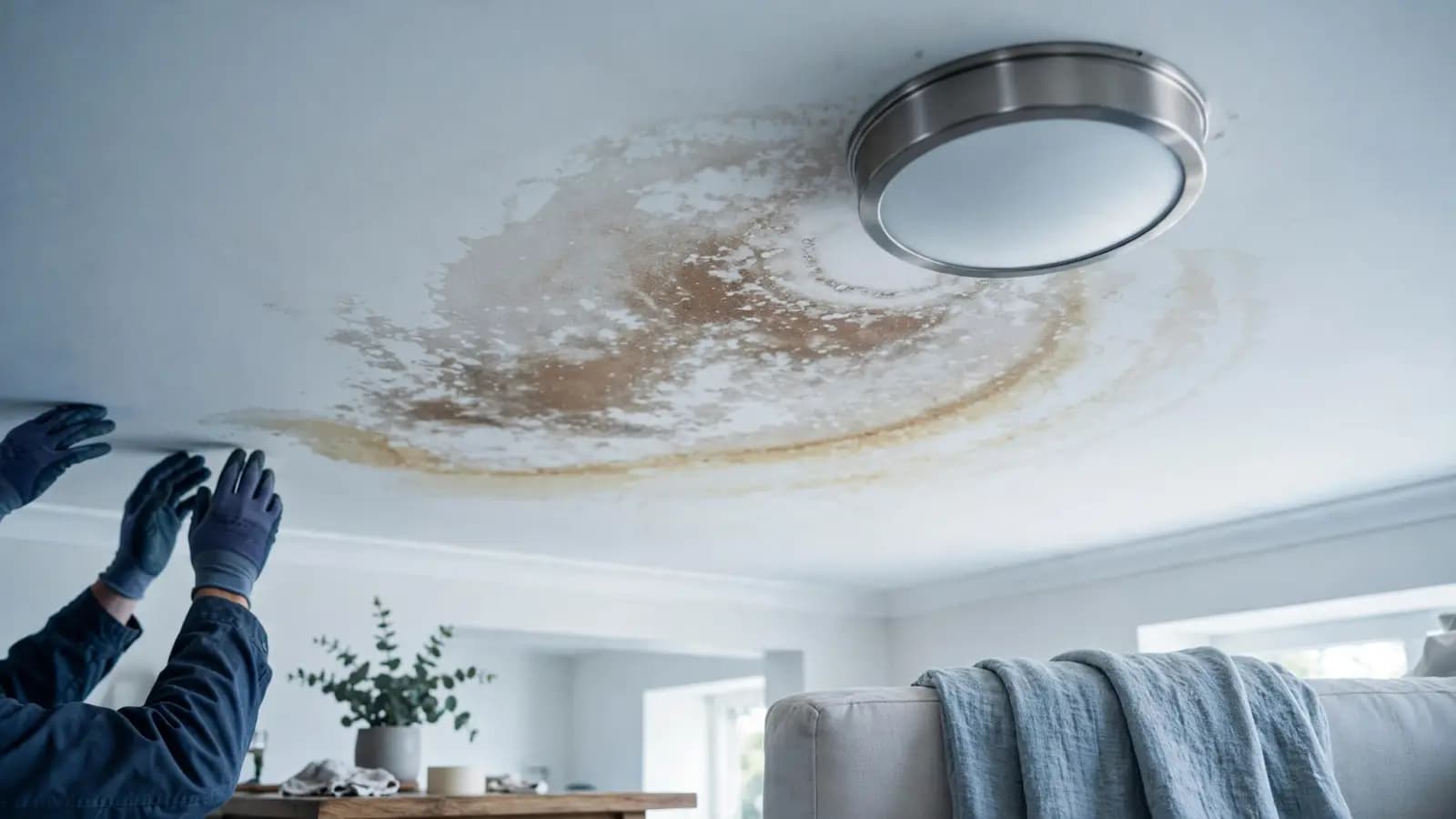
Shower leaks are mostly clean water, but chronic ones leave the cavity wet for long periods, which often means mold on the top of the drywall and on the subfloor. Opening the ceiling below lets the cavity dry and lets you see the condition of the joists and subfloor. See upstairs bathroom leaks for the full set of bathroom sources and mold on a water-damaged ceiling.
Frequently asked questions
How do I know if my shower pan is leaking?
Plug the drain, flood the shower floor with water above the drain, mark the level and wait at least 30 minutes. A dropping water level, or a stain growing on the ceiling below, points to the pan.
Will regrouting stop a shower leak?
It stops leaks through cracked grout on walls. It does not fix a failed shower pan or drain, because the waterproofing in a tiled shower is under the tile.
Can a leaking shower valve cause a ceiling stain?
Yes. A leaking valve body or connection inside the wall can drip down the wall cavity into the floor and ceiling below, often only when the shower is running.
Related guides
- CausesUpstairs bathroom leakStains under a bathroom: testing each fixture to find which one is leaking.
- CausesBathtub leakOverflow gaskets, drain shoes, spout and caulk: how tubs leak and how to test them.
- Ceiling TypesBathroom ceilingsWater from above and steam from below: ventilation, mold and repair materials.
- ServicesLeak detectionMoisture meters, thermal imaging, acoustic tools and water tests to find hidden sources.
This guide is general educational information, not a site-specific inspection. Read our editorial policy for how content is researched and reviewed.