
Service guide
Mold Remediation for Ceilings
Short answer
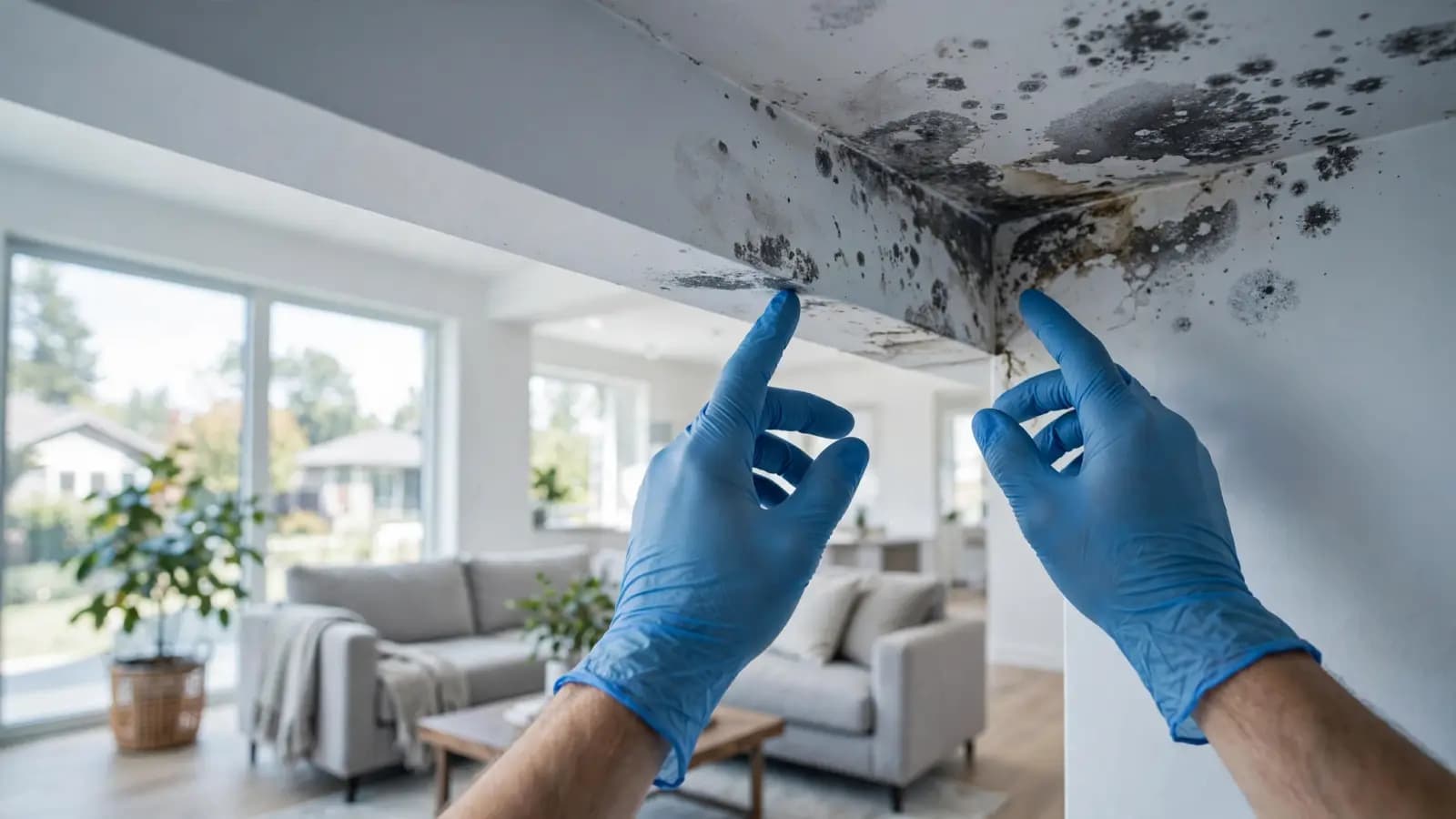
Mold remediation for a ceiling means fixing the moisture source, isolating the area with containment, removing moldy drywall and insulation, cleaning framing and the space with HEPA vacuums, drying, and verifying the area before rebuild. The EPA suggests considering professional help for growth over about 10 square feet, contaminated water, or mold in HVAC systems.
At a glance
- Condition
- Mold growth on or inside a ceiling after water damage.
- Common causes
- Leaks not dried within 24–48 hours, repeated wetting, condensation.
- Evidence
- Visible growth, musty odor, history of leaks.
- Risk if ignored
- Spreading growth and spores during unsafe removal; health effects for sensitive people.
- What to do now
- Stop moisture, avoid disturbing growth, estimate the area.
- Solution
- Containment, removal, cleaning, drying and verification.
The remediation process
- Assessment of the moisture source and the extent of growth, including above the ceiling.
- Containment with plastic sheeting; negative air pressure with HEPA filtration for larger jobs.
- Removal of moldy porous materials (drywall, insulation), bagged inside containment.
- HEPA vacuuming and cleaning of framing and surfaces.
- Drying of remaining materials to normal levels.
- Verification by visual inspection and, where appropriate, independent testing, before the ceiling is rebuilt.
When a professional is warranted
Smaller surface growth on hard surfaces is covered in mold on a water-damaged ceiling.
- Growth over about 10 square feet.
- Mold inside the ceiling cavity or attic.
- Water damage from sewage or other contaminated water.
- Mold in or near HVAC equipment or ducts.
- Household members with asthma, allergies or immune concerns.
What remediation does not include
Remediation removes and cleans mold-affected materials. It does not repair the leak that caused it, and it usually does not include rebuilding the ceiling. Plan for three separate pieces of work: the trade that stops the water, the remediation itself, and the drywall rebuild. Some companies coordinate all three; others handle only the middle step.
Avoid companies that propose spraying or fogging a product over mold-damaged drywall as the main treatment. Coatings and fogging do not remove growth from porous materials, and moldy drywall still needs removal.
Questions to ask a remediation company
- How will the work area be contained?
- What will be removed versus cleaned?
- How will the moisture source be addressed?
- How will you verify the work before rebuild?
- Do you hold any license your state requires for mold work?
Frequently asked questions
Do I need professional mold remediation for my ceiling?
Consider it when growth exceeds about 10 square feet, mold is inside the cavity or attic, contaminated water was involved, HVAC is affected, or someone in the home has health concerns.
Can mold remediation be done without removing the ceiling?
Small surface growth on firm, non-porous surfaces can be cleaned. Mold on drywall paper or in insulation usually requires removing those materials.
Will mold come back after remediation?
Not if the moisture source is fixed and materials stay dry. Mold returns when the underlying water or humidity problem remains.
Related guides
- Ceiling ProblemsCeiling moldSpots, fuzz or discoloration after a leak: how mold develops, what is safe to clean, and what needs a pro.
- Ceiling ProblemsMusty smellAn earthy odor after a leak, with or without visible damage: what it means and how to find it.
- ServicesWater damage cleanupExtraction, debris removal and contaminated-water cleanup after a ceiling leak.
- Repair & DryingDrying a ceilingDrying timelines, what speeds them up, and how to confirm a ceiling is actually dry.
Also referenced in
This guide is general educational information, not a site-specific inspection. Read our editorial policy for how content is researched and reviewed.
Need help with ceiling water damage?
Call and describe what you see. One call gets you help.