
Service guide
Ceiling Water Damage Cleanup
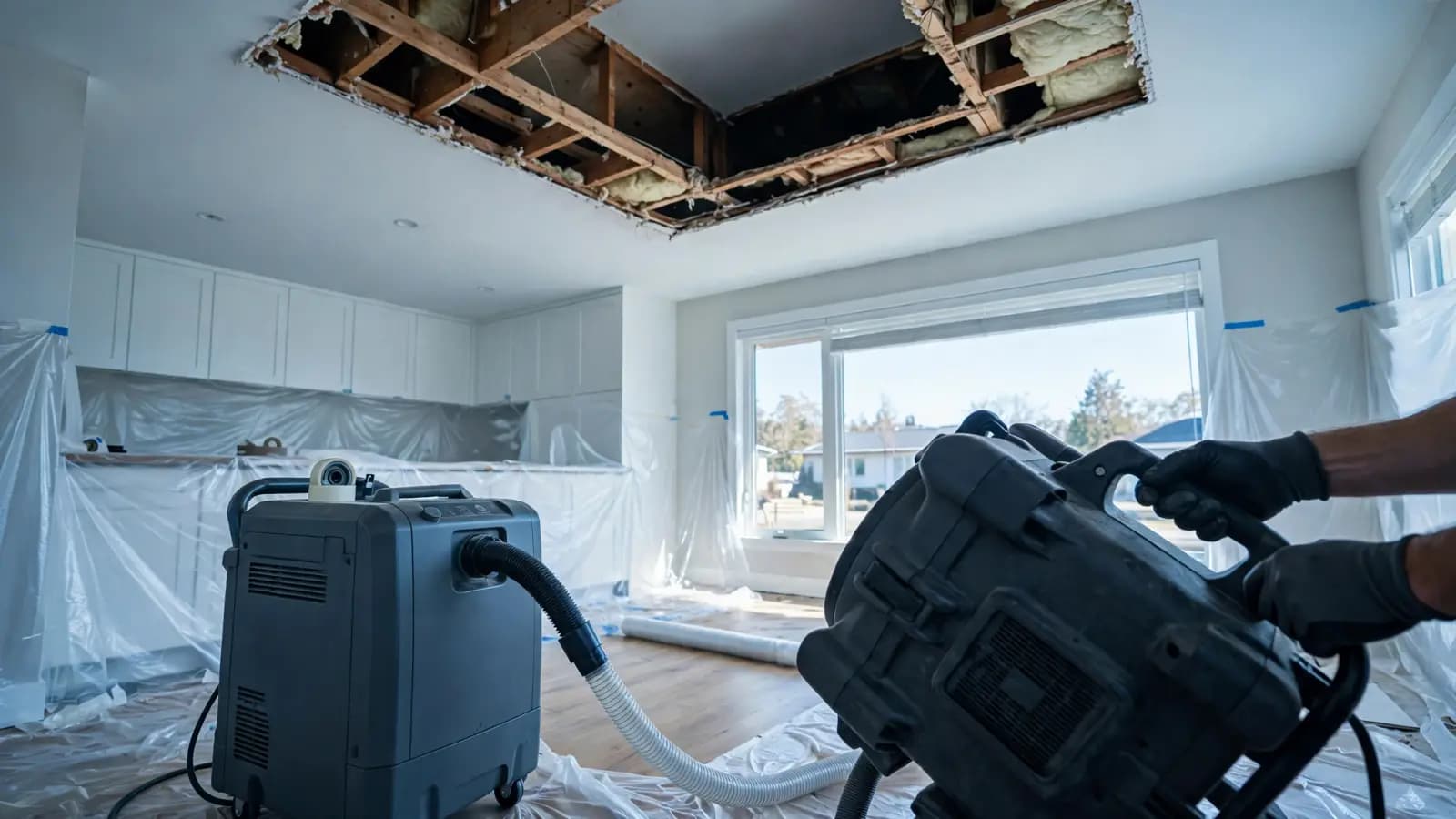
Short answer
Cleanup after a ceiling leak means removing standing water and fallen debris, protecting or moving contents, bagging wet insulation and drywall, and cleaning surfaces before drying begins. When the water came from a toilet, a sewer line or a flood, cleanup includes removing contaminated porous materials and sanitizing, and should be handled by professionals using protective equipment.
At a glance
- Condition
- Water, debris and wet materials in a room after a ceiling leak or failure.
- Common causes
- Overflows, burst lines, roof leaks, ceiling collapse.
- Evidence
- Standing water, fallen drywall and insulation, wet contents.
- Risk if ignored
- Slip and electrical hazards, contamination, mold.
- What to do now
- Make the area safe, document, then extract and remove debris.
- Solution
- Extraction, debris and material removal, cleaning, then drying.
Clean-water cleanup a homeowner can start
- Confirm power to wet fixtures and outlets in the room is off at the panel, if you can reach it from a dry location.
- Photograph everything before moving it.
- Move contents out of the room; put foil or blocks under furniture legs that cannot be moved.
- Remove standing water with a wet vacuum, mops and towels.
- Bag fallen drywall and wet insulation; wear gloves, eye protection and a dust mask.
- Begin drying: see drying a water-damaged ceiling.
Contaminated water is different
Water from a toilet, a sewer backup or a flood can carry bacteria and other pathogens. Porous materials it soaks, including drywall, insulation, carpet and pad, are generally removed rather than cleaned. Hard surfaces are cleaned and disinfected. Workers wear gloves, eye protection and respiratory protection. See toilet overflow.
After a ceiling collapse
For the safety sequence, see the emergency guide and can a water-damaged ceiling collapse?.
- Do not enter until you are confident the rest of the ceiling is stable; look for further sagging.
- Turn off power to the room at the panel from a dry location.
- Expect wet insulation and debris spread across the floor; it is heavy when wet.
- Have the remaining ceiling assessed before cleanup crews work under it.
Frequently asked questions
How do I clean up after water comes through the ceiling?
Make the area safe electrically, photograph the damage, move contents, extract standing water, bag fallen debris and wet insulation, and begin drying. Use professionals if the water was contaminated.
Can I clean up sewage water from a ceiling leak myself?
It is not recommended. Sewage and toilet water carry pathogens, and contaminated porous materials need removal under protective conditions. A restoration company that handles contaminated water is the safer choice.
What should I do with wet insulation that fell from the ceiling?
Bag it and remove it. Soaked insulation that has fallen is not reinstalled. Wear gloves and a dust mask when handling fiberglass.
Related guides
- CausesToilet overflowContaminated water from toilets: why it changes the cleanup and what has to be removed.
- ServicesWater damage dryingDehumidifiers, air movers, cavity drying and documented moisture readings.
- EmergencyEmergencyActive leaks, bulging ceilings and water near lights: the safe sequence of steps.
- ServicesMold remediationContainment, removal, HEPA cleaning and verification for mold after a ceiling leak.
Also referenced in
This guide is general educational information, not a site-specific inspection. Read our editorial policy for how content is researched and reviewed.
Need help with ceiling water damage?
Call and describe what you see. One call gets you help.