
Ceiling Problems
Soft or Spongy Drywall Ceiling
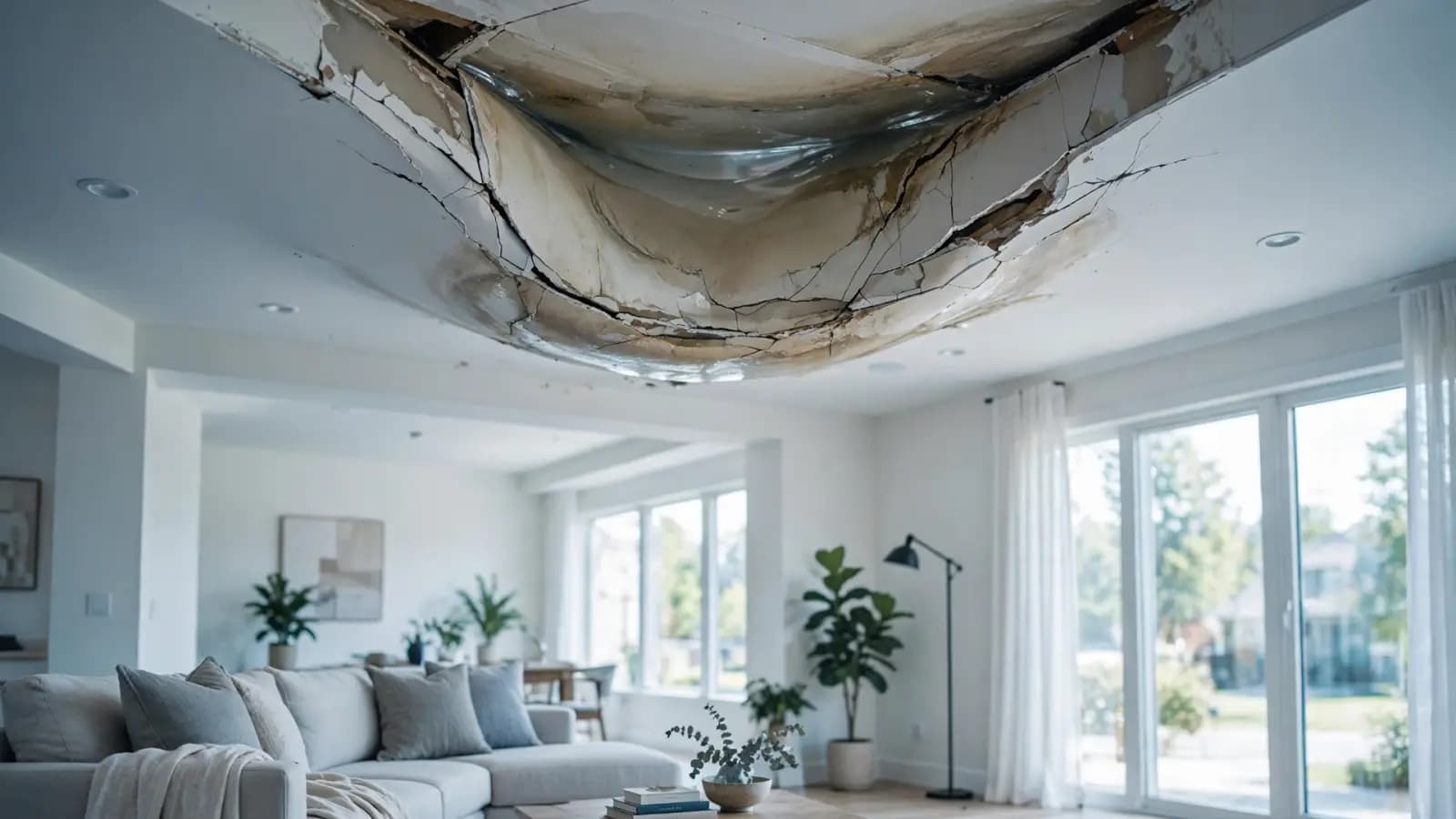
Short answer
Soft ceiling drywall has absorbed enough water to weaken the gypsum core and the bond between the core and its paper face. Even after it dries, soft drywall rarely recovers its original strength, and it is often the stage just before sagging. It is usually cut out and replaced once the source is fixed.
At a glance
- Condition
- Drywall that compresses, flexes or crumbles under light pressure.
- Common causes
- Prolonged or repeated wetting from leaks or overflows above.
- Evidence
- Give under a flat palm, fingertip dents, crumbling at the edges of a stain, paper wrinkling.
- Risk if ignored
- Progression to sagging and collapse, plus a high chance of mold behind or above it.
- What to do now
- Stop pressing, keep clear if it is large or near fixtures, stop the source.
- Solution
- Remove the soft section to firm material, dry the cavity, replace insulation and drywall.
What has happened inside the board
Gypsum is a mineral that is stable when dry but loses strength when wet. The paper faces carry much of the board's bending strength, and they are bonded to the core with starches that soften in water. A soft spot means both have been compromised. When it dries, the gypsum may re-harden partly, but the board often remains crumbly and the paper may stay loose.
How to check without causing damage
- Use a flat palm with light pressure, never a fingertip or tool, and never from directly below a wide area.
- Compare with an area you know is dry.
- Map the soft area with painter's tape on the surrounding firm ceiling so you can tell if it grows.
- Use a moisture meter if you have one; soft and wet means the source may still be active.
Can soft drywall be saved?
Drywall that was only damp and stayed firm can often be dried in place. Soft drywall is past that point. Most restoration professionals replace it, cutting back to firm board and to the nearest framing so the new piece can be fastened properly. Detailed rules are in when to replace ceiling drywall, and the hiring side is covered under drywall ceiling repair.
Do not skip what is above
Soft drywall almost always has wet insulation and possibly wet framing above it. Replacing the board without drying the cavity seals moisture in. Insulation that was soaked usually loses performance and is replaced, and framing is dried until it reads normal before closing up. Contaminated water from a toilet or sewer means everything porous it touched is removed: see toilet overflow.
Frequently asked questions
Will soft drywall harden again when it dries?
It may firm up partially, but it rarely regains its original strength, and the paper face often stays loose. Soft drywall is normally replaced.
Is a soft spot in the ceiling dangerous?
A small soft spot is not immediately dangerous, but it shows the board is saturated and weakened. Larger soft areas can sag and fall, especially with wet insulation on top.
How do I know how much drywall to remove?
Remove all soft, stained-through, moldy or contaminated material, and extend the cut to firm board and to framing for support. Professionals use moisture meters to find the wet boundary, which is usually larger than the visible stain.
Can I patch a soft spot with joint compound?
No. Joint compound over soft drywall will crack and fall away, and it seals moisture in. The soft section needs to be cut out and replaced.
Related guides
- Ceiling ProblemsSagging ceilingDrooping or bulging drywall after a leak: why it happens, collapse risk, and safe next steps.
- Repair & DryingRepair or replaceDecision rules for keeping or replacing wet drywall, plus an interactive checker.
- ServicesDrywall ceiling repairPatching or replacing ceiling drywall after drying, and matching finish and texture.
- Ceiling TypesDrywall ceilingsHow gypsum board takes on water, damp vs saturated board, and moisture-resistant options.
Also referenced in
This guide is general educational information, not a site-specific inspection. Read our editorial policy for how content is researched and reviewed.