
Causes
Ceiling Leak Below an Upstairs Bathroom
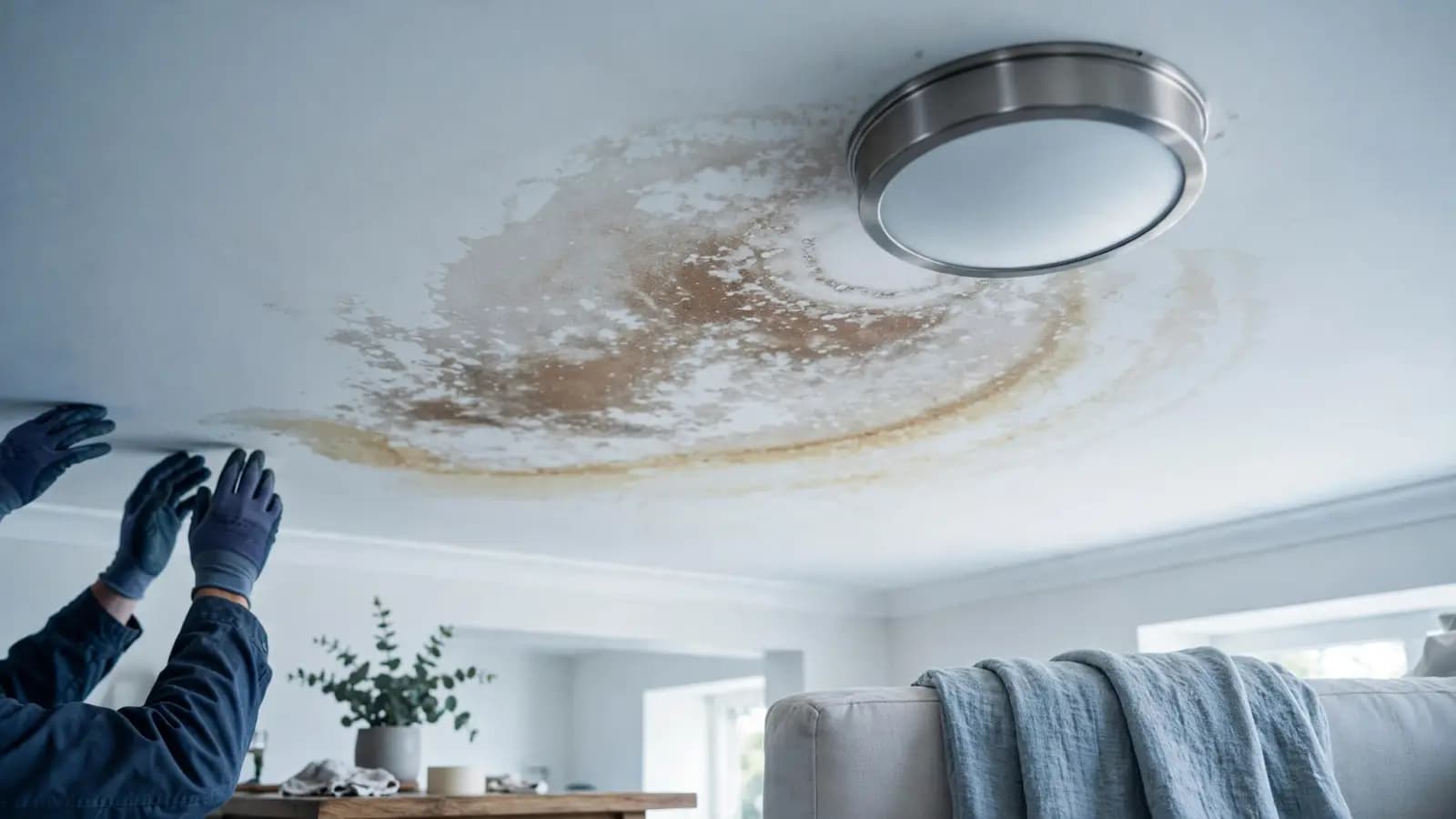
Short answer
A leak through the ceiling below a bathroom usually comes from one of five places: the shower, the tub, the toilet, the sink, or the supply lines to them. Test them one at a time, using each fixture alone and watching the ceiling, to find which one causes the stain to grow. Toilet leaks involve contaminated water and need more aggressive cleanup.
At a glance
- Condition
- Water escaping from bathroom fixtures, drains or finishes into the floor-ceiling cavity below.
- Common causes
- Failed shower pans and grout, tub drain and overflow gaskets, toilet wax rings, sink drains, supply connections, and overflows.
- Evidence
- Stain directly below or near the bathroom that grows after showers, baths or flushes.
- Risk if ignored
- Repeated small leaks rot subfloor and joists and grow mold; toilet water is contaminated.
- What to do now
- Stop using the bathroom or the suspect fixture, then test fixtures one at a time.
- Solution
- Plumber or tile contractor repairs the fixture, then the cavity is dried and the ceiling repaired.
Fixture-by-fixture test
Mark the stain's edge with pencil, then test one fixture per day (or with enough drying time between) and check the ceiling after each:
- Sink: fill the basin, let it drain, and run water for several minutes. Check under the cabinet for drips at the trap and supply lines.
- Toilet: flush several times, then check around the base. Movement when you rock it gently, or water at the base, points to the wax ring or flange.
- Tub: run water into the tub with the drain open, then close the drain and fill above the overflow opening. A leak only when filled high points to the overflow gasket.
- Shower walls: spray the walls (not the floor) with the drain covered by a towel. A leak points to grout, caulk or the valve trim.
- Shower floor: plug the drain and flood the floor with an inch of water for 30 minutes or more. A leak points to the shower pan or drain.
Leak source decision tree
1. Is there a bathroom directly above the ceiling?
Yes → Test each fixture separately. Bathroom leaks
No → next question
2. Is the damage worse after rain?
Yes → Investigate the roof, flashing and vents. Roof leaks
No → next question
3. Does the water meter move with every fixture off?
Yes → A pressurized supply line is leaking. Plumbing leaks
No → next question
4. Is the damage near HVAC equipment or vents, in cooling season?
Yes → Check drain pans and the condensate line. HVAC condensation
No → next question
5. Is a laundry room, kitchen or water heater above?
Yes → Check hoses, connections and pans. Appliance leaks
What each result usually means
| Leaks when… | Likely cause | Guide |
|---|---|---|
| Shower runs | Grout, caulk, valve, pan or drain | Shower leak |
| Tub fills | Drain or overflow gasket, faucet | Bathtub leak |
| Toilet flushes or overflows | Wax ring, flange, supply line | Toilet overflow |
| All the time | Supply line in the wall or floor | Plumbing leak |
| After showers, no fixture tests positive | Splash over tub edge, failed caulk at floor | Check caulk joints and the floor-to-tub seal |
Why bathroom leaks do more damage than they look
Bathroom leaks are often small and repeated: a little water every shower for months. The subfloor under a toilet or shower can rot while the ceiling below shows only a faint stain, because the subfloor absorbs most of the water before it reaches the drywall. When the stain finally appears, there may already be soft subfloor and mold in the cavity. Check the floor around the toilet and the shower threshold for softness.
Repair sequence
- Fix the fixture: the plumber or tile contractor repairs the source.
- Open the ceiling below as needed for access and drying.
- Dry the subfloor and joists; replace rotted subfloor from above if needed.
- Remove contaminated materials if a toilet or drain was involved.
- Replace insulation and drywall, then finish and paint. See bathroom ceilings for the ceiling of the bathroom itself.
Frequently asked questions
Why is there a water stain on the ceiling under my bathroom?
Water is escaping from one of the bathroom fixtures, its drain, its supply lines, or the seals around the tub and shower. Testing each fixture separately is the fastest way to find which one.
Can a shower leak through the ceiling below?
Yes, through failed grout or caulk, a leaking valve, or a failed shower pan or drain. Pan and drain leaks usually show up only when water is on the shower floor.
Is it safe to keep using the bathroom?
Avoid using the fixture you suspect until it is repaired. If the ceiling below is sagging, stop using the bathroom entirely and keep people out of the room below.
Who fixes a leak from an upstairs bathroom?
A plumber for drains, supply lines, toilets and valves; a tile contractor for grout and shower pan failures; then a restoration company for drying and a drywall contractor for the ceiling.
Related guides
- CausesShower leakGrout, caulk, valve, pan or drain: isolating a shower leak.
- CausesBathtub leakOverflow gaskets, drain shoes, spout and caulk: how tubs leak and how to test them.
- CausesToilet overflowContaminated water from toilets: why it changes the cleanup and what has to be removed.
- Ceiling TypesBathroom ceilingsWater from above and steam from below: ventilation, mold and repair materials.
Also referenced in
This guide is general educational information, not a site-specific inspection. Read our editorial policy for how content is researched and reviewed.