
Local guide
Ceiling Water Damage in Connecticut
Short answer
Connecticut ceiling water damage commonly comes from ice dams and snowmelt, storm-damaged roofs and fallen trees, and plumbing in older colonial-era and mid-century homes. Coastal towns also see wind-driven rain from tropical systems.
How ceilings get water damaged in Connecticut
Connecticut has cold, snowy winters inland, milder conditions on the shoreline, humid summers, and exposure to nor'easters and tropical storms.
- Mature trees over roofs: Heavily wooded neighborhoods mean limbs on roofs during storms; tree damage was widespread during Irene and Sandy. See storm damage and ceiling leaks.
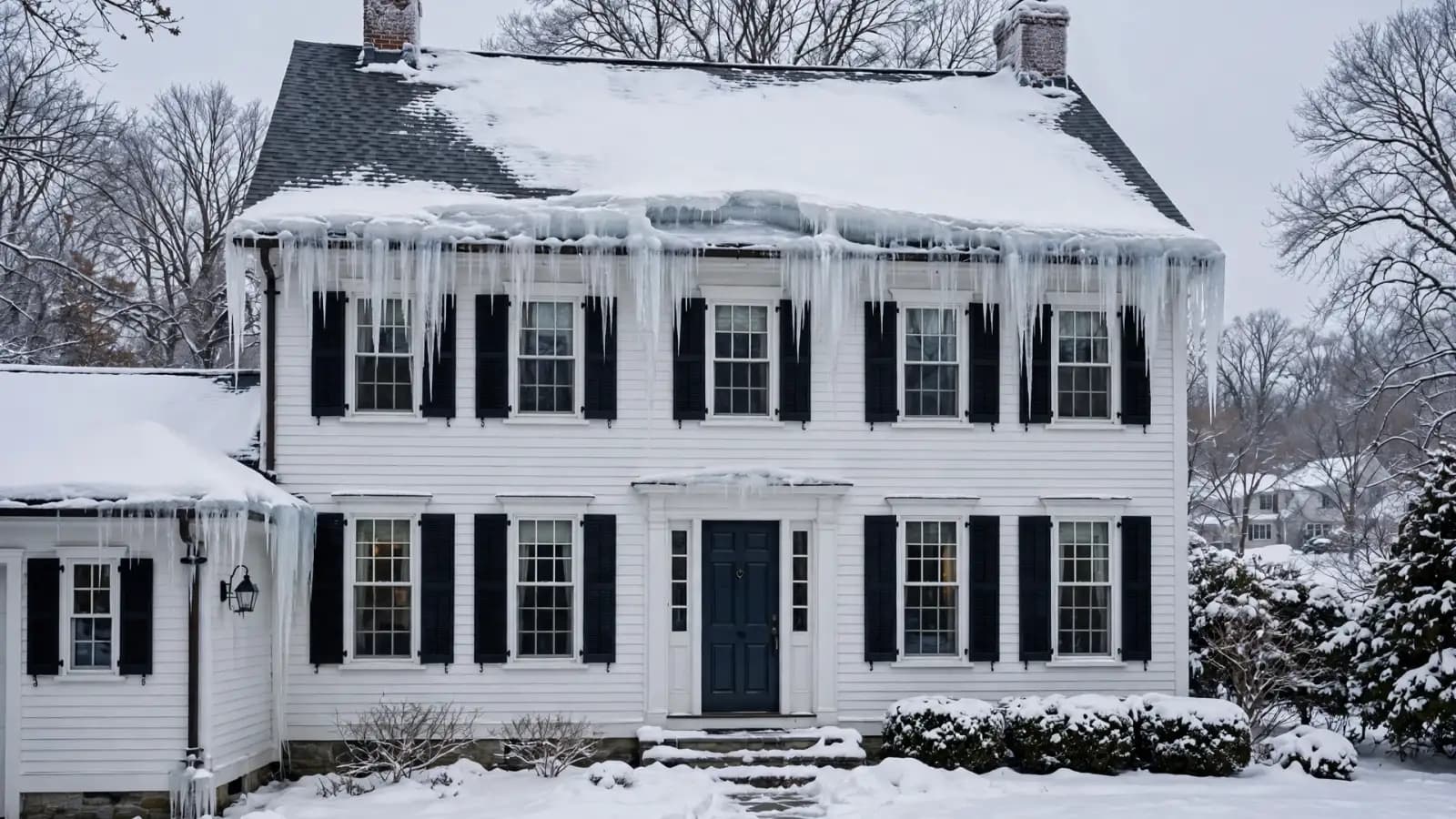
- Ice dams: Inland towns with heavier snow see recurring ice-dam leaks along eaves and over bay windows. See roof leaks and ceiling damage.
- Hurricanes & tropical storms: Shoreline communities face wind-driven rain and coastal flooding from tropical systems. See storm damage and ceiling leaks.
- Older housing stock: Historic colonials and older homes in cities such as Hartford and New Haven often have plaster ceilings. See water-damaged plaster ceilings.
How conditions differ across Connecticut
Shoreline towns face coastal storms and tropical systems, while northern and northwestern Connecticut, including the Litchfield Hills, get more snow and ice dams.
Connecticut housing and what it means for ceilings
Connecticut has many homes built before 1980, from colonials to raised ranches and split-levels, with finished basements common in suburban houses.
When ceiling leaks peak in Connecticut
Connecticut's ice-dam season runs from December through March, and late summer into fall brings the highest risk from tropical storms and remnants. Severe thunderstorms with falling trees peak in summer.
A practical tip for Connecticut homeowners
Ask a tree service to look at large limbs over your roof every few years. Many Connecticut ceiling leaks after storms start with a branch that was already weak.
Notable water events in Connecticut
- 2011, Tropical Storm Irene: Irene caused widespread tree damage and power outages in Connecticut in August 2011.
- 2012, Hurricane Sandy: Sandy brought coastal flooding and extensive outages to Connecticut in October 2012.
Ceiling water damage by city in Connecticut
- Hartford: older housing stock and mature trees over roofs.
Neighboring states
Local sources
Local facts on this page were checked against these public sources. Conditions change; confirm details with the agency.
Frequently asked questions
A tree branch hit my Connecticut roof. Is the ceiling at risk?
Yes, even without a visible hole. Limbs can crack sheathing and lift shingles, letting the next rain into the attic. Have the roof inspected and check the attic for wet insulation.
Are raised ranches prone to ceiling leaks?
The upper-level bathroom and kitchen sit directly over finished lower-level rooms, so plumbing leaks often show up in the lower-level ceiling.
Why do Connecticut raised ranches leak at the lower-level ceiling?
The kitchen and main bathroom sit directly above finished lower-level rooms, so dishwasher, sink, toilet and tub leaks show up in the lower ceiling first.
Is ice dam damage covered by homeowners insurance in Connecticut?
Many policies cover sudden water damage from ice dams but not the cost of fixing the underlying insulation or ventilation problem. Check your policy and document the damage with photos.
Related guides
- CausesStorm damageWind-driven rain, fallen trees, hail and hurricanes: ceiling leaks after severe weather.
- CausesRoof leakStains that appear after rain: flashing, vents, shingles, ice dams and how water travels to the ceiling.
- Ceiling TypesPlaster ceilingsLath and plaster in older homes: key failure, delamination, and how plaster is repaired.
- ServicesCeiling water damage repairEnd-to-end professional repair: inspection, drying, removal, rebuild and finishing.
Also referenced in
This guide is general educational information, not a site-specific inspection. Read our editorial policy for how content is researched and reviewed.
Free referral call · All 50 states
Need help with ceiling water damage?
Call and describe what you see. One call gets you help.
By calling, you agree to be connected with an independent local contractor and that your call may be recorded for quality. Calling is free and there is no obligation to hire anyone.