
Causes
Water Heater Leaks and Ceiling Damage
Short answer
Water heaters damage ceilings when they are installed in an attic or on an upper floor and the tank, its fittings, or its relief valve leaks. A failed tank can release its full contents onto the ceiling below. Shut off the cold water supply to the heater and its power or gas following the manufacturer's directions, contain the water below, and call a plumber.
At a glance
- Condition
- Water escaping from a water heater located above a finished ceiling.
- Common causes
- Corroded tank, leaking supply connections, discharging temperature and pressure relief valve, clogged or missing pan drain.
- Evidence
- Stain below the heater location, water in the drain pan, rust, hissing or dripping from the relief valve pipe.
- Risk if ignored
- Rapid ceiling saturation from a large volume of water; hot water scalding risk.
- What to do now
- Close the cold-water supply to the heater, turn off power or gas per instructions, contain the water.
- Solution
- Plumber repairs or replaces the heater and pan; ceiling dried and repaired.
Where the water comes from
- The tank itself: a corroded tank cannot be repaired and must be replaced.
- Connections: supply connectors, unions and the drain valve can leak and are repairable.
- Temperature and pressure (T&P) relief valve: discharge can mean excess pressure or temperature or a failing valve; it needs a plumber's evaluation.
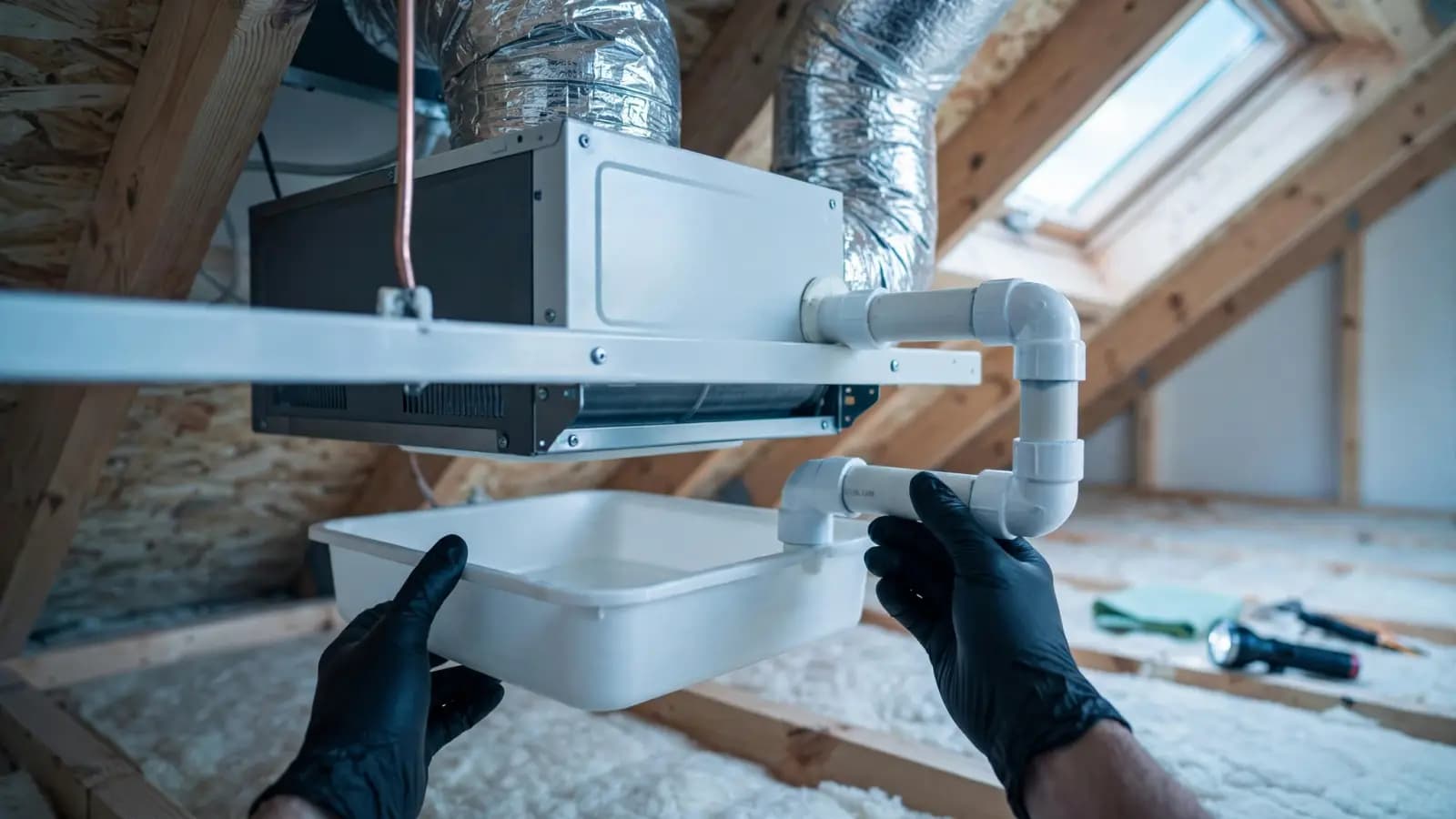
- Drain pan: a pan without a working drain line, or a cracked pan, lets small leaks reach the ceiling.
- Tankless units: connections and the condensate line on high-efficiency models.
Shutting it down safely
- Close the cold-water inlet valve at the top of the heater, or the main water shutoff.
- For an electric heater, switch off its dedicated breaker. For gas, set the control to off or pilot following the label on the unit.
- Do not open the drain valve or the relief valve; the water may be scalding.
- Contain water below and check the ceiling for sagging.
After the leak
A tank failure can release dozens of gallons quickly, saturating a large ceiling area at once. That usually means professional drying with the ceiling opened. See water damage drying. Pans with a drain line routed to a visible location, and leak sensors with automatic shutoff valves, reduce the risk with the replacement heater. Related: appliance leaks.
Frequently asked questions
What should I do if my attic water heater is leaking?
Close the cold-water supply valve to the heater, switch off its power or set the gas control to off per the label, contain the water below, and call a plumber. Do not open the drain or relief valve yourself.
Can a leaking water heater tank be repaired?
A leak from the tank body itself usually means it has corroded through and needs replacement. Leaks at fittings and valves are often repairable.
Why is water coming out of the water heater relief valve pipe?
The relief valve opens when temperature or pressure is too high, or it may be failing. Either way it needs a plumber's evaluation; do not cap or plug it.
Related guides
- CausesAppliance leakUpstairs washing machines, dishwashers and ice-maker lines leaking to the floor below.
- CausesHVAC condensationAttic air handlers, clogged condensate lines, overflowing pans and sweating ducts.
- CausesPlumbing leakSupply and drain leaks between floors: telling them apart, shutting them off, and repair.
- ServicesWater damage dryingDehumidifiers, air movers, cavity drying and documented moisture readings.
Also referenced in
This guide is general educational information, not a site-specific inspection. Read our editorial policy for how content is researched and reviewed.