
Causes
Ceiling Water Damage From HVAC Condensation
Short answer
Air conditioners remove moisture from the air, and that water drains away through a condensate line. When the line clogs, the pan overflows, or ducts sweat in a hot attic, the water lands on the ceiling below. Stains that appear in warm months, near the air handler or around supply vents, point to this source. An HVAC technician clears or repairs the drainage; the ceiling is dried and repaired afterward.
At a glance
- Condition
- Condensate water or duct condensation reaching ceilings below HVAC equipment or ducts.
- Common causes
- Clogged condensate lines, cracked or rusted drain pans, missing or failed float switches, frozen coils thawing, uninsulated or leaky ducts.
- Evidence
- Stains in summer, near the attic air handler or around ceiling vents; water in the secondary pan.
- Risk if ignored
- Repeated overflows saturate drywall and insulation; damp ducts and insulation grow mold.
- What to do now
- Turn the AC off at the thermostat, check the pans if they are safely accessible, contain drips.
- Solution
- HVAC technician clears the line, repairs pans and safety switches, insulates or seals ducts; ceiling dried and repaired.
How AC condensate reaches the ceiling
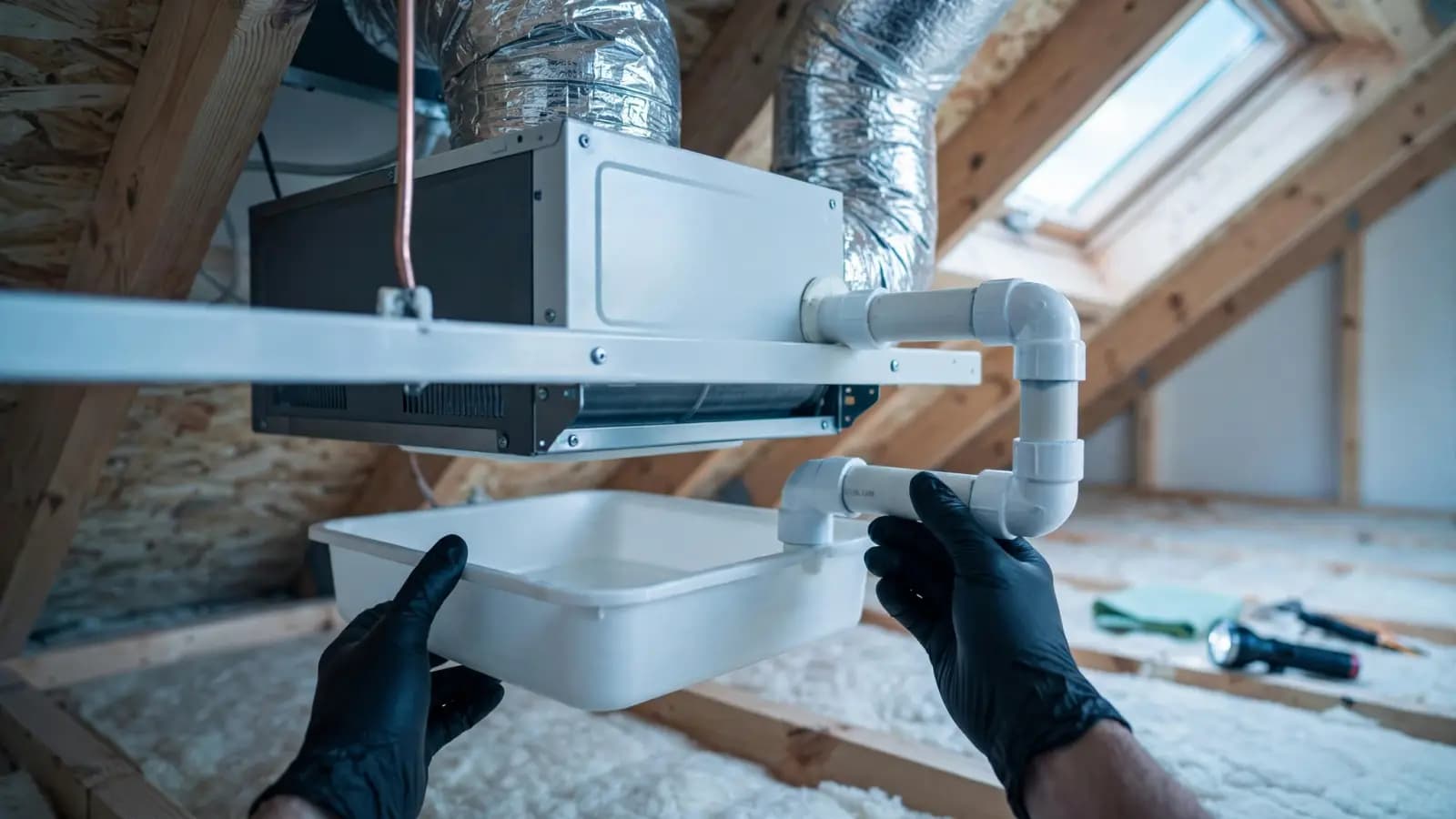
As warm, humid air passes over the cold evaporator coil, moisture condenses and drips into a primary drain pan, then flows through a condensate line to a drain or the outside. In many homes the air handler sits in the attic, directly above a ceiling. When algae, sludge or debris clog the line, the primary pan fills and overflows. Codes generally require a secondary means of protection where an overflow would damage the building, such as a secondary drain pan or an overflow shutoff switch, but these can be missing, clogged or disconnected.
Clues that the AC is the source
- Stains appear during cooling season and stop in winter.
- The stain is under or near the attic air handler, or around ceiling supply registers.
- There is water in the secondary pan under the unit (it should normally be dry).
- The AC shuts off repeatedly, which may be a float switch doing its job.
- Stains around registers with no equipment above suggest ducts or register boots sweating in a hot, humid attic.
What to do
- Turn the cooling off at the thermostat to stop producing condensate.
- If the attic is safely accessible, check the secondary pan and the primary pan for water. Walk only on framing or decking.
- Contain drips below and check the ceiling for sagging.
- Call an HVAC technician to clear the condensate line, check the pans and install or test a float switch.
- Pull back wet insulation around the area so the drywall can dry.
Prevention
For the drying and repair side, see drying a water-damaged ceiling. A musty smell when the AC starts may mean damp insulation or mold near the unit: see musty smell after a ceiling leak.
- Annual HVAC maintenance including clearing the condensate line.
- A working float (overflow) switch on the primary or secondary pan.
- Secondary pan drained to a visible location, so water there gets noticed.
- Sealed and insulated ducts and register boots in attics.
Frequently asked questions
Why is my AC leaking water through the ceiling?
Usually the condensate line is clogged and the drain pan under the air handler is overflowing. A cracked pan, a failed float switch, a disconnected line or a frozen coil thawing can do the same.
Why is there a water stain around my ceiling air vent?
Cool supply air can cause condensation on ducts, register boots or the vent itself in a hot, humid attic, especially if ducts are poorly insulated or leaking air. It can also mean condensate is traveling along a duct from the air handler.
Should I turn off my AC if it is leaking through the ceiling?
Yes. Turning cooling off stops new condensate. Leave it off until the drain is cleared.
What is an AC float switch?
A float switch senses rising water in a drain pan or line and shuts off the system before the pan overflows. It is a common safety device for attic air handlers.
Related guides
- Ceiling ProblemsMusty smellAn earthy odor after a leak, with or without visible damage: what it means and how to find it.
- CausesWater heater leakAttic and upper-floor water heaters: tank failure, relief valves and drain pans.
- Guides & ToolsLeak source finderA step-by-step decision tree for narrowing down where the water comes from.
- Ceiling ProblemsBrown water stainWhat brown or yellow rings mean, how to tell if the leak is still active, and when a stain is only cosmetic.
Also referenced in
This guide is general educational information, not a site-specific inspection. Read our editorial policy for how content is researched and reviewed.