
Ceiling Problems
Mold on a Water-Damaged Ceiling
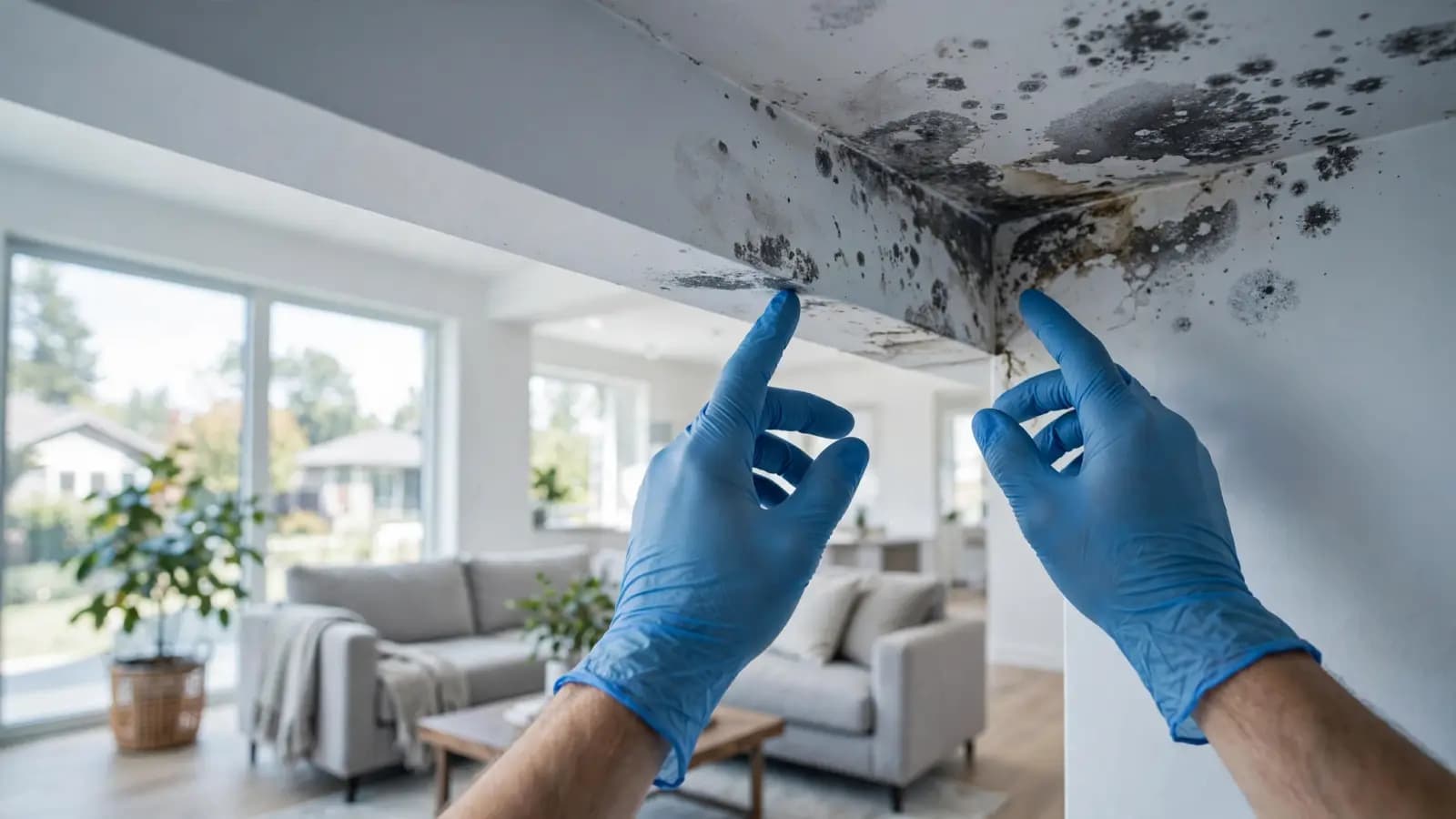
Short answer
Mold grows on a water-damaged ceiling when the drywall paper, insulation or framing stays damp long enough for spores already present in the home to germinate, which can begin within 24–48 hours. The fix is moisture control first: stop the leak and dry the area. Small surface mold on hard surfaces can be cleaned, but mold on drywall paper usually means that drywall is removed.
At a glance
- Condition
- Fungal growth on or within ceiling materials that stayed wet.
- Common causes
- Leaks that were not dried quickly, repeated wetting, bathroom condensation, and attic moisture.
- Evidence
- Black, green, gray or white spotting or fuzz, often speckled; a musty, earthy smell.
- Risk if ignored
- Mold can trigger allergic and asthma symptoms; growth spreads on wet porous material and damages it.
- What to do now
- Stop the moisture, do not dry-scrape or disturb growth, and estimate the affected area.
- Solution
- Dry the structure, remove moldy porous materials under containment, clean hard surfaces, and verify dryness before rebuilding.
How mold develops after a ceiling leak
Mold spores are present in almost all indoor air. They need moisture, a food source and time. Drywall paper, the starch binders in drywall, cellulose insulation and wood framing are all food. The missing ingredient is usually moisture, which a leak supplies. The EPA recommends drying water-damaged materials within 24–48 hours to prevent mold growth. Ceilings are vulnerable because the top side is hidden and dries slowly.
Mold often appears first on the top of the drywall or in the insulation, not on the painted face, so a ceiling can have growth above it with little visible below.
Mold or water stain?
| Feature | Water stain | Mold |
|---|---|---|
| Pattern | Even blotch with rings | Speckled, spotty, sometimes fuzzy |
| Color | Brown or yellow | Black, green, gray, white, sometimes pink or orange |
| Texture | Flat, part of the paint | Can be raised or powdery |
| Smell | Usually none | Musty or earthy |
| Growth | Grows only with new water | Spreads while conditions stay damp |
DIY or professional?
The EPA's guidance for homes treats about 10 square feet (roughly a 3 ft by 3 ft patch) as the dividing line: smaller areas can often be handled by the homeowner, while larger areas warrant reading the EPA's more detailed remediation guidance and usually hiring a professional. Other reasons to use a professional regardless of size:
- The water was contaminated (sewage or flood water).
- Mold is in the insulation or the attic, or inside the ceiling cavity.
- Anyone in the home has asthma, allergies, a weakened immune system, or other health concerns.
- The HVAC system or ducts may be involved.
What remediation of a ceiling involves
More on hiring this work: mold remediation.
- Fix the water source and confirm it is stopped.
- Set up containment (plastic sheeting) and, for larger jobs, negative air pressure so spores do not spread.
- Remove moldy porous materials such as drywall and insulation, bagging them inside the containment.
- Clean framing and other hard surfaces; dry them to normal moisture levels.
- HEPA-vacuum and clean the work area.
- Verify the area is dry and clean before new drywall goes up.
Should you paint over mold?
No. Paint, including mold-resistant paint, does not kill or remove established growth on drywall, and the mold continues to grow behind the paint if moisture remains. Paint is only appropriate on a surface that has been properly cleaned or replaced and is dry.
Frequently asked questions
Does ceiling water damage cause mold?
It can. Mold needs moisture, and a ceiling that stays wet for more than a day or two gives spores already in the home the moisture they need. Quick drying usually prevents it.
How quickly can mold grow after a ceiling leak?
Growth can begin within 24–48 hours on wet materials, which is why the EPA recommends drying within that window. Visible colonies often take several days or longer to appear.
Can I clean mold off a ceiling myself?
For a small area (under about 10 square feet), on a surface that is not porous, with no contaminated water involved and no health concerns in the household, often yes, using protection and detergent and water. Moldy drywall paper is usually removed rather than cleaned.
Is bleach effective for ceiling mold?
Bleach is not recommended as a routine mold cleaner on porous materials like drywall. It can lighten the surface without addressing growth in the material, and it adds moisture. Removal of the affected drywall is the reliable approach.
Do I need mold testing?
If mold is visible, testing is usually unnecessary; the visible growth needs to be removed either way. Testing can help when there is a musty smell without visible growth, or for post-remediation verification.
Is ceiling mold dangerous to my health?
Mold can cause allergic reactions, irritate the eyes, nose, throat and lungs, and trigger asthma attacks in sensitive people. People with weakened immune systems are at higher risk. Consult a doctor about symptoms.
Related guides
- Ceiling ProblemsMusty smellAn earthy odor after a leak, with or without visible damage: what it means and how to find it.
- ServicesMold remediationContainment, removal, HEPA cleaning and verification for mold after a ceiling leak.
- Repair & DryingDrying a ceilingDrying timelines, what speeds them up, and how to confirm a ceiling is actually dry.
- Ceiling TypesBathroom ceilingsWater from above and steam from below: ventilation, mold and repair materials.
Also referenced in
This guide is general educational information, not a site-specific inspection. Read our editorial policy for how content is researched and reviewed.