
Causes
Appliance Leaks That Damage Ceilings
Short answer
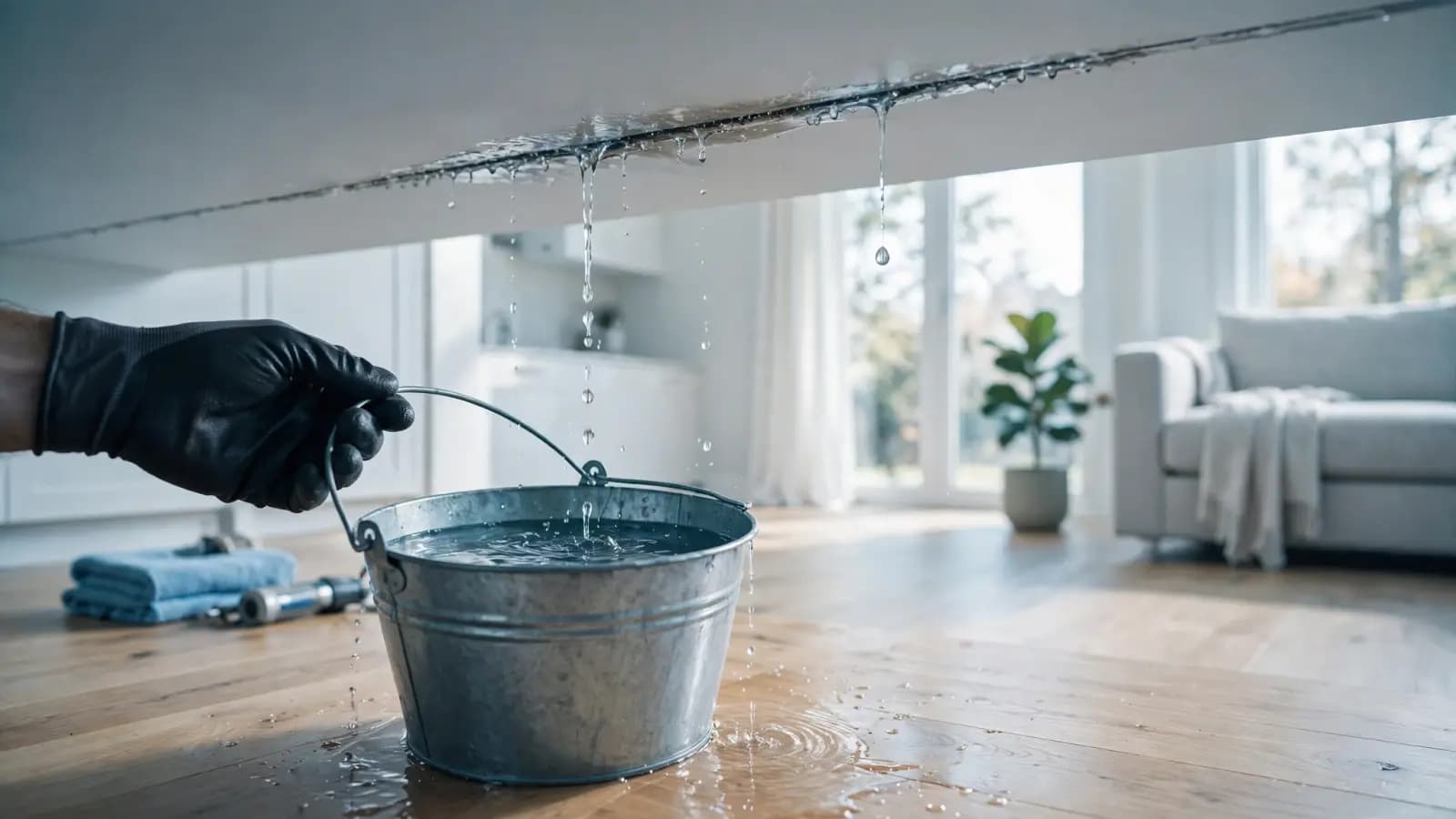
Appliances leak onto ceilings when they sit on an upper floor or over a finished room: second-floor washing machines, kitchen dishwashers over a basement, and refrigerator ice-maker supply lines. Burst or worn supply hoses release water under full pressure, so they cause the largest losses. Turn off the appliance's supply valves, stop the cycle, and contain the water below.
At a glance
- Condition
- Water from an appliance's supply, drain or internal parts reaching the ceiling below.
- Common causes
- Burst or worn washer hoses, drain hose dislodged, dishwasher door seal or connection leaks, cracked plastic ice-maker lines, clogged drains.
- Evidence
- Stain below the appliance location, water under the appliance, warped flooring.
- Risk if ignored
- A burst supply hose can release a large volume quickly; slow leaks rot subfloor unseen.
- What to do now
- Stop the cycle, close the appliance's water valves, unplug only if dry and safe, contain water.
- Solution
- Appliance or plumbing repair; replace hoses; dry and repair the ceiling.
Appliances most likely to leak onto a ceiling
| Appliance | Common failure | Prevention |
|---|---|---|
| Washing machine (upper floor) | Supply hose burst, drain hose pulled out of standpipe, pump leak | Braided hoses replaced on schedule, drain pan with drain, close valves when away |
| Dishwasher | Supply connection, drain hose, door gasket | Check under the sink and at the toe kick for dampness |
| Refrigerator ice maker / water dispenser | Plastic supply tubing cracks, compression fitting loosens | Use braided or copper lines, check behind the fridge |
| Sink and disposal | Slip-joint and disposal seals | Look under the sink regularly |
Stop the water
- Stop the appliance cycle.
- Close the hot and cold valves behind the washer, the supply under the sink for the dishwasher, or the ice-maker valve.
- Unplug the appliance only if the outlet and floor are dry; otherwise switch off the circuit at the panel.
- Contain the water below and check the ceiling for sagging.
Prevention that works
Kitchen leaks onto the ceiling below are discussed further under kitchen ceilings and basement ceilings.
- Replace rubber washer hoses with braided stainless hoses and follow the manufacturer's replacement interval.
- Install a laundry pan with a drain under upper-floor washers.
- Use leak sensors near appliances; models connected to an automatic main shutoff valve stop water without anyone home.
- Close washer valves when away for extended periods.
Frequently asked questions
How do I know if my washing machine is leaking through the ceiling?
A stain below the laundry room that grows during or after wash cycles, water under or behind the washer, and wet hoses or a loose drain hose are the main signs.
Can a refrigerator ice maker leak cause ceiling damage?
Yes, if the kitchen is above a finished room. Plastic ice-maker supply lines can crack and leak slowly behind the refrigerator for weeks before a stain appears below.
How often should washing machine hoses be replaced?
Follow the washer and hose manufacturer's guidance. Many recommend replacement every few years, and immediately if hoses show bulges, cracks, kinks or corrosion at the fittings.
Related guides
- Ceiling TypesKitchen ceilingsStains above kitchens: bathrooms and laundry overhead, recessed lights, and cooking moisture.
- Ceiling TypesBasement ceilingsLeaks from the floor above, sweating pipes and ducts, and finish choices for easier access.
- CausesWater heater leakAttic and upper-floor water heaters: tank failure, relief valves and drain pans.
- Ceiling ProblemsWet ceilingDamp or dark patches without dripping: where the moisture comes from and whether it will dry on its own.
Also referenced in
This guide is general educational information, not a site-specific inspection. Read our editorial policy for how content is researched and reviewed.