
Local guide
Ceiling Water Damage in Hawaii
Short answer
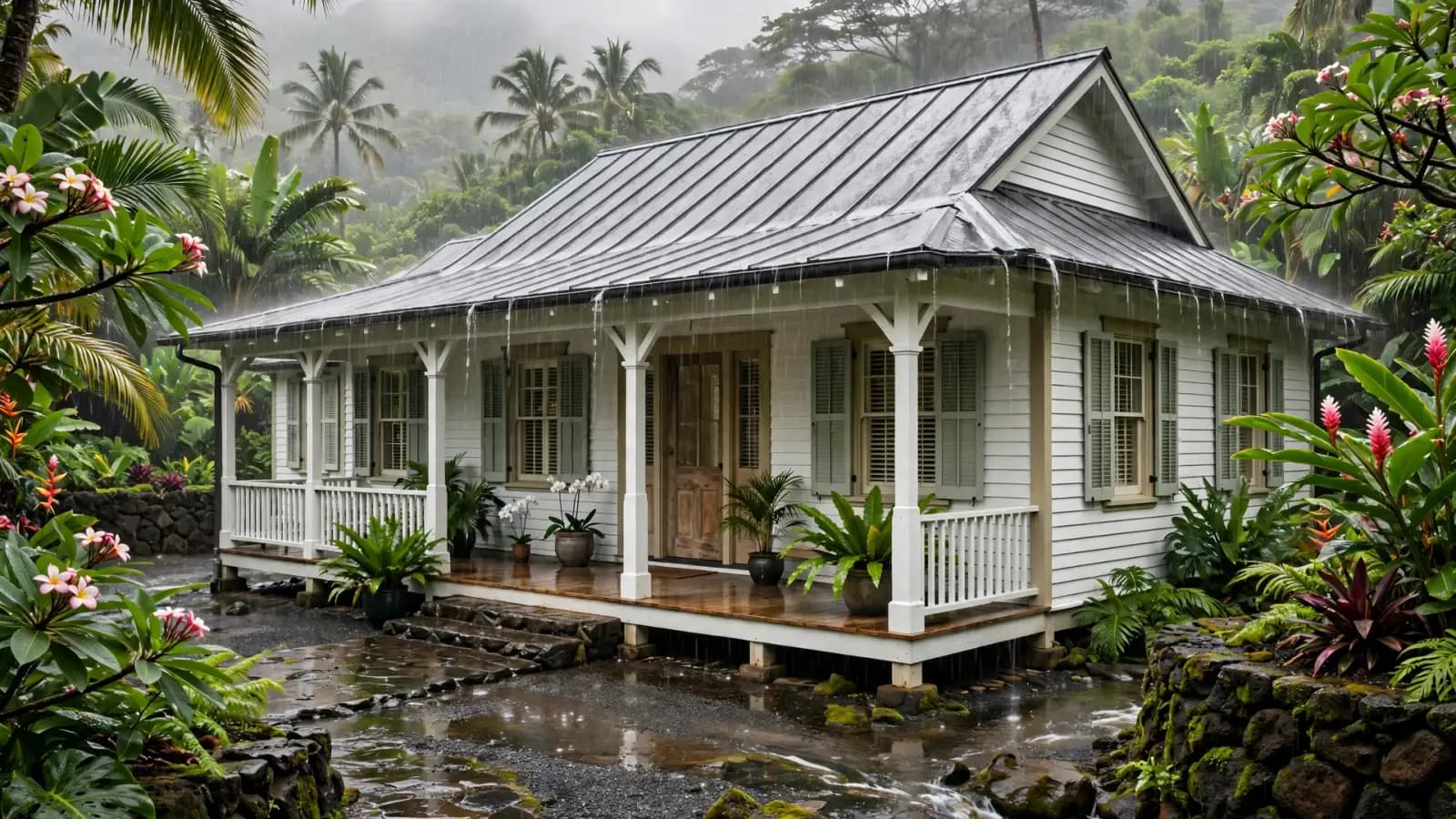
Hawaii ceiling water damage comes from heavy tropical rain on windward slopes, Kona storms and hurricanes, and corrosion of roofs and fasteners in salt air. Humidity also slows drying and speeds mold growth.
How ceilings get water damaged in Hawaii
Hawaii has a tropical climate with trade winds, wet windward and dry leeward sides, and occasional Kona storms and hurricanes.
- Hurricanes & tropical storms: Hurricane Iniki struck Kauai in 1992, and hurricanes and tropical storms remain a threat statewide. See storm damage and ceiling leaks.
- Long wet seasons: Windward areas receive heavy rain that tests roofs year-round. See roof leaks and ceiling damage.
- Humidity & long AC seasons: High humidity slows drying and favors mold after a leak. See ac condensation and ceiling stains.
How conditions differ across Hawaii
Each island has wet windward and dry leeward sides. Windward areas such as Hilo and the windward coast of Oahu receive frequent rain, while leeward areas such as Kona and much of Honolulu are drier but exposed to Kona storms from the south.
Hawaii housing and what it means for ceilings
Housing includes older single-wall plantation-style homes, post-and-pier homes, and condominiums in Honolulu.
When ceiling leaks peak in Hawaii
Hawaii's wetter months are generally October through April, when Kona storms can bring heavy rain from the south. Hurricane season runs June through November, and windward areas receive rain year-round.
A practical tip for Hawaii homeowners
Near the ocean, have metal roofs and flashing inspected for corrosion regularly; rusted screws and seams are a leading cause of leaks on island homes.
Notable water events in Hawaii
- 1992, Hurricane Iniki: Iniki caused major damage on Kauai in September 1992.
Ceiling water damage by city in Hawaii
- Honolulu: long wet seasons and humidity & long ac seasons.
Local sources
Local facts on this page were checked against these public sources. Conditions change; confirm details with the agency.
Frequently asked questions
Do metal roofs in Hawaii cause leaks?
Metal roofs are common and durable, but salt air corrodes fasteners and flashing over time. Leaks often start at screws and seams, so periodic inspection matters near the coast.
How do I dry a ceiling in Hawaii's humidity?
Close the room and run a dehumidifier and fans. Open windows usually add moisture in humid weather.
Do Hawaii homes without attics get ceiling leaks differently?
Many older Hawaii homes have open-beam or single-wall construction with little or no attic, so roof leaks drip directly through the ceiling with no insulation to absorb them first.
Does vog affect roofs and ceilings in Hawaii?
Volcanic smog can contribute to corrosion of metal roofing and fasteners over time, especially on the Big Island, which can lead to leaks at screws and seams.
Related guides
- CausesStorm damageWind-driven rain, fallen trees, hail and hurricanes: ceiling leaks after severe weather.
- CausesRoof leakStains that appear after rain: flashing, vents, shingles, ice dams and how water travels to the ceiling.
- CausesHVAC condensationAttic air handlers, clogged condensate lines, overflowing pans and sweating ducts.
- ServicesCeiling water damage repairEnd-to-end professional repair: inspection, drying, removal, rebuild and finishing.
Also referenced in
This guide is general educational information, not a site-specific inspection. Read our editorial policy for how content is researched and reviewed.
Free referral call · All 50 states
Need help with ceiling water damage?
Call and describe what you see. One call gets you help.
By calling, you agree to be connected with an independent local contractor and that your call may be recorded for quality. Calling is free and there is no obligation to hire anyone.