
Local guide
Ceiling Water Damage in Indiana
Short answer
Indiana ceiling leaks come from severe thunderstorms and tornadoes, winter freezes and ice dams, and plumbing leaks over finished basements. Hail and wind regularly damage roofs across the state.
How ceilings get water damaged in Indiana
Indiana has cold winters, humid summers, and an active severe-weather season with tornadoes, hail and damaging winds.
- Severe thunderstorms & tornadoes: Tornadoes and straight-line winds damage roofs in spring and early summer. See storm damage and ceiling leaks.
- Hail: Hailstorms bruise shingles that later leak during wind-driven rain. See storm damage and ceiling leaks.
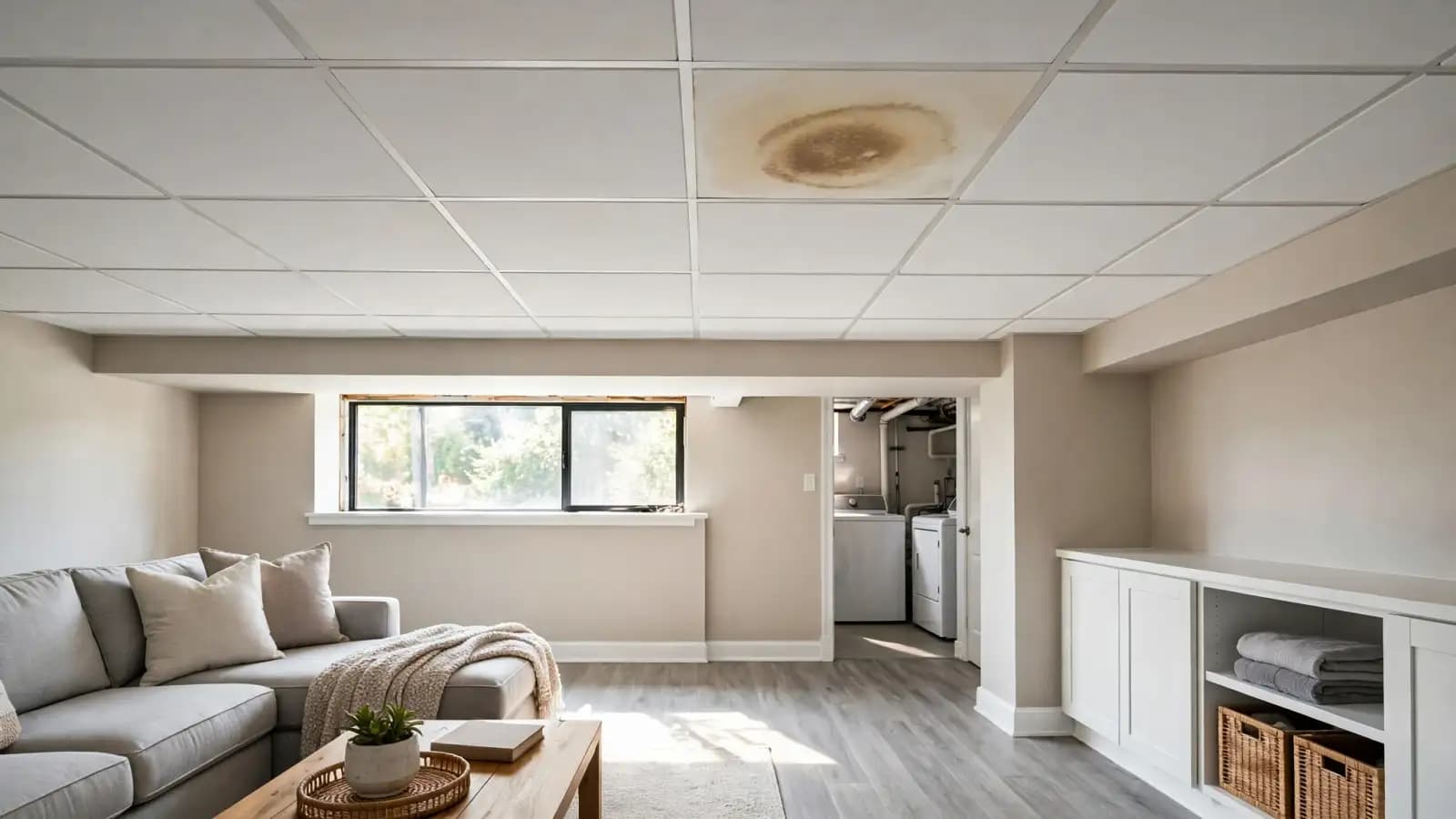
- Finished basements: Many homes have basements, so upper-floor plumbing leaks show in basement ceilings. See basement ceiling leaks.
How conditions differ across Indiana
Northern Indiana, near Lake Michigan, sees more lake-effect snow and ice dams. Central Indiana, including Indianapolis, has a mix of winter freezes and spring storms. Southern Indiana is warmer and more humid, with more severe thunderstorms and fewer snow-related leaks.
Indiana housing and what it means for ceilings
Indiana has older homes in Indianapolis and industrial cities, farmhouses in rural areas, and growing suburbs around Indianapolis.
When ceiling leaks peak in Indiana
Indiana's severe-weather season peaks from April through June, and winter freeze problems from December through February. Basement ceiling leaks from plumbing happen year-round.
A practical tip for Indiana homeowners
Keep the area around your main water shutoff clear and test that the valve turns. In many Indiana basements it is hidden behind storage or a finished wall.
Ceiling water damage by city in Indiana
- Indianapolis: hail and finished basements.
Neighboring states
Local sources
Local facts on this page were checked against these public sources. Conditions change; confirm details with the agency.
Frequently asked questions
How do I check for hail damage on an Indiana roof?
From the ground, look for missing granules in gutters and dents in gutters and vents. A roofer can confirm bruised or cracked shingles. Hail damage often leaks only later.
My Indiana ceiling leaked during a freeze. Why?
A pipe in an exterior wall or attic likely froze and split, and the leak appeared when it thawed. Shut off the water and call a plumber.
My Indiana ceiling stained after a windstorm. Should I call a roofer or a restoration company?
Call a roofer first to stop the water, then a restoration company if the ceiling or attic insulation is wet. If the ceiling is sagging, call for help immediately.
How do I keep an Indiana basement ceiling from getting wet in summer?
Insulate cold water pipes and ducts and run a dehumidifier. Sweating pipes in humid basements often drip enough to stain ceiling tiles or drywall.
Related guides
- CausesStorm damageWind-driven rain, fallen trees, hail and hurricanes: ceiling leaks after severe weather.
- Ceiling TypesBasement ceilingsLeaks from the floor above, sweating pipes and ducts, and finish choices for easier access.
- ServicesCeiling water damage repairEnd-to-end professional repair: inspection, drying, removal, rebuild and finishing.
Also referenced in
This guide is general educational information, not a site-specific inspection. Read our editorial policy for how content is researched and reviewed.
Free referral call · All 50 states
Need help with ceiling water damage?
Call and describe what you see. One call gets you help.
By calling, you agree to be connected with an independent local contractor and that your call may be recorded for quality. Calling is free and there is no obligation to hire anyone.