
Ceiling Problems
Musty Smell After a Ceiling Leak
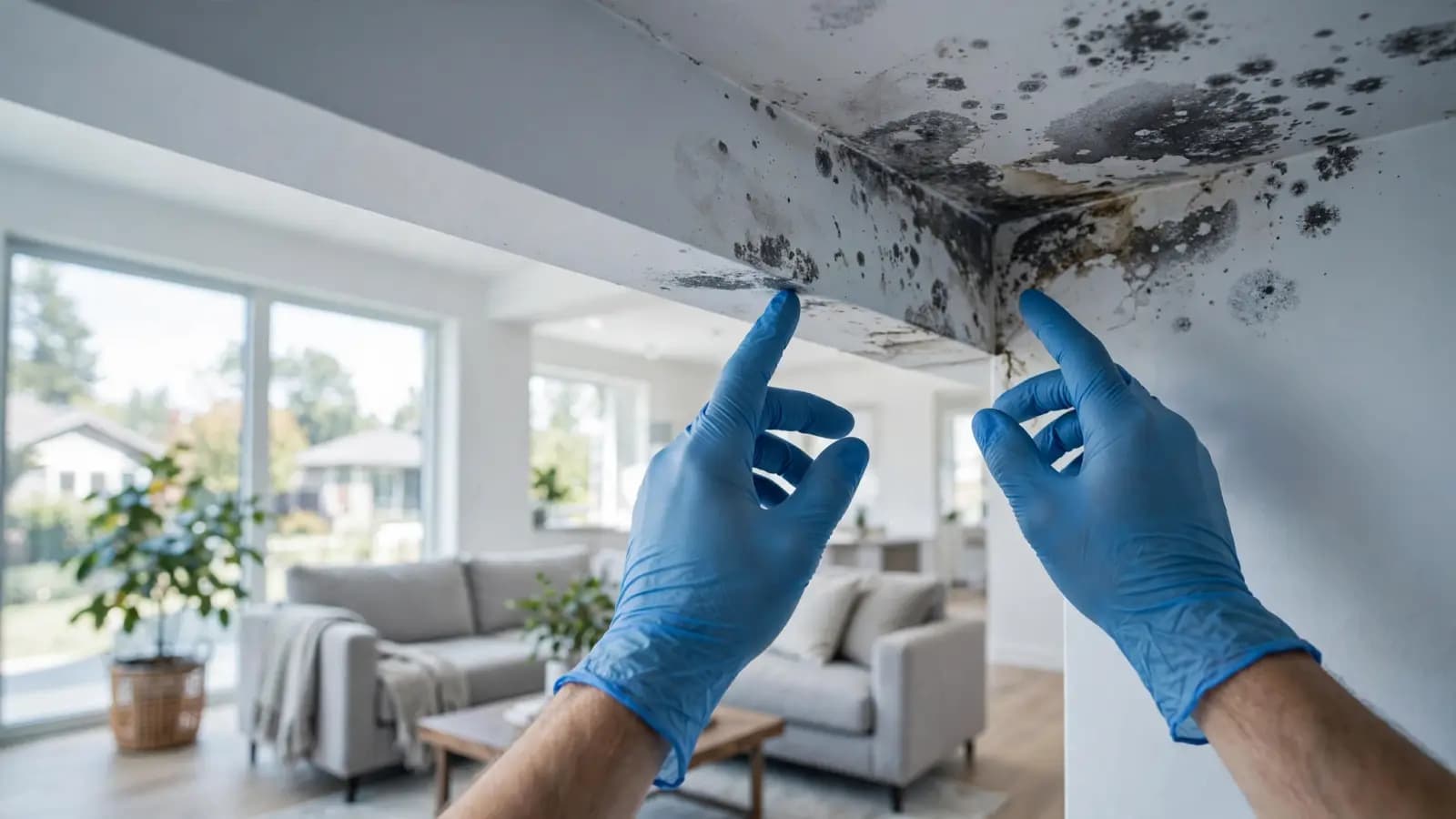
Short answer
A musty smell after a ceiling leak almost always means something above or inside the ceiling stayed wet long enough for mold or bacteria to grow. The usual culprits are wet insulation, the top side of the drywall, or framing in the cavity. The ceiling surface can look completely normal. The fix is to find and dry or remove the wet material, not to mask the odor.
At a glance
- Condition
- Odor from microbial growth on damp materials in or above the ceiling.
- Common causes
- Leaks that dried on the surface but not inside, wet insulation, attic moisture and condensation.
- Evidence
- Earthy, damp-basement odor that is strongest near one area or when the HVAC starts.
- Risk if ignored
- Ongoing hidden mold growth, damage to materials, and indoor air quality complaints.
- What to do now
- Locate the area, check moisture, inspect from the attic or the floor above where possible.
- Solution
- Remove or dry wet materials, remediate mold, fix the moisture source.
Why the smell appears after the leak is fixed
Repairing a leak stops new water but does not remove water that is already in the insulation and framing. Fiberglass batts that were soaked and flattened, and especially cellulose insulation, can hold moisture for a long time in an enclosed cavity. The musty odor comes from compounds released by mold and bacteria growing there.
How to track it down
- Walk the area and note where the smell is strongest, and whether it gets stronger when the HVAC system starts.
- Compare moisture readings across the ceiling with a meter; hidden damp areas often read higher than the surroundings.
- If there is an attic above, inspect the insulation over the leak area for compression, staining or dampness from the attic side, walking only on framing or boards.
- Under a bathroom or between floors, a small inspection hole in the drywall, or an infrared camera followed by meter confirmation, can show what is inside.
What not to do
- Do not use air fresheners or odor sprays to cover it; they hide the evidence and do not affect growth.
- Do not run an ozone generator in an occupied home. The EPA advises against ozone for indoor air cleaning; it is a lung irritant and does not remove mold.
- Do not close the ceiling back up over damp insulation.
Frequently asked questions
Why does my ceiling smell musty but look fine?
The growth is usually above the drywall on wet insulation, the top face of the board, or framing. The painted side can stay clean while the hidden side is damp.
Will the musty smell go away on its own?
Only if the materials fully dry and growth stops, which rarely happens in a closed ceiling cavity. Usually the wet material has to be dried or removed.
Can wet insulation in the ceiling be dried?
Lightly dampened fiberglass that is not contaminated can sometimes dry if exposed. Soaked, compressed or contaminated insulation, and most wet cellulose, is normally removed and replaced.
Is a musty smell always mold?
Not always, but it is the most common cause after a leak. Bacteria on damp materials and stagnant water in drain pans can also produce musty odors.
Related guides
- Ceiling ProblemsCeiling moldSpots, fuzz or discoloration after a leak: how mold develops, what is safe to clean, and what needs a pro.
- ServicesLeak detectionMoisture meters, thermal imaging, acoustic tools and water tests to find hidden sources.
- CausesHVAC condensationAttic air handlers, clogged condensate lines, overflowing pans and sweating ducts.
- Repair & DryingDrying a ceilingDrying timelines, what speeds them up, and how to confirm a ceiling is actually dry.
Also referenced in
This guide is general educational information, not a site-specific inspection. Read our editorial policy for how content is researched and reviewed.