
Ceiling Types
Water Damage on Drop Ceilings
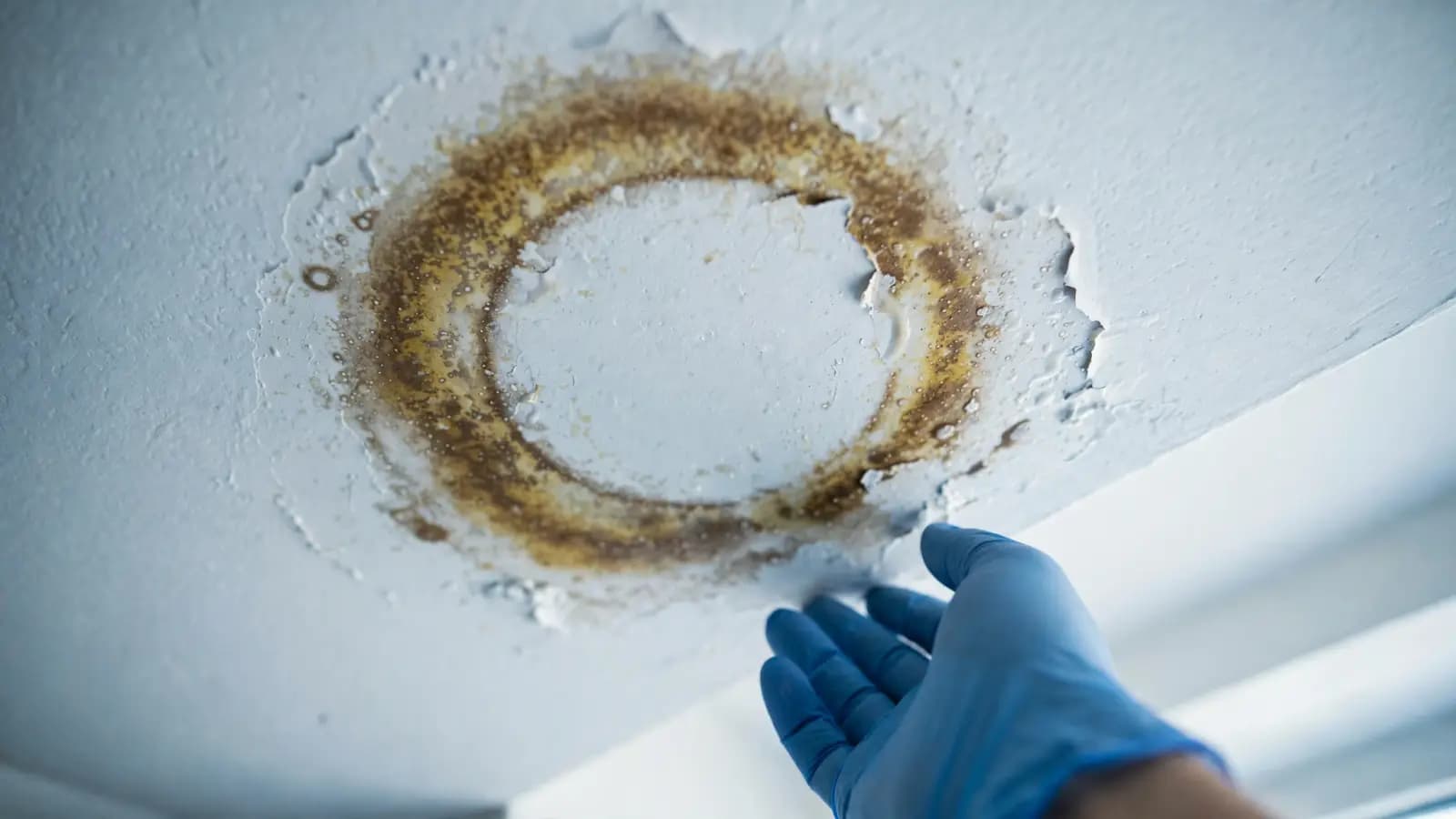
Short answer
Drop ceiling tiles absorb water quickly, so they stain and sag at the first sign of a leak, which makes them an early warning. They are also easy to lift for inspection. Stained or sagged mineral fiber tiles are normally replaced rather than cleaned once the leak is fixed, and the space above is checked for wet insulation or pipes.
At a glance
- Condition
- Suspended grid with lay-in tiles, common in basements and commercial spaces.
- Common causes
- Pipes, ducts and fixtures in the space above; condensation on cold water lines.
- Evidence
- Brown rings on tiles, warped or sagging tiles, drips at grid joints.
- Risk if ignored
- Low collapse risk; mold on tiles and in the space above if wet for days.
- What to do now
- Lift adjacent dry tiles to look above, find the source.
- Solution
- Fix the source, dry the plenum, replace damaged tiles.
Using the tiles to find the leak
- Wear eye protection; dust and debris fall when tiles move.
- Lift a dry tile next to the stained one, not the wet tile itself, which may tear or dump water.
- Use a flashlight to follow pipes, ducts and the underside of the floor above toward the wettest point.
- Look for condensation on cold water lines and uninsulated ducts, a common cause in basements during humid months.
Replace or clean?
Most mineral fiber acoustic tiles are porous and lose shape when wet. Stains can sometimes be lightened, but warped or moldy tiles are replaced. Match the replacement by size, edge detail (square lay-in or tegular) and texture; take an old tile to the supplier. Vinyl-faced and some plastic tiles can be wiped clean if they did not deform.
Drying the space above the tiles
Removing wet tiles is only half the job. The space above a drop ceiling often holds wet insulation, damp joists and the underside of the subfloor, and it can trap humid air. Leave several tiles out while drying so air reaches the cavity, run a dehumidifier in the room, and check the joists and subfloor with a moisture meter before reinstalling tiles. Replace any insulation that was soaked, and look for mold on the back of nearby tiles and on framing.
The grid itself is usually fine after a leak, but thin steel grid can rust where water sat, and hanger wires can corrode over time. Replace rusted runners and check that the grid is still level before setting new tiles.
Basement drop ceilings
Basement drop ceilings often hide supply lines, drains from bathrooms above and HVAC ducts, so they see leaks from all directions. See basement ceilings for basement-specific sources, and HVAC condensation for ducts that sweat.
Frequently asked questions
Can you clean water stains off ceiling tiles?
Light stains on intact tiles can sometimes be lightened, but most water-stained mineral fiber tiles are replaced, especially if they warped or show mold.
Why are my drop ceiling tiles wet with no leak?
Condensation on cold water pipes or air-conditioning ducts in the space above can drip onto tiles, especially in humid basements during summer.
Are old ceiling tiles dangerous to remove?
Tiles installed before the 1980s may contain asbestos. Have unknown older tiles tested before disturbing them.
Related guides
- Ceiling TypesBasement ceilingsLeaks from the floor above, sweating pipes and ducts, and finish choices for easier access.
- CausesHVAC condensationAttic air handlers, clogged condensate lines, overflowing pans and sweating ducts.
- Ceiling ProblemsBrown water stainWhat brown or yellow rings mean, how to tell if the leak is still active, and when a stain is only cosmetic.
- CausesPlumbing leakSupply and drain leaks between floors: telling them apart, shutting them off, and repair.
This guide is general educational information, not a site-specific inspection. Read our editorial policy for how content is researched and reviewed.