
Local guide
Ceiling Water Damage in New Hampshire
Short answer
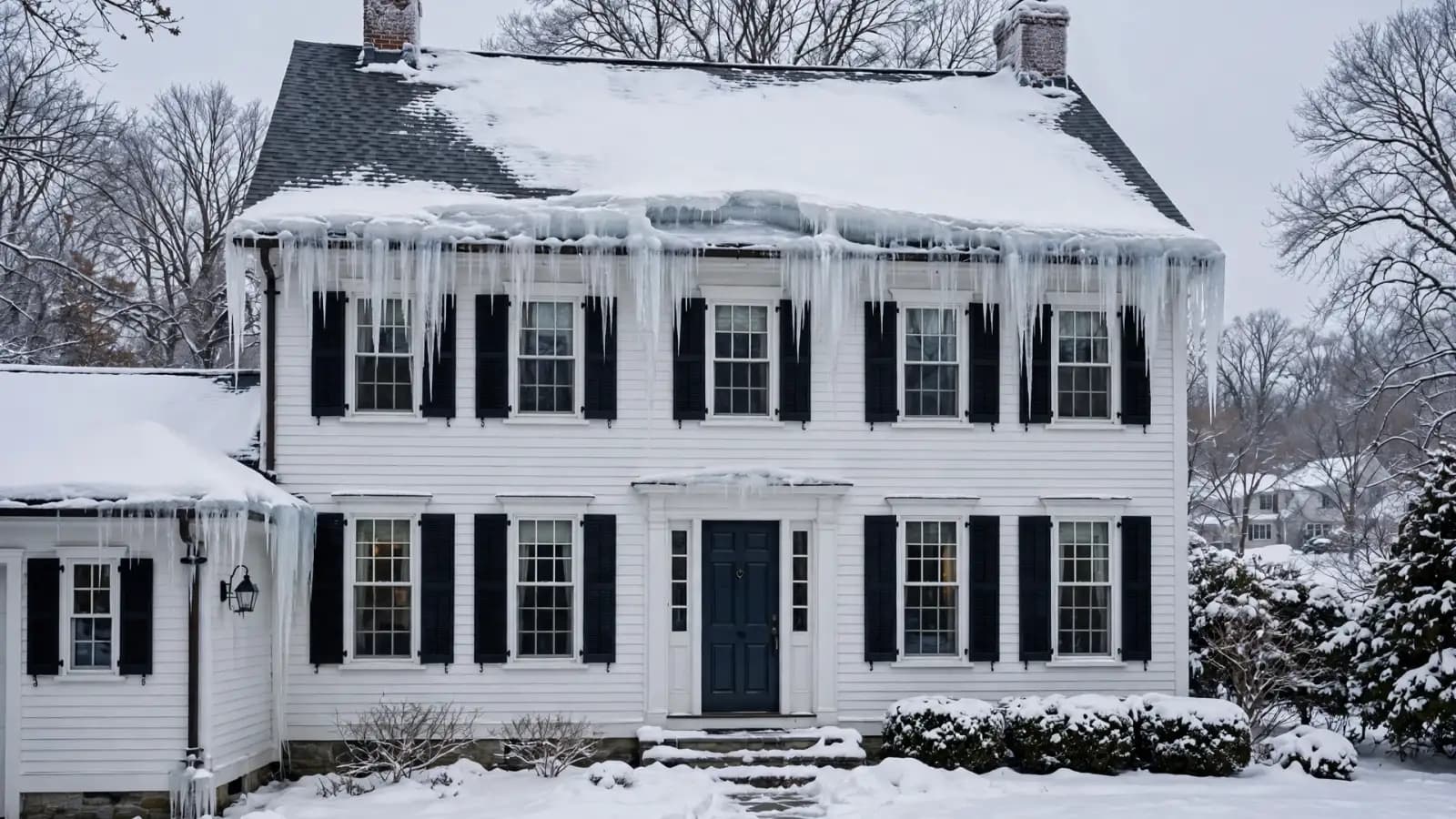
In New Hampshire, ceiling water damage is mostly a winter problem: ice dams on snow-covered roofs, frozen pipes in older farmhouses and vacation homes, and spring melt testing flashing. Summer thunderstorms add a smaller share of roof leaks.
How ceilings get water damaged in New Hampshire
New Hampshire has cold, snowy winters, especially in the White Mountains and the north, and warm, humid summers in the southern tier. Snowpack combined with sunny thaws drives ice-dam season.
- Ice dams: Southern New Hampshire's mix of older capes and finished upper half-stories is especially prone to ice dams at knee walls. See roof leaks and ceiling damage.
- Frozen pipes: Ski-area condos and second homes left at low heat can freeze during deep cold, often discovered only after the thaw. See plumbing leaks above ceilings.
- Heavy snow: Mountain-area roofs carry heavy snow loads that stress flashing at chimneys, skylights and valleys. See roof leaks and ceiling damage.
- Older housing stock: Colonial-era and nineteenth-century homes often have plaster ceilings that can lose their grip on the lath when wetted. See water-damaged plaster ceilings.
How conditions differ across New Hampshire
Southern New Hampshire's commuter towns have older capes prone to ice dams, the Lakes Region has many seasonal homes at risk of frozen pipes, and the White Mountains receive heavy snow.
New Hampshire housing and what it means for ceilings
Housing ranges from historic colonials and capes to newer subdivisions in the southern commuter towns, plus a large stock of seasonal homes in the Lakes Region and mountains.
When ceiling leaks peak in New Hampshire
New Hampshire ice dams typically peak from January through March, and spring thaw in March and April brings meltwater leaks. Summer thunderstorms cause fewer, but sudden, roof leaks.
A practical tip for New Hampshire homeowners
Before winter, make sure attic hatches are insulated and sealed. A drafty attic hatch is a common, inexpensive-to-fix source of the warm air that causes ice dams.
Notable water events in New Hampshire
- 1998, Ice Storm of 1998: The January 1998 ice storm brought extended power outages to parts of New Hampshire, a reminder that cold-weather outages lead to frozen-pipe leaks.
Ceiling water damage by city in New Hampshire
- Manchester: ice dams and frozen pipes.
Neighboring states
Local sources
Local facts on this page were checked against these public sources. Conditions change; confirm details with the agency.
Frequently asked questions
Why does my New Hampshire ceiling leak only in winter?
A leak that appears only with snow on the roof is almost always an ice dam or melting snow finding a flashing gap. Check for ice along the eaves and stains near exterior walls.
Who fixes ice dam damage in New Hampshire?
A roofer or insulation contractor addresses the cause, usually attic air sealing, insulation and ventilation. A restoration company dries the wet insulation and ceiling, and a drywall or plaster contractor repairs the finish.
Why do New Hampshire capes get ice dams so often?
Capes have finished upper rooms under sloped ceilings with little space for insulation and ventilation, so heat reaches the roof and melts snow.
Can frozen pipes in a New Hampshire vacation home damage several ceilings?
Yes. If a pipe bursts while the home is empty, water can run for days and damage ceilings on every floor below.
Related guides
- CausesRoof leakStains that appear after rain: flashing, vents, shingles, ice dams and how water travels to the ceiling.
- CausesPlumbing leakSupply and drain leaks between floors: telling them apart, shutting them off, and repair.
- Ceiling TypesPlaster ceilingsLath and plaster in older homes: key failure, delamination, and how plaster is repaired.
- ServicesCeiling water damage repairEnd-to-end professional repair: inspection, drying, removal, rebuild and finishing.
Also referenced in
This guide is general educational information, not a site-specific inspection. Read our editorial policy for how content is researched and reviewed.
Free referral call · All 50 states
Need help with ceiling water damage?
Call and describe what you see. One call gets you help.
By calling, you agree to be connected with an independent local contractor and that your call may be recorded for quality. Calling is free and there is no obligation to hire anyone.