
Ceiling Types
Basement Ceiling Water Damage
Short answer
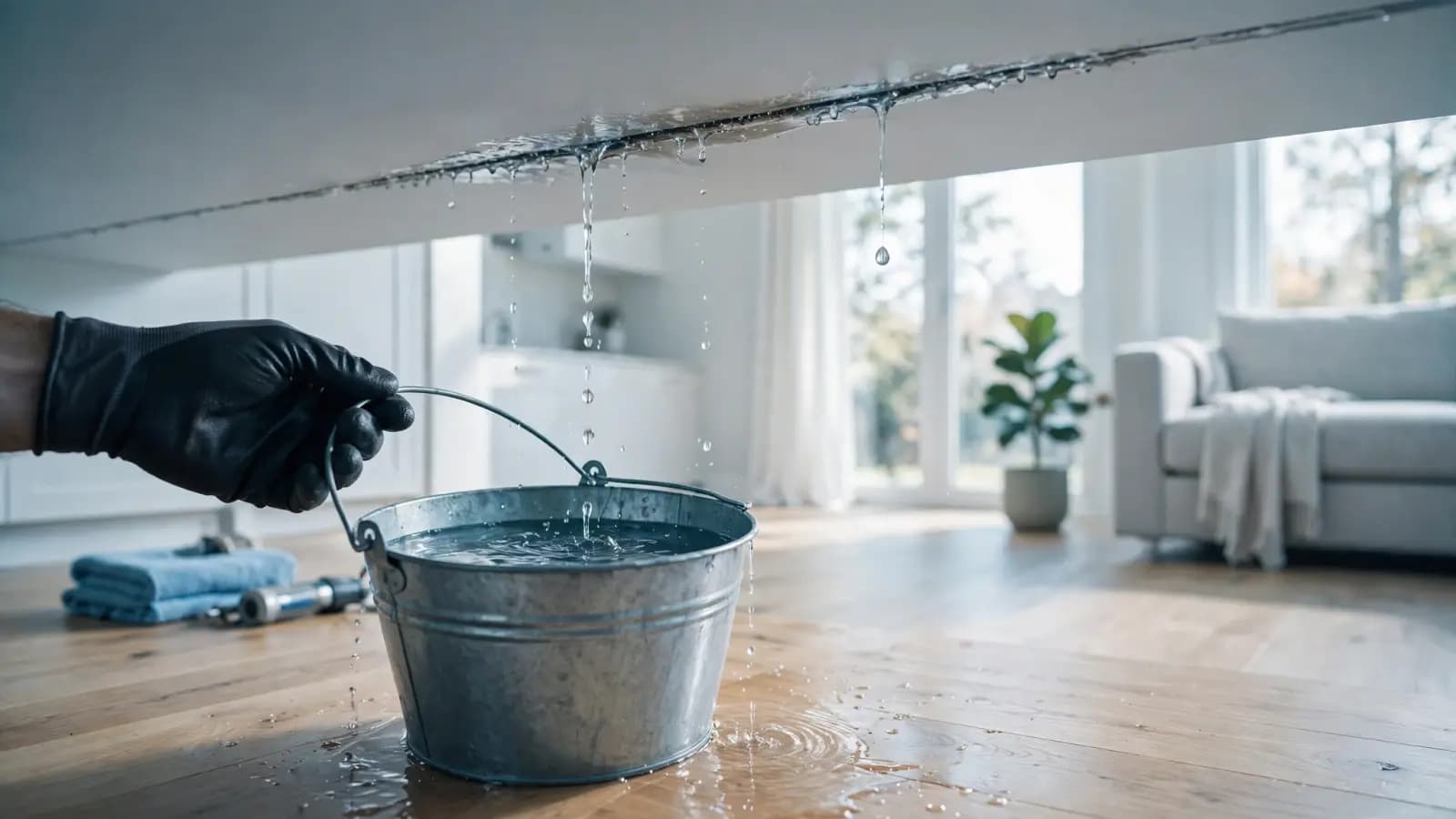
Basement ceilings are below the busiest plumbing in the house, including kitchens, bathrooms, laundry and main supply and drain lines, so most basement ceiling leaks come from the floor above or from pipes and ducts running in the joists. In humid weather, cold water pipes and ducts can also sweat enough to drip. Unlike upper floors, rain is rarely the cause.
At a glance
- Condition
- Finished basement ceiling with plumbing and HVAC in the joist space.
- Common causes
- Kitchen and bathroom leaks above, supply and drain lines in the joists, sweating pipes and ducts, appliance leaks.
- Evidence
- Stains following pipe routes, drips in humid months, stains under fixtures above.
- Risk if ignored
- Basements dry slowly and run humid, so mold risk is higher after a leak.
- What to do now
- Trace stains to the fixtures above, check for condensation, run a dehumidifier.
- Solution
- Fix leaks, insulate sweating pipes, dry, and repair with access in mind.
Common basement ceiling sources
- Kitchen: dishwasher, sink drain, ice-maker line. See appliance leaks.
- Bathrooms above: see upstairs bathroom leaks.
- Main supply lines and the drain stack running through the joists: see plumbing leaks.
- Condensation on cold water lines and air-conditioning ducts in humid weather.
- First-floor exterior doors and windows letting water in at the sill.
Sweating pipes versus leaks
Condensation shows up in warm, humid weather and appears along the full length of cold pipes as beads of water. A leak shows up at one point and continues regardless of weather. Insulating cold water lines with foam pipe insulation and keeping basement humidity in check with a dehumidifier usually ends sweating.
Tracing a stain to the floor above
- Measure the stain's position from two walls of the basement.
- Take the same measurements upstairs to find what sits above it: a toilet, tub, sink, dishwasher or refrigerator.
- Check the floor around that fixture for soft spots, lifted flooring or staining at the base.
- Follow visible pipes in the joist bay toward the stain; water often runs along a pipe before dripping.
- Run the fixture above while someone watches the basement ceiling.
Drying and finishing considerations
Basements are cooler and often more humid than upper floors, so evaporation is slower and mold risk higher after a leak. Run a dehumidifier during drying. When repairing, consider access panels under valves and cleanouts, or a drop ceiling in areas with lots of plumbing, so the next repair does not require cutting drywall.
Frequently asked questions
Why is water dripping from my basement ceiling?
Usually a leak from a kitchen, bathroom or laundry fixture above, a supply or drain line in the joists, or condensation on cold pipes and ducts in humid weather.
How do I stop basement pipes from sweating?
Insulate cold water pipes with foam pipe insulation and lower basement humidity with a dehumidifier.
Should I use drywall or a drop ceiling in a basement?
Drywall looks more finished; a drop ceiling gives easy access to plumbing and ducts. Many owners use drywall with access panels under valves and cleanouts as a compromise.
Related guides
- Ceiling TypesDrop ceilingsSuspended tiles: why they stain quickly, how to look above them, and replacing tiles.
- CausesAppliance leakUpstairs washing machines, dishwashers and ice-maker lines leaking to the floor below.
- Ceiling TypesKitchen ceilingsStains above kitchens: bathrooms and laundry overhead, recessed lights, and cooking moisture.
- CausesPlumbing leakSupply and drain leaks between floors: telling them apart, shutting them off, and repair.
This guide is general educational information, not a site-specific inspection. Read our editorial policy for how content is researched and reviewed.