
Local guide
Ceiling Water Damage in Maine
Short answer
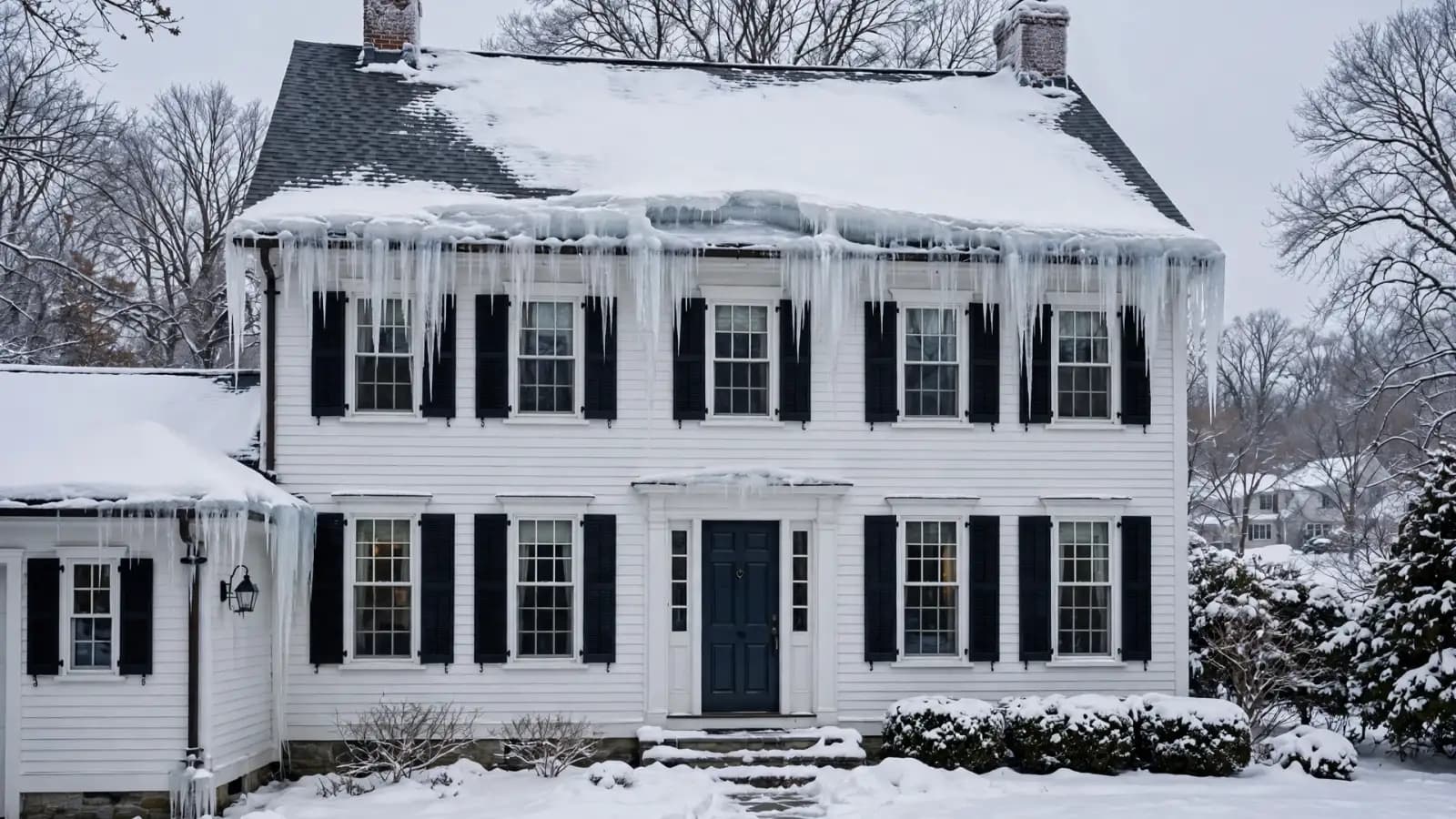
Most ceiling water damage in Maine traces to winter: ice dams forcing meltwater under shingles, pipes freezing in exterior walls and unheated spaces, and heavy wet snow on older roofs. Coastal homes add nor'easter wind-driven rain to the list.
How ceilings get water damaged in Maine
Maine has long, cold winters with substantial snowfall inland and frequent nor'easters along the coast. Freeze-thaw cycles in late winter and early spring are when ice dams and roof leaks peak.
- Ice dams: Snow-covered roofs over heated, under-insulated attics form ice dams along the eaves, and the backed-up meltwater stains ceilings along exterior walls. See roof leaks and ceiling damage.
- Frozen pipes: Seasonal camps and homes with plumbing in exterior walls are vulnerable during cold snaps; a split pipe usually shows up as a ceiling leak when it thaws. See plumbing leaks above ceilings.
- Older housing stock: Many farmhouses and village capes are more than a century old, with plaster-and-lath ceilings and decades of roof patches. See water-damaged plaster ceilings.
- Heavy snow: Wet coastal snow and repeated storms load roofs and test flashing at chimneys and dormers. See roof leaks and ceiling damage.
How conditions differ across Maine
Coastal Maine, including Portland, faces nor'easters and wind-driven rain, while inland and northern Maine have colder winters with more snow and more frozen-pipe risk.
Maine housing and what it means for ceilings
Older capes, farmhouses with attached barns and coastal cottages are common, and many have limited attic insulation and ventilation, the two conditions behind most ice dams.
When ceiling leaks peak in Maine
Maine's ice-dam season runs from December into March, with spring thaw in March and April bringing meltwater leaks. Coastal nor'easters can strike from fall through spring.
A practical tip for Maine homeowners
Use a roof rake to clear the bottom few feet of snow from the roof after big storms. It is one of the simplest ways to reduce ice dams on older Maine homes.
Notable water events in Maine
- 1998, Ice Storm of 1998: Freezing rain caused widespread outages across Maine in January 1998, with long stretches of unheated homes where pipes froze.
Ceiling water damage by city in Maine
- Portland: ice dams and older housing stock.
Neighboring states
Local sources
Local facts on this page were checked against these public sources. Conditions change; confirm details with the agency.
Frequently asked questions
When do ice dams usually cause leaks in Maine?
Most ice-dam leaks appear after a significant snowfall followed by a few days of thaw or strong sun, typically from December through March. Stains along exterior walls on the top floor are the classic sign.
How do I protect pipes in a seasonal Maine home?
Winterize plumbing that will sit unheated: drain supply lines, shut off the main and add antifreeze to traps, or keep heat on with a low-temperature alarm. A plumber can winterize and de-winterize the system.
Why do ceilings in Maine homes with attached barns get stained?
The roof junction between the house and an attached barn or ell is a complex valley that catches snow and ice. It is a common leak point in older Maine homes.
Can a Maine heat pump cause ceiling leaks?
Ducted heat pumps with air handlers in the attic produce condensate in cooling mode and can overflow if the drain clogs. Ductless indoor units can also drip if their drain lines fail.
Related guides
- CausesRoof leakStains that appear after rain: flashing, vents, shingles, ice dams and how water travels to the ceiling.
- CausesPlumbing leakSupply and drain leaks between floors: telling them apart, shutting them off, and repair.
- Ceiling TypesPlaster ceilingsLath and plaster in older homes: key failure, delamination, and how plaster is repaired.
- ServicesCeiling water damage repairEnd-to-end professional repair: inspection, drying, removal, rebuild and finishing.
Also referenced in
This guide is general educational information, not a site-specific inspection. Read our editorial policy for how content is researched and reviewed.
Free referral call · All 50 states
Need help with ceiling water damage?
Call and describe what you see. One call gets you help.
By calling, you agree to be connected with an independent local contractor and that your call may be recorded for quality. Calling is free and there is no obligation to hire anyone.