
Local guide
Ceiling Water Damage in North Dakota
Short answer
North Dakota ceiling water damage is mostly about extreme cold: frozen pipes, ice dams and snowmelt. Spring thaw and flooding along the Red River also affect homes.
How ceilings get water damaged in North Dakota
North Dakota has long, extremely cold winters with strong winds and blowing snow, short summers with thunderstorms, and spring flooding risk along major rivers.
- Frozen pipes: Extreme cold and wind chill freeze pipes in exterior walls and unheated spaces. See plumbing leaks above ceilings.
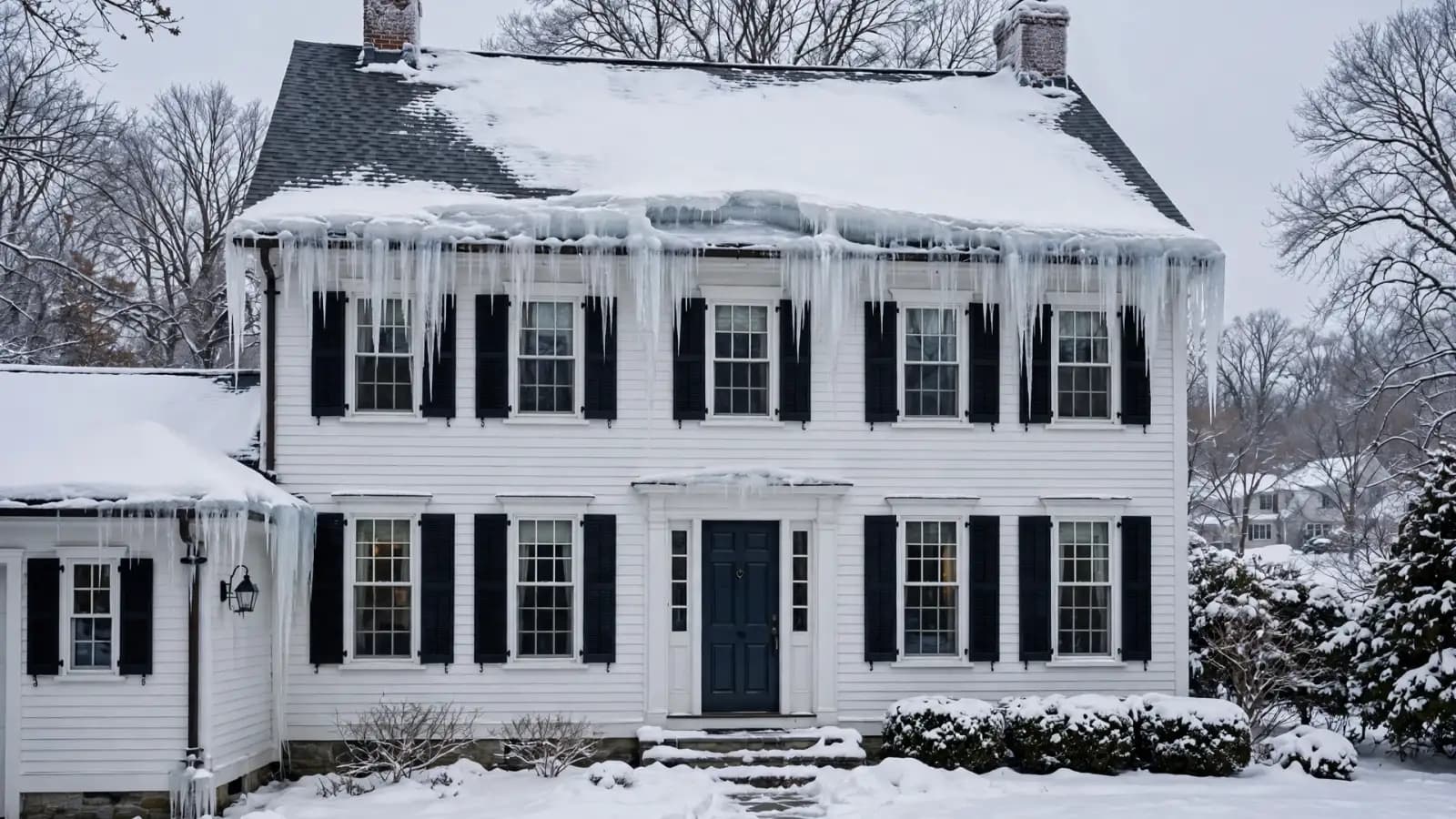
- Ice dams: Persistent snow cover and sunny thaws build ice dams. See roof leaks and ceiling damage.
- Finished basements: Basements are standard, so plumbing leaks commonly appear in basement ceilings. See basement ceiling leaks.
How conditions differ across North Dakota
Eastern North Dakota, along the Red River Valley including Fargo and Grand Forks, faces spring flooding risk and extreme cold. Western North Dakota is drier and windier, with blizzards that can drive snow into attics.
North Dakota housing and what it means for ceilings
Most homes are single-family with basements, including older homes in Fargo, Grand Forks and Bismarck.
When ceiling leaks peak in North Dakota
North Dakota's frozen-pipe risk is highest from December through February, ice dams build during long snow cover, and spring thaw from March to April brings meltwater and flooding.
A practical tip for North Dakota homeowners
If you leave home in winter, ask someone to check the house daily or install a remote temperature monitor. A furnace failure in a North Dakota cold snap freezes pipes fast.
Notable water events in North Dakota
- 1997, Red River flood: The 1997 Red River flood devastated Grand Forks.
Ceiling water damage by city in North Dakota
- Fargo: frozen pipes and ice dams.
Neighboring states
Local sources
Local facts on this page were checked against these public sources. Conditions change; confirm details with the agency.
Frequently asked questions
What temperature should I keep a North Dakota home at to avoid frozen pipes?
Keep heat on throughout the home, including when away, and avoid letting rooms with plumbing on exterior walls get cold. A low-temperature alarm or smart thermostat alerts you if heat fails.
Why does my North Dakota ceiling leak during spring thaw?
Snow melting on the roof can back up behind ice at the eaves or find gaps in flashing. Check the attic during thaws and clear snow from the lower roof.
Why do North Dakota ceilings stain during the coldest weeks?
Pipes in exterior walls or unheated spaces freeze and split. When they thaw, they leak into ceilings below.
Can spring flooding in North Dakota damage ceilings?
Flooding mainly damages lower levels, but the humidity it leaves can cause mold on ceilings. Dry quickly.
Related guides
- CausesPlumbing leakSupply and drain leaks between floors: telling them apart, shutting them off, and repair.
- CausesRoof leakStains that appear after rain: flashing, vents, shingles, ice dams and how water travels to the ceiling.
- Ceiling TypesBasement ceilingsLeaks from the floor above, sweating pipes and ducts, and finish choices for easier access.
- ServicesCeiling water damage repairEnd-to-end professional repair: inspection, drying, removal, rebuild and finishing.
Also referenced in
This guide is general educational information, not a site-specific inspection. Read our editorial policy for how content is researched and reviewed.
Free referral call · All 50 states
Need help with ceiling water damage?
Call and describe what you see. One call gets you help.
By calling, you agree to be connected with an independent local contractor and that your call may be recorded for quality. Calling is free and there is no obligation to hire anyone.