
Ceiling Types
Water Damage on Plaster Ceilings
Short answer
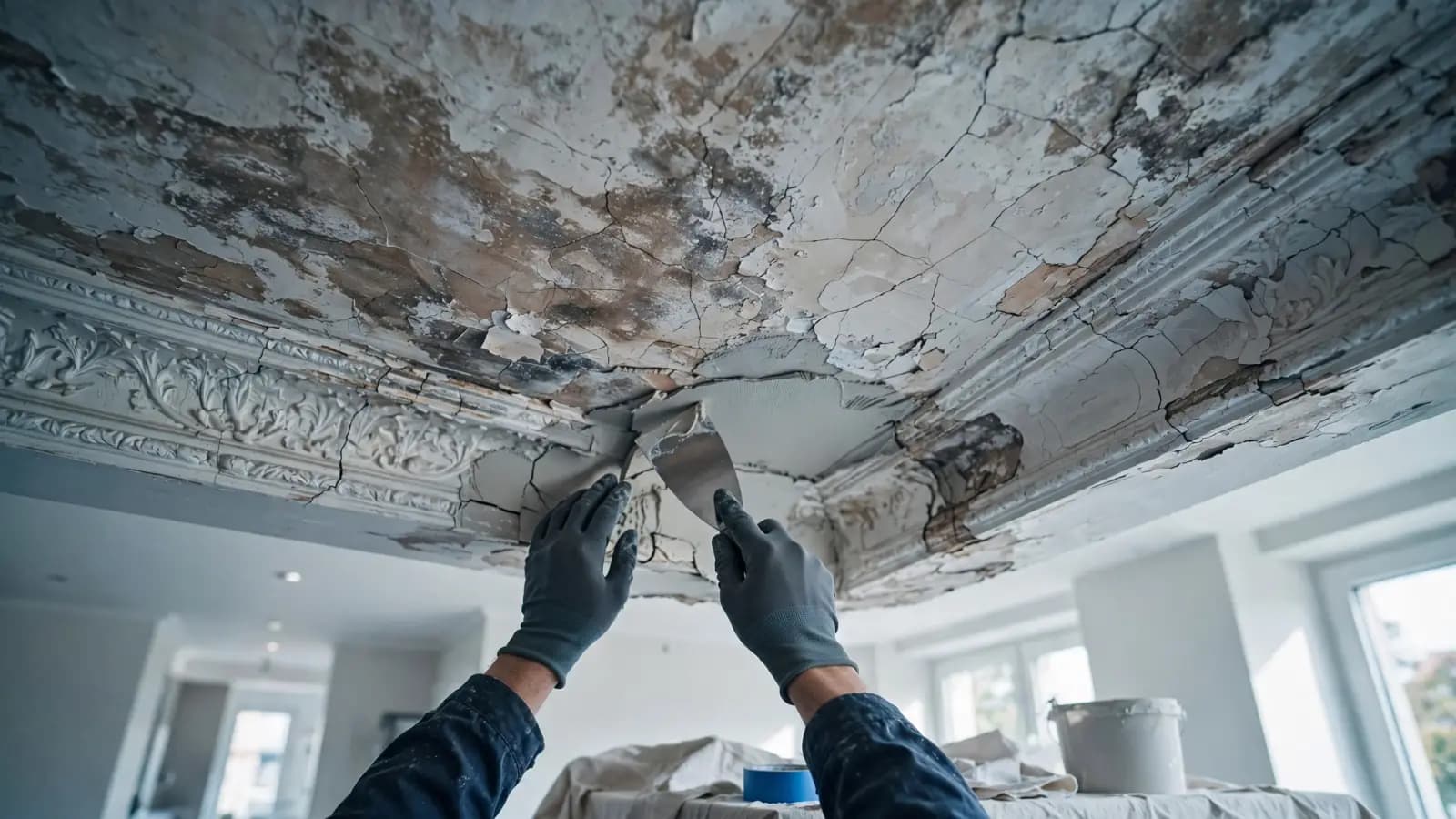
Plaster ceilings are attached by keys, plaster pushed between strips of wood lath that hardens behind them. Water weakens the plaster and can swell the lath, breaking those keys so sections sag or fall. Plaster is far heavier than drywall, so a bulging or hollow-sounding plaster ceiling after a leak should be treated as a falling hazard until assessed.
At a glance
- Condition
- Plaster on wood or metal lath, wetted from above.
- Common causes
- Roof and plumbing leaks in older homes, often over many years.
- Evidence
- Stains, crumbling or powdery plaster, web-like cracks, bulges, hollow sound when tapped lightly.
- Risk if ignored
- Heavy sections detaching; lead paint and, in some older finishes, asbestos.
- What to do now
- Keep clear of bulging areas, stop the source, have it assessed before disturbing.
- Solution
- Re-attaching sound plaster with washers and adhesive, patching, or replacing sections or the whole ceiling.
How plaster ceilings fail
Traditional plaster ceilings are built in coats over narrow strips of wood lath with gaps between them. The first coat squeezes through the gaps and curls over the back of the lath, forming the keys that hold the ceiling up. Water softens plaster, dissolves some binders and swells wood lath. When the keys crack, the plaster face stays in place only through its connection to neighboring sound areas. That is why plaster can appear intact and then drop in a slab.
Warning signs
- A bulge or droop, especially one that moves slightly when pressed gently from a ladder at the edge (not the center).
- A hollow or drummy sound when tapped lightly.
- Crumbling, powdery plaster or plaster that turns to sand.
- Web-like cracking around a stain, or cracks with one side lower.
Repair options
Plaster dries more slowly than drywall because it is thicker, and it should be fully dry before patching. Matching an old plaster finish takes a plaster-experienced contractor. Related: cracked ceiling after water damage.
| Condition | Typical repair |
|---|---|
| Stained, sound, firmly attached | Dry, seal with stain blocker, repaint |
| Small loose areas, plaster intact | Re-attach with plaster washers and screws, often with injected adhesive; patch cracks |
| Localized failed or crumbling plaster | Cut out to sound edges, patch with plaster or a drywall insert set flush |
| Widespread failed keys or repeated leaks | Remove plaster, or overlay with drywall screwed through to the joists |
Frequently asked questions
Can a water-damaged plaster ceiling be repaired?
Often, yes. Sound plaster that is still attached can be dried and refinished, and loose sections can be re-attached with plaster washers. Crumbling or widely detached plaster is cut out or overlaid with drywall.
Is a bulging plaster ceiling dangerous?
Yes. A bulge usually means the keys holding the plaster to the lath have broken. Plaster is heavy and can fall in large pieces, so keep people out from under it.
Does plaster hold up better than drywall in a leak?
Plaster is harder and less absorbent at the surface, so small leaks may leave only a stain. But when plaster does fail, it can detach in heavy pieces, and older plaster may contain lead paint.
Related guides
- Ceiling ProblemsCracked ceilingCracks along seams or stains after a leak: water cracks versus structural cracks.
- Ceiling TypesDrywall ceilingsHow gypsum board takes on water, damp vs saturated board, and moisture-resistant options.
- Ceiling TypesTextured & popcornPopcorn, knockdown and orange-peel ceilings after a leak, including the asbestos question.
- Guides & ToolsCan it collapse?Why saturated ceilings fail, the warning signs that come first, and safe next steps.
Also referenced in
This guide is general educational information, not a site-specific inspection. Read our editorial policy for how content is researched and reviewed.