
Guides & Tools
Can a Water-Damaged Ceiling Collapse?
Short answer
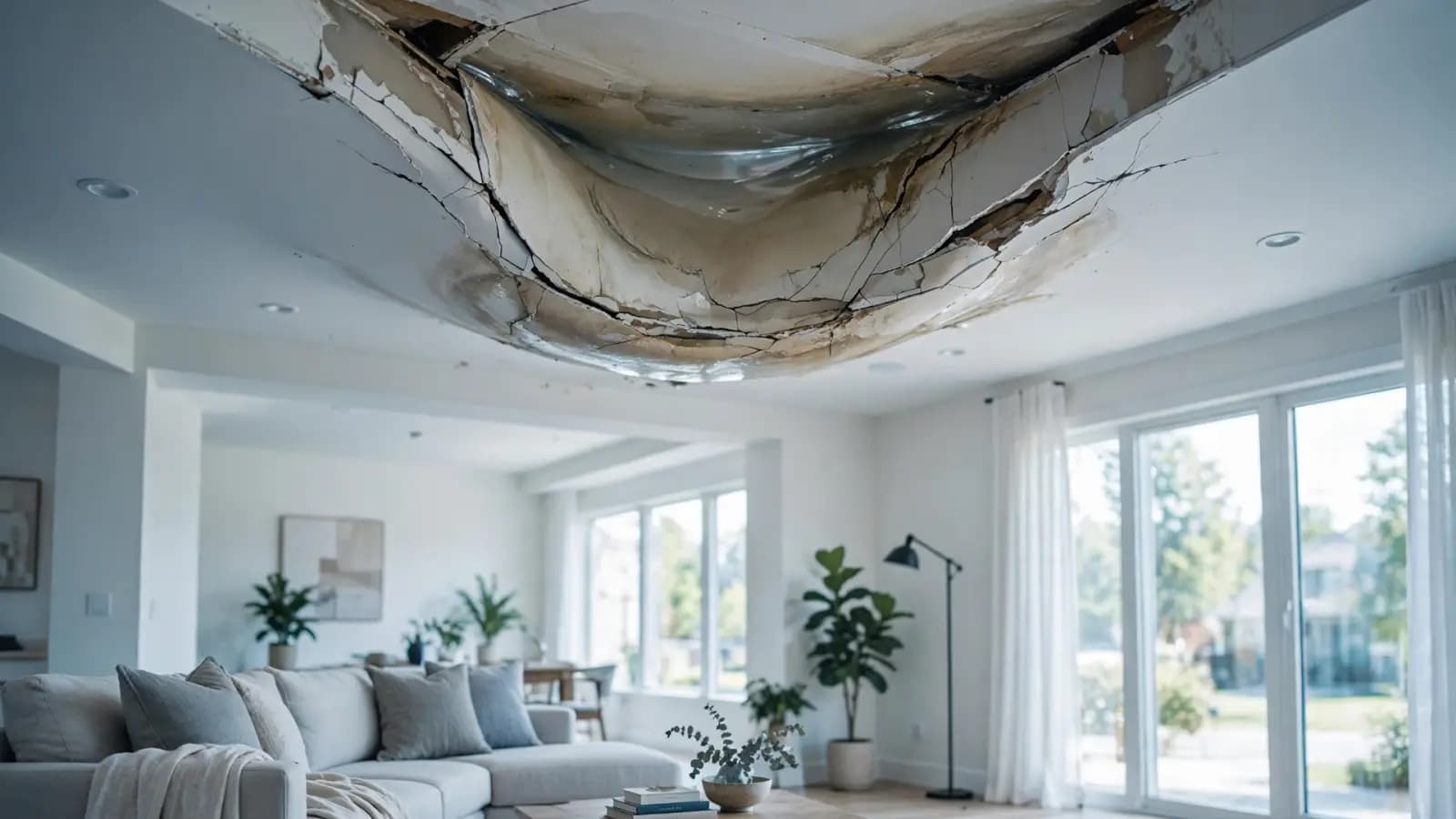
Yes. A ceiling can collapse when water saturates the drywall or plaster, weakening it while adding weight from absorbed water, pooled water and soaked insulation. Collapse is usually preceded by visible sagging, bulging, cracking at seams or popped fasteners, so those signs mean you should clear the area immediately.
At a glance
- Condition
- A ceiling losing its ability to support its own weight after water exposure.
- Common causes
- Large or long leaks, pooled water on the drywall, soaked insulation, plaster key failure.
- Evidence
- Sagging, bulging, seam cracks, popping fasteners, creaking, water running from seams.
- Risk if ignored
- Falling drywall, plaster, insulation and water; injury; electrical hazards.
- What to do now
- Clear the room, stop the source, cut power to fixtures from a dry panel location.
- Solution
- Controlled removal of compromised material, drying and replacement.
Why water makes ceilings fail
- Saturation: gypsum and paper lose much of their strength when soaked.
- Weight: water weighs about 8.3 pounds per gallon, and wet insulation can hold a lot of it on top of the drywall.
- Fasteners: as the board softens, it can pull over screw and nail heads.
- Span: the board sags between joists first, so wider joist spacing fails sooner.
- Plaster: water breaks the keys holding plaster to lath, letting heavy sections detach.
Warning signs, from early to urgent
| Sign | Urgency |
|---|---|
| Stain, firm ceiling | Monitor and find the source |
| Bubbling paint, damp feel | Act today: stop the source, start drying |
| Soft spot | Act today; keep weight off the area |
| Sag between joists | Clear the room; call for help |
| Growing bulge, seam cracks, popped fasteners, creaking | Emergency: keep everyone out |
Ceiling damage severity
- 1Cosmetic stainDry and firm. Seal and repaint once the source is fixed.
- 2Damp materialFresh stain, firm board. Stop the source and dry it.
- 3Saturated drywallSoft spots, bubbling, seam cracks. Professional assessment.
- 4Sagging or bulgingClear the room. Controlled removal needed.
- 5Collapse or contaminationKeep out. Professional cleanup and electrical check.
Full chart: ceiling damage severity chart
What to do
The full action sequence is in the emergency guide.
- Get everyone out of the room and close the door.
- Stop the water source.
- Switch off power to the room's ceiling fixtures at the breaker if you can do so from a dry location.
- Do not try to push the ceiling back up or prop it from below.
- Call a water damage restoration company for controlled removal.
Which ceilings are most at risk
- Ceilings with heavy blown insulation on top, which holds water against the board.
- Ceilings with 24-inch joist or truss spacing and thinner drywall.
- Older plaster ceilings, which are heavier and can detach in sections: see plaster ceilings.
- Ceilings under bathrooms, water heaters or laundry rooms, where large volumes can be released quickly.
Frequently asked questions
How long before a wet ceiling collapses?
There is no fixed time. A large overflow can bring down a section within hours; a slow leak may take weeks to weaken the board. The warning signs, sagging, bulging and seam cracks, matter more than elapsed time.
Can a ceiling collapse without warning?
Most collapses are preceded by sagging, bulging or cracking, but those can develop quickly during a large leak and may be hidden in dark rooms or above furniture. Treat any active leak with sagging as an imminent hazard.
Will my ceiling fall if I poke a hole to drain it?
Draining a contained paint bubble can relieve weight, but puncturing saturated, sagging drywall can trigger a sudden release of water and debris. Leave it to a professional if the ceiling is sagging.
Is a stained ceiling at risk of collapse?
A dry, firm stain is not a collapse risk. Risk rises with softness, sagging and active water.
Related guides
- Ceiling ProblemsSagging ceilingDrooping or bulging drywall after a leak: why it happens, collapse risk, and safe next steps.
- EmergencyEmergencyActive leaks, bulging ceilings and water near lights: the safe sequence of steps.
- Guides & ToolsSeverity chartFive levels from cosmetic stain to collapse risk, with the right response for each.
- Ceiling TypesPlaster ceilingsLath and plaster in older homes: key failure, delamination, and how plaster is repaired.
Also referenced in
This guide is general educational information, not a site-specific inspection. Read our editorial policy for how content is researched and reviewed.