
Ceiling Types
Water Damage on Drywall Ceilings
Short answer
Drywall is a gypsum core wrapped in paper, and both absorb water readily. A drywall ceiling that was briefly dampened and stayed firm can usually be dried in place; drywall that is soft, sagging, crumbling, moldy or wetted by contaminated water is replaced. Because ceilings are hung overhead and carry insulation, they tolerate water worse than walls.
At a glance
- Condition
- Gypsum board ceilings absorbing water from leaks or condensation above.
- Common causes
- Any leak above; ceilings also carry the weight of wet insulation.
- Evidence
- Stains, bubbling paint, seam cracks, fastener pops, softness, sagging.
- Risk if ignored
- Rapid strength loss when saturated; mold on paper facings.
- What to do now
- Stop the source, assess firmness and extent with a moisture meter.
- Solution
- Dry in place when firm and clean; cut out and replace when compromised.
Why ceilings fail before walls
On a wall, wet drywall is held vertically against studs and its weight bears down through the board. On a ceiling, the board hangs from fasteners and spans the gap between joists, so softening shows up immediately as sag. Ceilings also catch water that pools: water poured onto a wall runs off, while water on top of a ceiling sits on the board and soaks in. Insulation lying on the drywall holds water against it.
Damp, wet and saturated drywall
The decision rules in detail: when to replace ceiling drywall.
| State | What you see | Usual outcome |
|---|---|---|
| Damp | Stain, firm board, slightly higher meter reading | Dry in place, seal and paint |
| Wet | Cool to touch, bubbling paint, still firm | Dry quickly with airflow and dehumidification; monitor |
| Saturated | Soft, spongy, seams cracking | Replace the affected section |
| Deformed | Sagging, bulging, fasteners pulled | Replace; treat as urgent |
| Contaminated | Wetted by toilet, sewer or flood water | Replace regardless of firmness |
Board types and moisture
- Standard 1/2-inch board: common on walls; on ceilings with wider framing it is more prone to sag.
- Sag-resistant 1/2-inch ceiling board and 5/8-inch board: stiffer, preferred for ceilings, especially with 24-inch framing or heavy insulation.
- Moisture-resistant board (often green or blue paper, or paperless with fiberglass facing): resists humidity and mold better in bathrooms, but is not waterproof and still fails when soaked.
Repair approach
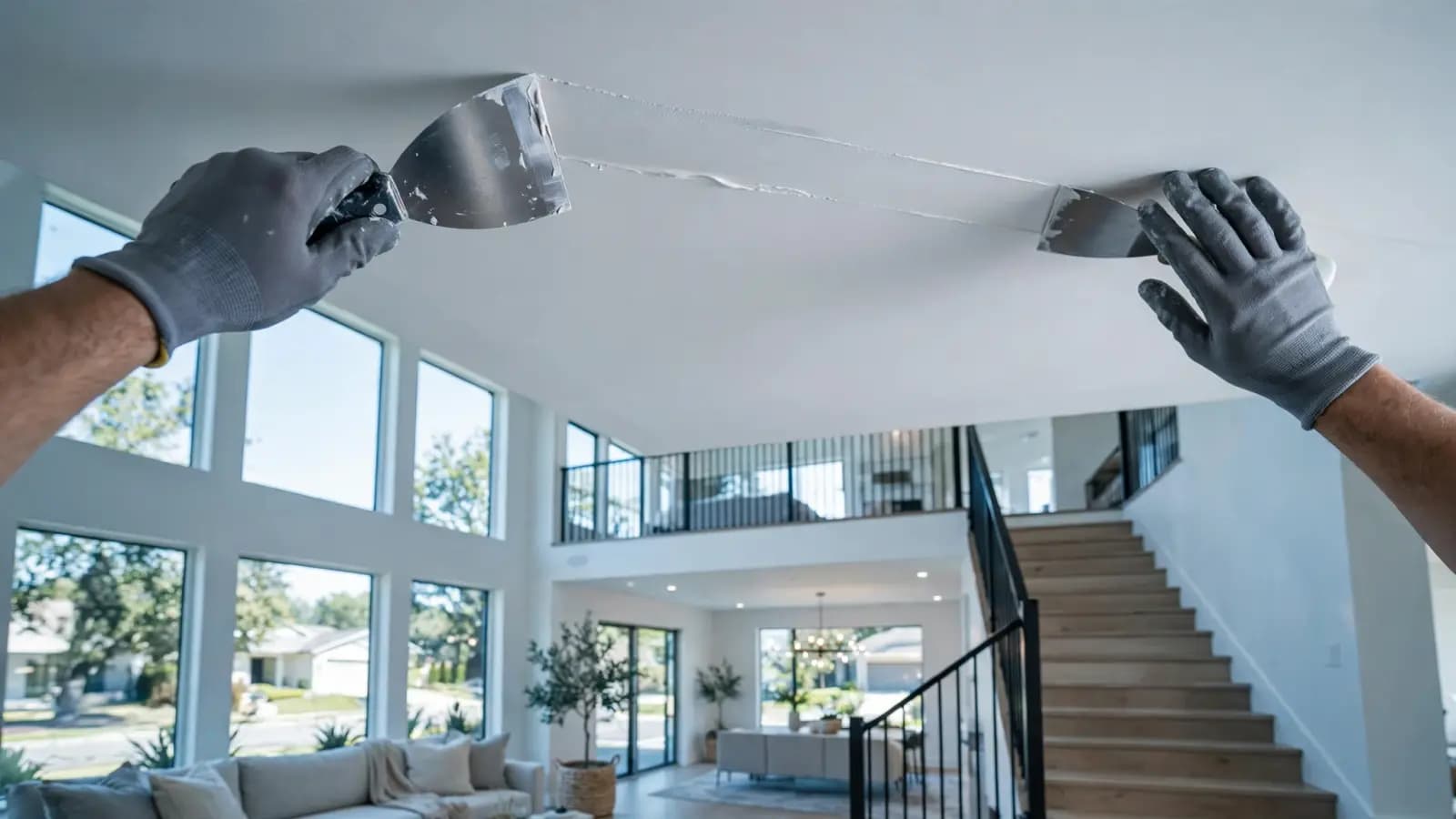
Firm, clean drywall is dried, sealed with a stain blocker and repainted. Damaged sections are cut back to framing and replaced, then taped, finished and textured to match. See how to repair a water-damaged ceiling and drywall ceiling repair.
Frequently asked questions
Can water-damaged drywall be saved?
Yes, if it was wetted by clean water, stayed firm and flat, and is dried quickly. Soft, sagging, moldy or contaminated drywall should be replaced.
Is green board waterproof?
No. Moisture-resistant drywall resists humidity and mold better than standard board, but it absorbs water and loses strength when soaked like any gypsum board.
How do you know if ceiling drywall is still wet?
Use a moisture meter and compare readings at the damaged area with a dry area of the same ceiling. Feel and appearance are unreliable, because the surface can dry before the core.
What happens if water gets inside ceiling drywall?
The gypsum core softens, the paper bond weakens, and the board gets heavier. Depending on how long it stays wet, it can stain, sag, crack at seams, pull off its fasteners and grow mold.
Related guides
- Repair & DryingRepair or replaceDecision rules for keeping or replacing wet drywall, plus an interactive checker.
- Ceiling ProblemsSoft drywallDrywall that gives or crumbles when pressed: what has failed inside the board and the repair path.
- ServicesDrywall ceiling repairPatching or replacing ceiling drywall after drying, and matching finish and texture.
- Ceiling TypesPlaster ceilingsLath and plaster in older homes: key failure, delamination, and how plaster is repaired.
Also referenced in
This guide is general educational information, not a site-specific inspection. Read our editorial policy for how content is researched and reviewed.