
Repair & Drying
When to Replace Wet Ceiling Drywall
Short answer
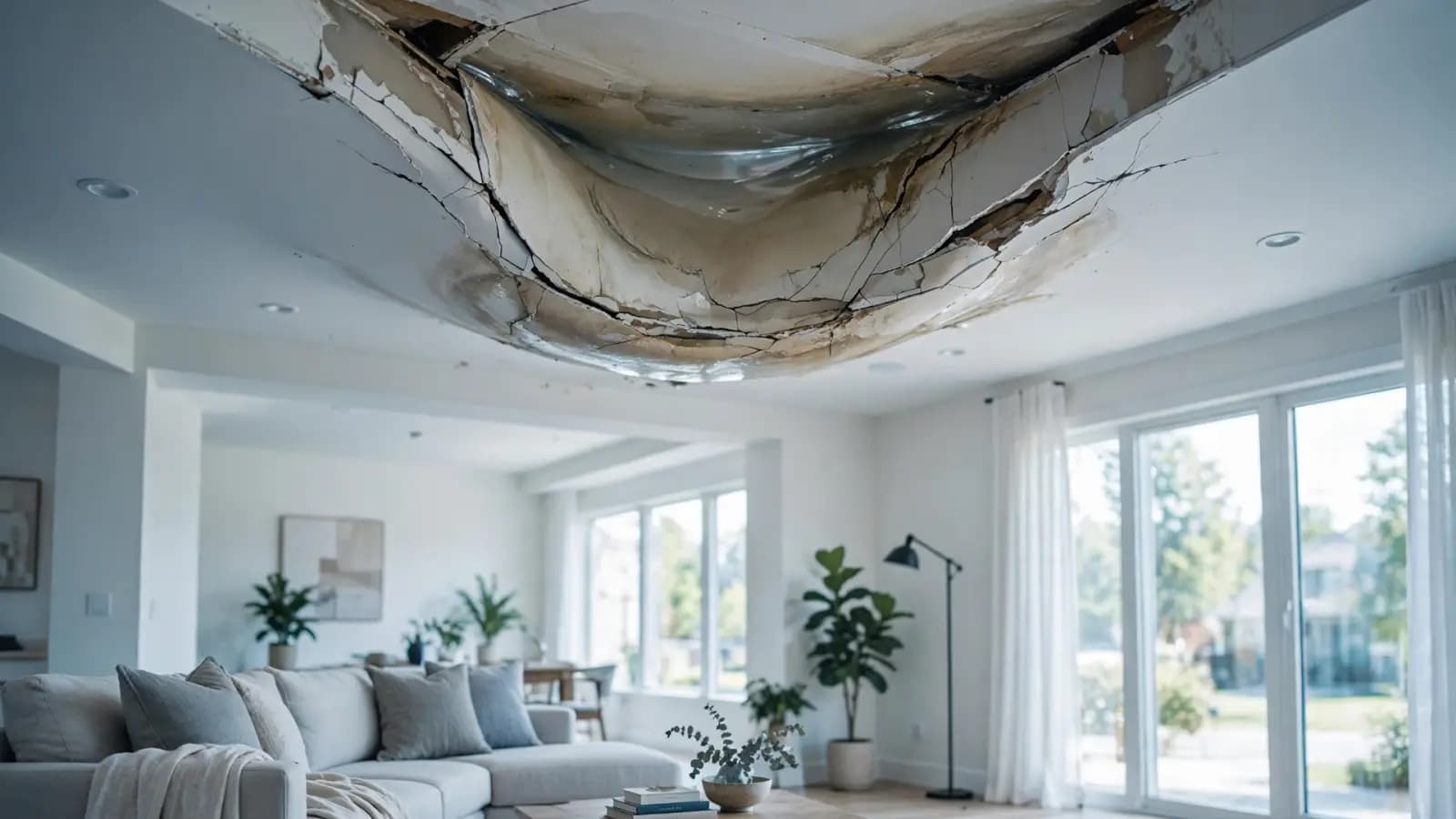
Ceiling drywall should be replaced when it is soft, sagging, crumbling, delaminated, moldy, or was wetted by contaminated water, or when it stayed wet long enough that drying in place is no longer reliable. Drywall that got wet from clean water, stayed firm and flat, and is dried promptly can usually stay.
At a glance
- Condition
- Ceiling drywall that got wet and must be judged keep-or-replace.
- Common causes
- Any leak or overflow above.
- Evidence
- Firmness, flatness, staining, mold, odor, moisture readings, source water type.
- Risk if ignored
- Keeping compromised drywall leads to sagging, mold and repeat repairs.
- What to do now
- Check each factor below; any single replace trigger usually decides it.
- Solution
- Dry and refinish, or cut out to framing and replace.
Replace triggers
Any one of these normally means the affected drywall is replaced:
- Sagging, bulging, or pulled over its fasteners.
- Soft, spongy or crumbling when pressed gently.
- Paper face delaminating or the core breaking up.
- Visible mold on the drywall, or mold on the top side found during inspection.
- Wetted by contaminated water: toilet overflow, sewage, flood water.
- Stayed wet for an extended period, roughly more than 48 hours with growth or odor present, or repeatedly wetted over weeks or months.
- Wet insulation above that cannot be dried without removing the ceiling.
Keep-and-dry conditions
- Clean water source, such as a supply line, rain or tank water.
- Board firm and flat, fasteners holding.
- No mold and no musty odor.
- Drying started promptly and the board can be dried to match a dry reference reading.
- The cavity above can be dried, for example from an open attic, or with drying equipment.
Repair-or-replace checker
Answer each question. This is an educational guide, not an inspection.
Gray areas
| Situation | How professionals usually handle it |
|---|---|
| Firm board under soaked insulation | Remove insulation from above if accessible; otherwise open the ceiling to dry |
| Small soft spot in a larger stained area | Cut out the soft area plus margin to framing; dry and keep the rest |
| Clean water that sat several days | Treat as more contaminated; removal more likely |
| Old stain, dry, firm, no odor | Seal and repaint |
How much to cut out
Remove all material that meets a replace trigger, then extend the cut to firm board and to framing so the new piece can be fastened. Moisture meters show the wet boundary, which is often larger than the stain. In the restoration industry, drywall removal is commonly done by cutting out the damaged area in a straight, clean line to make re-installation easier. The repair sequence is in how to repair a water-damaged ceiling.
Frequently asked questions
Should ceiling drywall be replaced after a leak?
Not always. Replace it if it is soft, sagging, moldy, delaminating, wetted by contaminated water, or stayed wet too long. Firm drywall from a clean-water leak that is dried promptly can stay.
How long can drywall be wet before it must be replaced?
There is no exact cutoff, but drying within 24–48 hours is the EPA's guidance for preventing mold. Drywall that stayed wet longer, especially with odor or visible growth, is more likely to need replacement.
Can drywall that got wet once be reused if it dries?
Yes, if it stayed firm and flat, the water was clean, there is no mold, and moisture readings return to normal.
Does ceiling drywall have to be replaced if the insulation got wet?
Not necessarily. If the insulation can be removed and replaced from an accessible attic and the drywall is firm and dries, the drywall can stay. Between floors, the ceiling often has to be opened to reach and dry the insulation.
Related guides
- Repair & DryingHow to repairThe full sequence from stopping the leak to the final coat of paint, with DIY limits marked.
- Ceiling TypesDrywall ceilingsHow gypsum board takes on water, damp vs saturated board, and moisture-resistant options.
- Ceiling ProblemsSoft drywallDrywall that gives or crumbles when pressed: what has failed inside the board and the repair path.
- ServicesDrywall ceiling repairPatching or replacing ceiling drywall after drying, and matching finish and texture.
Also referenced in
This guide is general educational information, not a site-specific inspection. Read our editorial policy for how content is researched and reviewed.