
Guides & Tools
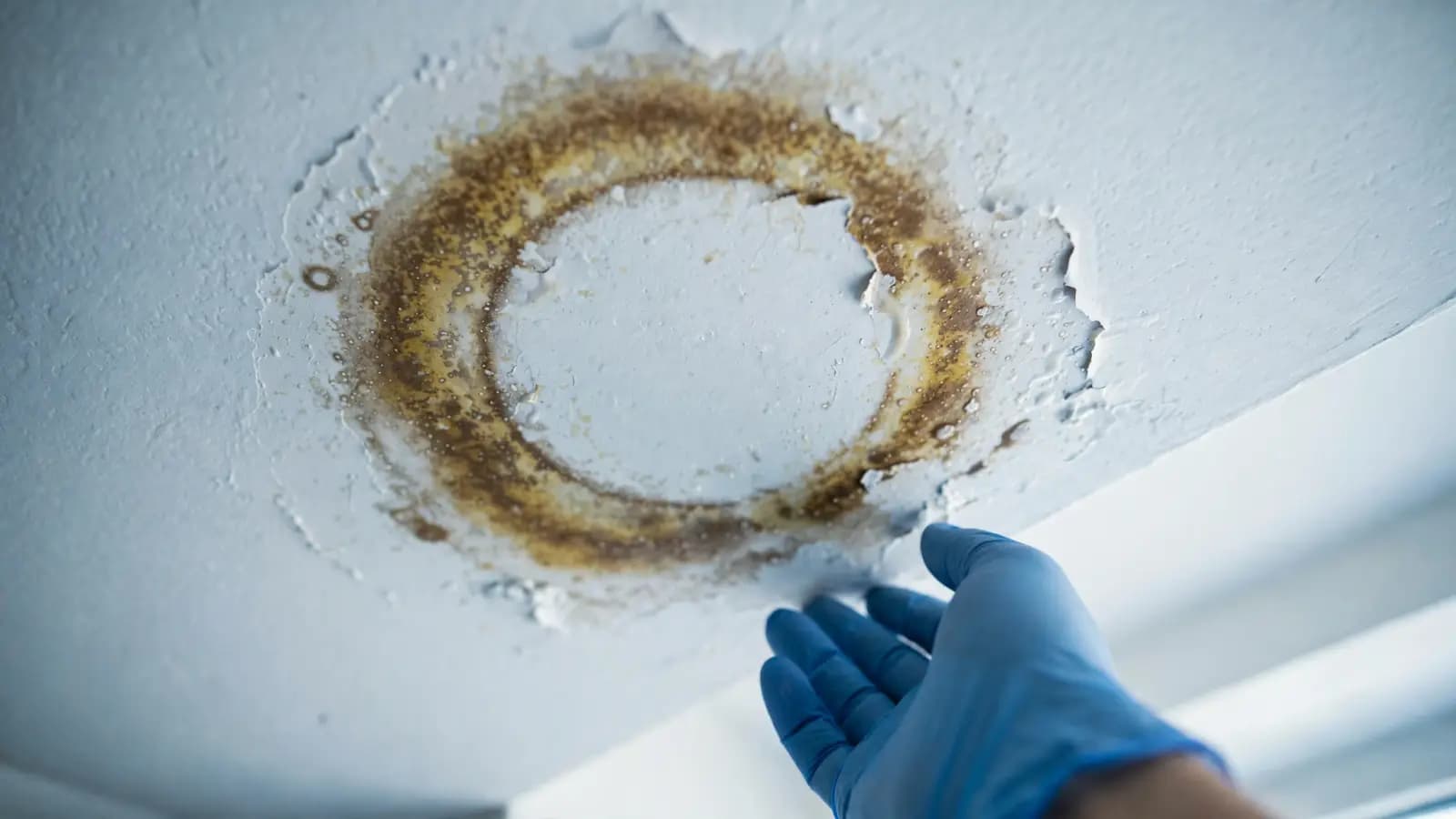
Ceiling Water Damage Severity Chart
Short answer
Ceiling water damage ranges from Level 1, a dry cosmetic stain, through damp and saturated material, to Level 4 sagging or bulging and Level 5 collapse or contamination risk. Levels 1–2 are usually manageable with source repair and drying; Levels 3–5 need professional help, and Levels 4–5 need people cleared from the area.
Ceiling damage severity
- 1Cosmetic stainDry and firm. Seal and repaint once the source is fixed.
- 2Damp materialFresh stain, firm board. Stop the source and dry it.
- 3Saturated drywallSoft spots, bubbling, seam cracks. Professional assessment.
- 4Sagging or bulgingClear the room. Controlled removal needed.
- 5Collapse or contaminationKeep out. Professional cleanup and electrical check.
Full chart: ceiling damage severity chart
The five levels
| Level | What you see | What it means | Response |
|---|---|---|---|
| 1: Cosmetic stain | Dry, firm stain; no growth | Historic or fixed leak | Confirm dry; seal and repaint |
| 2: Damp material | Fresh stain, cool or slightly damp, firm | Recent or active small leak | Stop source; dry; monitor readings |
| 3: Saturated drywall | Soft spots, bubbling, seam cracks | Board losing strength | Stop source; professional assessment; likely partial replacement |
| 4: Sagging or bulging | Visible droop, water pocket, popped fasteners | Board failing | Clear the room; emergency steps; controlled removal |
| 5: Collapse or contamination | Fallen material, or toilet/sewer/flood water | Structural or health hazard | Keep out; professional cleanup; electrical check |
Factors that raise the level
- Water near light fixtures, fans or smoke detectors.
- Contaminated water, which moves any situation to Level 5 for cleanup purposes.
- Mold growth or a musty odor.
- Damage spanning several joist bays or rooms.
- Plaster ceilings, which can detach in heavy sections.
Examples of how the levels apply
A ring above the guest bed that has not changed in a year
Level 1. Moisture readings match the rest of the ceiling and the stain did not grow through several storms. The roof was likely repaired at some point. Seal it with a stain-blocking primer and repaint.
A fresh stain under the upstairs shower
Level 2, possibly 3. The board is firm but cool, and the stain grows after showers. Stop using the shower, test the fixtures, and dry the area once the leak is repaired. If the board softens, it moves to Level 3.
A dome of paint holding water below an attic air handler
Level 4. Water has pooled on the ceiling from a condensate overflow. Turn the AC off, keep people out of the room, and arrange controlled removal and drying.
Wet ceiling under a toilet that overflowed
Level 5 for cleanup purposes, even if the ceiling is firm, because the water is contaminated. Porous materials it soaked are normally removed by a professional.
Using this chart
This chart is an educational guide, not an inspection. Damage often extends beyond what is visible, especially above the ceiling. If you are unsure between two levels, act on the higher one. For individual symptoms see sagging ceiling, soft drywall and brown water stains.
Frequently asked questions
How do I know how bad my ceiling water damage is?
Check firmness, flatness, whether it is still wet, how large the area is, whether the water was contaminated, and whether there is mold or odor. Sagging, softness, contamination and electrical exposure are the signs of serious damage.
Is a small ceiling water stain serious?
Not on its own. A small, dry, firm stain is cosmetic. It matters if it is growing, damp, soft, or appears repeatedly, because that means an active source.
Can I share this chart?
Yes. You are welcome to link to this page as a reference.
Related guides
- Guides & ToolsCan it collapse?Why saturated ceilings fail, the warning signs that come first, and safe next steps.
- Ceiling ProblemsSagging ceilingDrooping or bulging drywall after a leak: why it happens, collapse risk, and safe next steps.
- Guides & ToolsDamage checklistPrintable checklist from the first hour through the first week after a ceiling leak.
- Repair & DryingRepair or replaceDecision rules for keeping or replacing wet drywall, plus an interactive checker.
This guide is general educational information, not a site-specific inspection. Read our editorial policy for how content is researched and reviewed.