
Local guide
Ceiling Water Damage in Portland, Maine
Short answer
Ceiling water damage in Portland, Maine, usually comes from ice dams on older homes, nor'easter wind-driven rain off Casco Bay, and frozen pipes in drafty multi-family buildings.
Why ceilings get wet in Portland
Portland's coastal location brings nor'easters with heavy snow or wind-driven rain, and winter freeze-thaw cycles that build ice along roof edges.
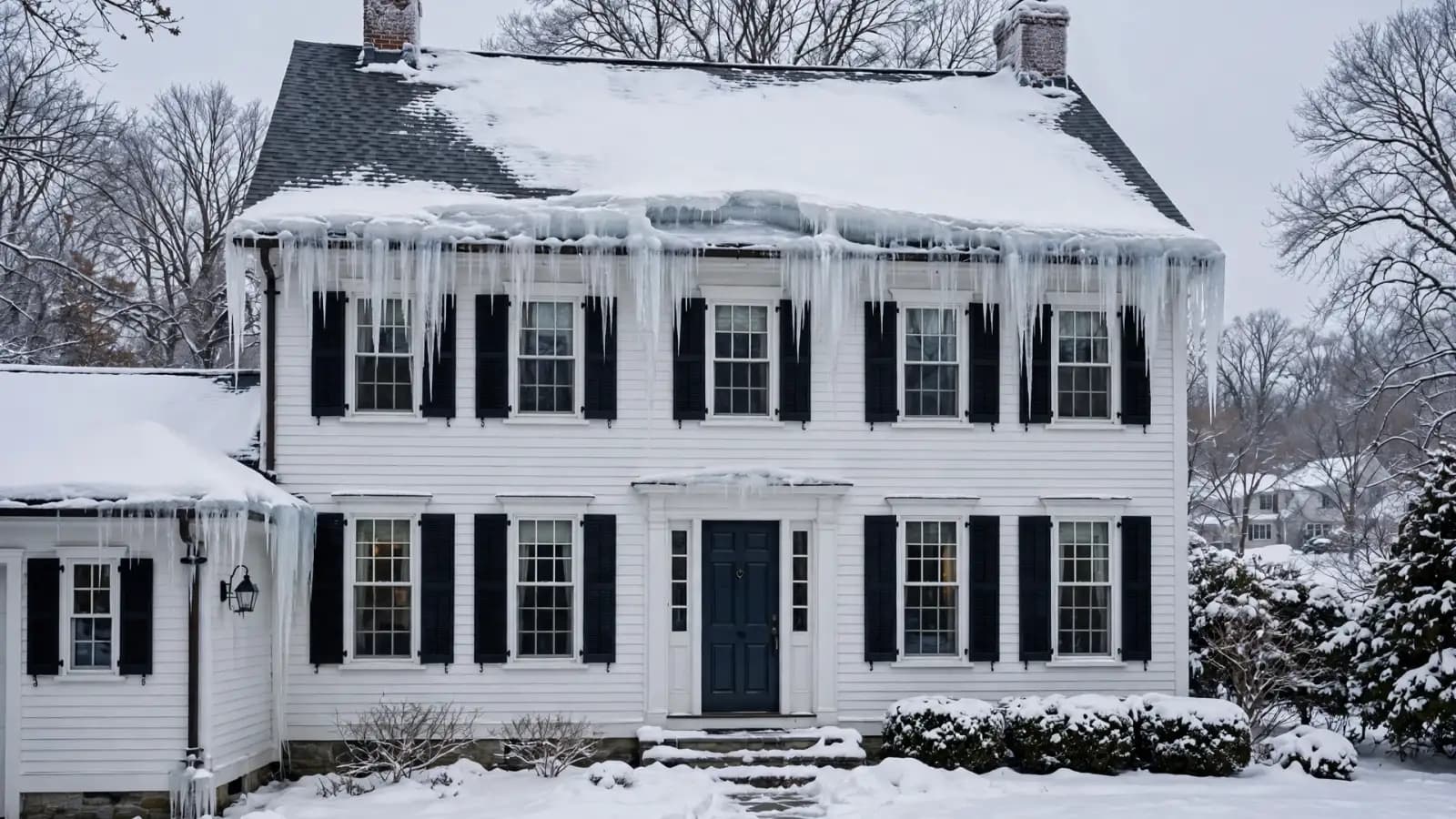
- Ice dams: Steep roofs over finished attics on older peninsula homes often form ice dams after a snowstorm followed by sun. See roof leaks and ceiling damage.
- Older housing stock: Converted multi-family buildings stack bathrooms, so one unit's leak reaches the ceilings below. See water-damaged plaster ceilings.
- Hurricanes & tropical storms: Coastal storms drive rain sideways into siding, windows and roof vents facing the water. See storm damage and ceiling leaks.
Portland homes and ceilings
The peninsula and nearby neighborhoods are dominated by nineteenth- and early-twentieth-century homes and triple-deckers, many with plaster ceilings and old supply lines.
Where ceiling problems concentrate in Portland
Older homes on the peninsula and in neighborhoods such as Munjoy Hill and the West End are most exposed to ice dams and wind-driven rain off the water, while newer homes off-peninsula see fewer plaster and roof problems.
How Portland homeowners can prepare
Before winter, have gutters cleared and attic hatches sealed, and if you rent a unit in a converted building, ask the owner where the water shutoffs are for your floor.
A typical ceiling leak in Portland
A common Portland call: after a February nor'easter followed by two sunny days, a brown stain appears along the exterior wall of a top-floor bedroom in a nineteenth-century home on the peninsula. Icicles hang from the gutter above. The fix is to have the ice dam steamed off by a roofing professional, pull back the wet insulation from the attic side if it is reachable, dry the plaster, and plan attic air sealing for spring so it does not happen again next winter.
Drying and repair in Portland
Drying in Portland depends on the season. In winter, heated indoor air is dry and helps evaporation, but wet insulation under a snow-covered roof dries slowly. In humid summer weather, run a dehumidifier with the room closed. Plaster ceilings on older peninsula homes dry more slowly than drywall and should be confirmed dry before patching.
Local contacts in Portland
- The Portland Water District supplies water to the city.
Help nearby
Manchester, NH · Burlington, VT · Boston, MA · Worcester, MA · Providence, RI · all of Maine
Local sources
Local facts on this page were checked against these public sources. Conditions change; confirm details with the agency.
Frequently asked questions
Why does my Portland apartment ceiling leak during nor'easters?
Wind-driven rain can enter through window frames, siding gaps and roof vents on the windward side. Building owners should check flashing and seals on the exposed walls.
Are plaster ceilings in Portland's older homes worth saving after a leak?
Often. If the plaster stayed attached and firm, it can be dried, re-secured and patched by a plaster-experienced contractor.
Can a Portland ice dam leak be fixed in winter?
The ceiling can be dried right away and ice can be steamed off the roof by a professional, but long-term fixes such as attic air sealing are easier once the snow is gone.
Who should I call for a wet plaster ceiling in Portland?
First the trade that stops the water, then a restoration company to dry it and a plaster-experienced contractor for the repair.
Related guides
- LocationMaineIce dams and frozen pipes are leading causes in Maine.
- CausesRoof leakStains that appear after rain: flashing, vents, shingles, ice dams and how water travels to the ceiling.
- Ceiling TypesPlaster ceilingsLath and plaster in older homes: key failure, delamination, and how plaster is repaired.
- CausesStorm damageWind-driven rain, fallen trees, hail and hurricanes: ceiling leaks after severe weather.
- ServicesCeiling water damage repairEnd-to-end professional repair: inspection, drying, removal, rebuild and finishing.
Also referenced in
This guide is general educational information, not a site-specific inspection. Read our editorial policy for how content is researched and reviewed.
Free referral call · All 50 states
Need help with ceiling water damage?
Call and describe what you see. One call gets you help.
By calling, you agree to be connected with an independent local contractor and that your call may be recorded for quality. Calling is free and there is no obligation to hire anyone.