
Local guide
Ceiling Water Damage in Virginia Beach, Virginia
Short answer
Virginia Beach ceiling leaks are driven by tropical storms and nor'easters with wind-driven rain, long humid summers with attic AC overflows, and salt-air wear on roofs and HVAC.
Why ceilings get wet in Virginia Beach
Virginia Beach has humid summers, mild winters, and direct exposure to tropical storms and nor'easters.
- Hurricanes & tropical storms: Coastal storms drive rain into vents, flashing and siding. See storm damage and ceiling leaks.
- Humidity & long AC seasons: Attic AC condensate overflows are common in long summers. See ac condensation and ceiling stains.
- Severe thunderstorms & tornadoes: Summer thunderstorms with high winds damage shingles. See storm damage and ceiling leaks.
Virginia Beach homes and ceilings
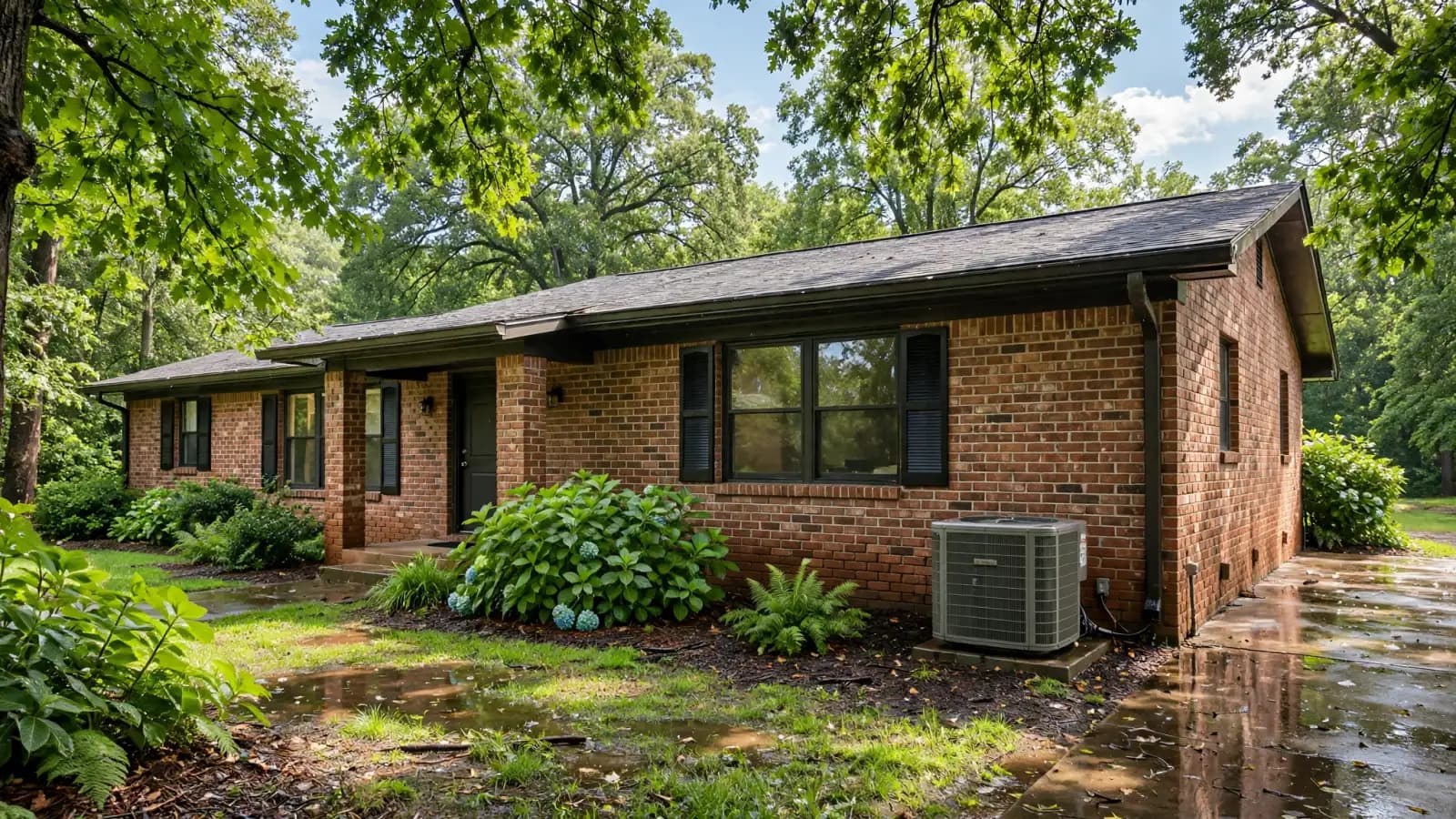
Mostly post-1960 suburban homes and townhomes, with many attic air handlers and slab or crawl-space foundations.
Where ceiling problems concentrate in Virginia Beach
Oceanfront and bayfront neighborhoods face the strongest wind-driven rain and salt-air corrosion, while inland subdivisions see more AC condensate and thunderstorm leaks.
How Virginia Beach homeowners can prepare
Before hurricane season, have flashing, vents and soffits checked, and clear the AC condensate line.
A typical ceiling leak in Virginia Beach
A typical Virginia Beach case: after a tropical storm, a homeowner near the oceanfront finds ceiling stains near a bathroom exhaust fan and a soffit vent on the windward side. Wind drove rain into the vents. The vents are sealed or replaced with storm-rated versions, and the ceiling and attic insulation are dried.
Drying and repair in Virginia Beach
Virginia Beach repairs after storms usually involve roof and flashing work first. Humid air slows drying, so dehumidifiers are essential. Salt air speeds corrosion of flashing and AC components, so leaks can recur if parts are not replaced.
Local contacts in Virginia Beach
- Virginia Beach Public Utilities supplies water to the city.
Help nearby
Richmond · Newark, NJ · Philadelphia, PA · Pittsburgh, PA · Wilmington, DE · all of Virginia
Local sources
Local facts on this page were checked against these public sources. Conditions change; confirm details with the agency.
Frequently asked questions
Does salt air affect ceiling leaks in Virginia Beach?
Salt air speeds corrosion of metal flashing, fasteners and AC components, which can lead to earlier roof and condensate leaks near the coast.
What should I do before hurricane season in Virginia Beach?
Have the roof and flashing checked, clear gutters, secure soffits, and clear the AC condensate line.
How soon should I dry a Virginia Beach ceiling after a storm?
Within 24 to 48 hours if possible to limit mold.
Why does my Virginia Beach AC leak into the ceiling?
Condensate line clogs or corroded drain pans are common causes.
Related guides
- LocationVirginiaHurricanes & tropical storms and humidity & long ac seasons are leading causes in Virginia.
- CausesStorm damageWind-driven rain, fallen trees, hail and hurricanes: ceiling leaks after severe weather.
- CausesHVAC condensationAttic air handlers, clogged condensate lines, overflowing pans and sweating ducts.
- ServicesCeiling water damage repairEnd-to-end professional repair: inspection, drying, removal, rebuild and finishing.
Also referenced in
This guide is general educational information, not a site-specific inspection. Read our editorial policy for how content is researched and reviewed.
Free referral call · All 50 states
Need help with ceiling water damage?
Call and describe what you see. One call gets you help.
By calling, you agree to be connected with an independent local contractor and that your call may be recorded for quality. Calling is free and there is no obligation to hire anyone.